
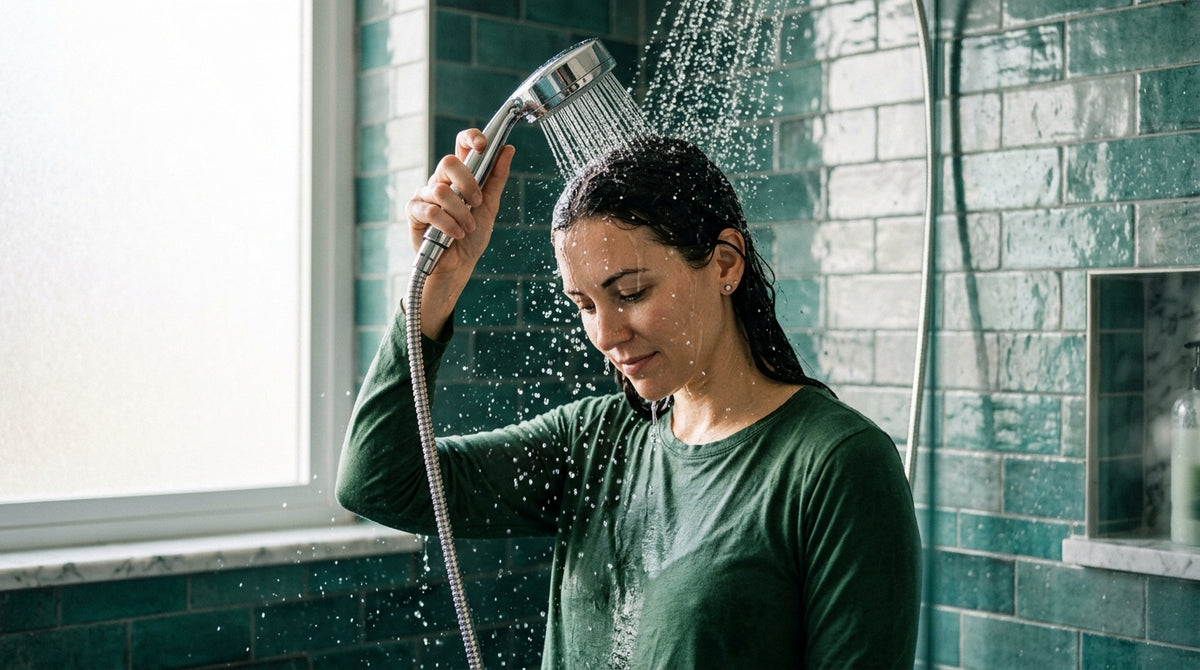
Your hair feels like straw no matter what you try. You've probably already added malibu c hard water wellness shampoo to your shower shelf, hoping that chelating formula would finally strip away the mineral buildup dulling your color and frizzing your curls. It helps, but only to a point. This article breaks down what that shampoo can and can't do, and why filtering the water before it ever touches your hair might be the piece you're missing.
Malibu C Hard Water Wellness Shampoo: What It Is and How It Works
The chelation process explained
At its core, this is a chelating treatment. The formula relies on chelating agents plus vitamin C, in the form of ascorbic acid, to grab onto mineral deposits sitting on the hair shaft and loosen them so they rinse away. Calcium, magnesium, and iron are the usual culprits. They build up strand by strand, shower after shower, until hair starts feeling coated, heavy, and strangely resistant to color or curl.
The ascorbic acid also goes after chlorine residue, which is a separate problem from mineral scale but shows up alongside it in most municipal water supplies. Some people wonder whether that same chlorine exposure affects skin too. It's worth reading up on does chlorine in tap water cause acid if breakouts have been a recurring issue. On hair, the combined chelation and acid action is strong enough that brands warn against daily use. Overdo it and you risk stripping natural oils along with the minerals.
Why it's positioned as a 'remedy' rather than prevention
This product is sold as a once-a-week ritual, usually alongside a companion crystal gel for more intensive sessions. That weekly cadence is deliberate. It's a reactive fix, not a daily habit, because the ingredients are too aggressive for regular use. You treat the damage after it's already there, every single week, forever, as long as hard water keeps hitting your hair.
That's really the catch. The treatment works on hair that's already been exposed to minerals and chlorine — it does nothing to the water itself. Nothing changes at the showerhead or the faucet. The next shower deposits the same minerals right back onto clean strands, starting the buildup cycle over again. It's a bit like mopping the floor under a leaky pipe instead of fixing the pipe.
For color-treated or curly hair especially, this cycle gets expensive and tedious fast. A box of treatment, done weekly, adds up over a year, and you're still managing dullness between sessions rather than preventing it. Many local businesses recommend pairing symptom-based fixes like this with some form of point-of-use filtration, simply because one addresses hair and the other addresses the water making contact with it in the first place.
Treating Buildup vs. Preventing It: Shampoo Versus Filtered Showerheads
Where each approach intervenes in the hard water cycle
Here's the real difference, stripped of marketing fluff: one approach cleans up a mess, the other tries to stop the mess from happening. A chelating shampoo like Malibu C goes to work after hard water minerals and chlorine have already landed on your strands and scalp. It's a rinse-out fix for buildup that's already there — effective in the moment, but it does nothing to change what hits your hair tomorrow morning.
A filtered showerhead sits upstream of that whole problem. It reduces chlorine and mineral contact before water ever touches your skin or hair, which means there's less residue to strip out in the first place. Think of it as closing the valve instead of mopping the floor. Anyone researching options will find a water filter for tap use discussed as part of a broader point-of-use filtration conversation, and the logic is the same whether it's a kitchen tap or a shower arm: treat the water, not just the aftermath.
Chelating shampoo is, by nature, a periodic fix. You use it once a week or so, and it only works if you remember to use it, apply it correctly, and keep buying it. Skip a few weeks on vacation or during a busy stretch, and the mineral film creeps right back. It's maintenance that depends entirely on you showing up for it, bottle in hand, every single time.
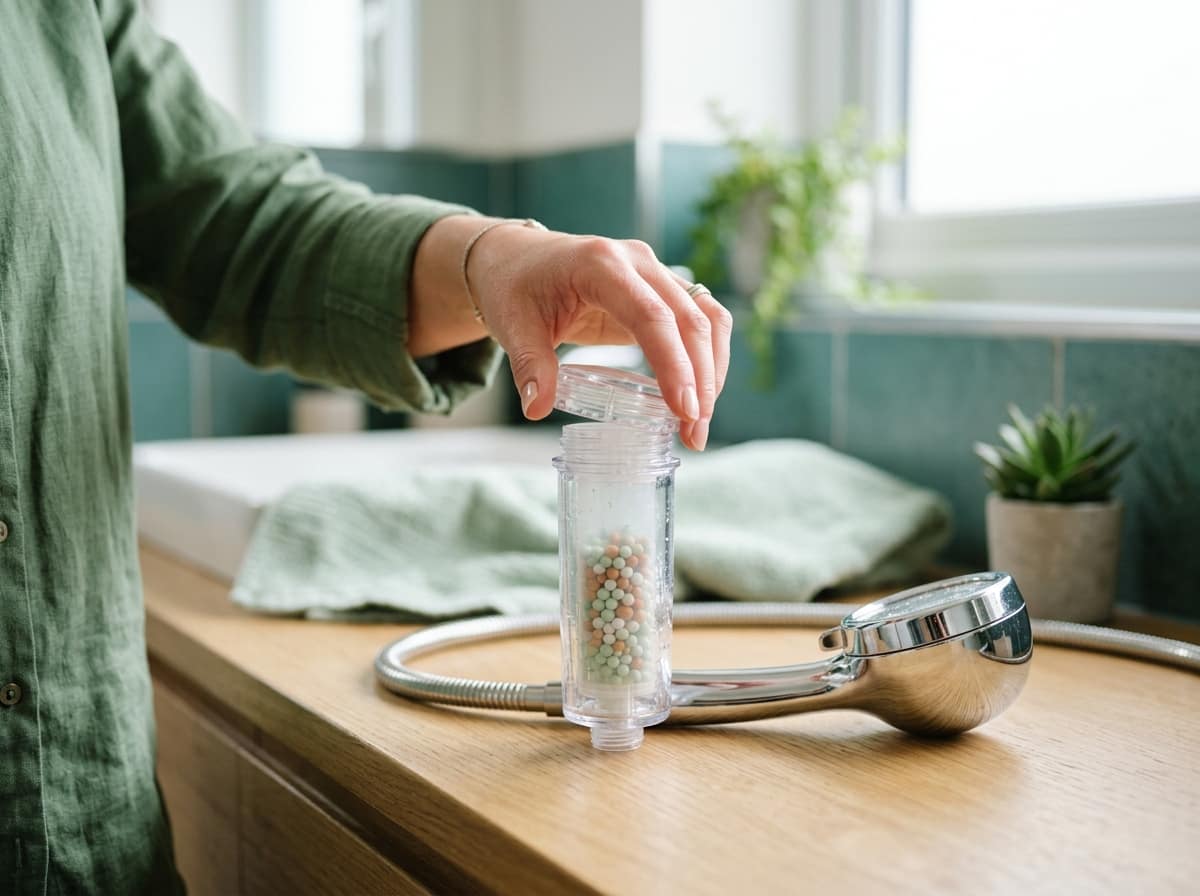
Point-of-use filtration, by contrast, is a no-plumber DIY install — you screw it on, and it works passively every shower after that. No reminders, no routine to maintain. A vitamin-infused filter cartridge addresses the water itself at the source, not as a topical treatment layered on afterward, which is a fundamentally different mechanism than anything applied to wet hair. That said, don't expect either option to replace the other entirely. Best results usually come from combining prevention at the tap with whatever clarifying shampoo or styling product you already trust — not swapping one for the other and hoping for a miracle.
Side-by-Side: Ingredients, Cost, and Maintenance
Before picking a side, it helps to line up what you're actually buying: a chemical process versus a mechanical one. One treats symptoms after they show up. The other changes what's coming out of the pipe. Neither replaces the step most people skip — water testing for hardness and mineral content, which typically happens elsewhere before you commit to either route.
| Factor | Malibu C Hard Water Wellness Shampoo | Filtered Showerhead (Cartridge System) |
|---|---|---|
| Core ingredients | Ascorbic acid, chelators, citric acid | Vitamin-infused filter media inside a swap-in cartridge |
| Format | Single-use packets or bottles | One cartridge housed in the showerhead itself |
| Install effort | None — apply like regular shampoo | Swap-in install, no plumber needed |
| Ongoing cost | Recurring product purchase, restocked as used up | One-time equipment cost plus a replacement filter subscription for cartridges |
| Maintenance rhythm | Applied every wash day, indefinitely | Periodic cartridge swaps, no technician visits |
Look at the cost structure and the difference is pretty stark. Shampoo is a consumable — you keep buying it, forever, with no end point. A filtered showerhead is equipment plus a subscription for cartridges, not a rental, so the unit is yours and only the filter media gets replaced on a schedule. If you want the specifics on what's actually inside that cartridge, the helios showerhead filter ingredients glossary breaks it down ingredient by ingredient. Maintenance differs just as much: one requires effort every single shower, the other just a few minutes every few months.
Worth noting — wellness routines overlap more than people expect. Clients exploring filtered water for skin sometimes also look into broader stress-reduction therapies, and resources on massage & wellness near you in Bergen County turn up in that same research alongside dermatology forums. Not a substitute for either shampoo or filtration, just a sign readers tend to treat skin health holistically.
Matching the Solution to Your Hair and Skin Concern
Not every hard water problem needs the same fix. Your hair type, your skin, even your living situation — all of it changes the right answer. Here's how the common scenarios actually break down.
- Curly or color-treated hair losing its vibrancy usually means mineral deposits are coating the cuticle and flattening color or curl pattern — a filtered showerhead reduces how much new buildup you get, while a chelating shampoo is what strips out what's already there.
- Dry, itchy, or dandruff-prone scalp often traces back to chlorine and hardness hitting the scalp daily, since that's water you can't avoid every time you wash; a filtered showerhead addresses the exposure itself, not just the symptom.
- Eczema flare-ups in a child call for caution — filtered water can be a supportive change alongside a dermatologist's plan, but it's not a treatment for the skin condition itself, and no filter replaces medical care.
- Renting and wanting a quick fix rules out anything permanent; a filtered showerhead installs without a plumber, needs no deposit, and packs up and moves with you to the next apartment.
- Following an esthetician's recommendation means you're likely already investing in good products — filtered water protects that investment by cutting down the minerals and chlorine that interfere with how those products absorb.
Here's the blunt version: nothing filters eczema away, and no showerhead fixes a bad dye job. Match the tool to the actual problem, not the one you wish you had.
If you're unsure which camp you're in, think about where the irritation shows up first. Scalp and skin issues point toward filtration at the source. Hair that's gone flat or faded, despite good products, usually means buildup has already happened — that's a cleanup job, not a prevention one.
What Neither Option Covers
Here's the honest part. Chelating shampoo and a filtered showerhead both fix water quality where it touches your skin and hair. That's it. Neither one touches the rest of your house, and it's worth knowing exactly where the line sits before you assume you're fully covered.
- A whole house water softener treats every tap and appliance at once, while shampoo and showerhead filters are point-of-use — they only improve the water at the fixture they're attached to, nothing upstream or downstream of it.
- Bath tub fills bypass a filtered showerhead entirely, since the water comes out of a separate spout; that needs its own tub filter, a different product not covered by either approach here.
- Laundry water still carries full hardness and chlorine levels unless you add a dedicated washing machine filter — shampoo and shower filters do nothing for your washer or your clothes.
- Well water problems like iron staining or sulfur smell aren't a hair or skin issue at all. Those call for a proper well treatment system, not a shower filter or a bottle of shampoo.
- Salon clarifying or chelating treatments remain worth booking for deep, already-set mineral buildup. A filtered showerhead slows new buildup daily, but it won't strip out months of old residue the way a salon session can.
Think of it this way: you're managing the water hitting your head and hands, not re-engineering your plumbing. If iron, sulfur, laundry spotting, or tub-fill chlorine are part of your situation, you'll need separate, dedicated systems for those — testing your water first, through a local lab or your water utility, is a smart way to know which ones actually apply to you.
Pros and Cons: Chelating Shampoo vs. Point-of-Use Filtration
Let's lay out the trade-offs plainly, because each option solves a different problem. A chelating treatment works on hair you already have. Point-of-use filtration works on water before it ever touches you. Here's how they stack up across the details that actually matter day to day.
| Option | Biggest Strength | Biggest Limitation | Install Effort |
|---|---|---|---|
| Chelating shampoo | Visible shine after one wash, easy to pack for travel | Temporary — buildup returns within days | None, just a bottle in your shower caddy |
| Filtered showerhead | Passive daily protection against minerals and chlorine | Doesn't repair damage already done to hair strands | Screws on in minutes, no plumber needed |
| Under-sink filter | Treats water used for face washing, not just showers | Not a whole-house or reverse-osmosis-level system | Connects to existing sink line without a plumber |
| Replacement cartridge subscription | Keeps filter performance consistent without remembering to reorder | Covers cartridges only, not the hardware itself | Delivered on schedule; swap takes a minute |
Notice the pattern? Shampoo treats symptoms. Filtration treats exposure. If you travel often or just want a quick fix before an event, a clarifying treatment earns its spot in your bag. But if you're showering in the same hard water every single day, repurchasing a bottle every few weeks starts to feel like mopping the floor with the faucet still running.
One honest caveat: neither a showerhead filter nor an under-sink unit reaches your bathtub spout or your washing machine. They cover where you shower and where you wash your face, not every tap in the house. For whole-home softening, that's a separate system entirely — filtration here is a targeted upgrade, not a house-wide overhaul.
Final Verdict: Choosing Between Treatment and Prevention
Here's the honest split. Malibu C does one job well: it strips mineral deposits already sitting in your hair, usually within a wash or two. That makes it a solid occasional deep-clean treatment, not a daily fix. Point-of-use filtration works the other direction. A filtered showerhead or under-sink filter reduces the chlorine and hardness hitting your skin, scalp, and hair before damage builds up at all. One treats symptoms after the fact; the other changes what comes out of the tap every single day. Neither is wrong — they're just solving different timelines.
For most households, the smartest move is both. Run filtered water at the shower and sink for daily prevention, then keep a chelating treatment on hand for the occasional reset — say, after a pool day or a stretch of travel through harder water. That combination covers prevention and residual buildup at once, which a single product can't do alone. If you're a renter who can't install a water softener, or a parent trying to calm a kid's eczema flare-ups without adding more products to the routine, a no-plumber filter swap is the lower-effort daily habit by a wide margin. You install it once, replace the cartridge on a schedule, and stop thinking about it.
So which wins? Depends on the question you're actually asking. Want a one-time fix for hair that already feels coated and dull? Grab the shampoo. Want an ongoing change to the water quality touching your skin and hair every day, the kind an esthetician would actually endorse? That's a filtration problem, not a bottle you reach for occasionally. Treating the water beats repeatedly treating the damage.
Before deciding how to deal with hard water's effect on your skin and hair, it's worth asking what you're actually trying to solve: whole-home treatment calls for a softener and a professional install, while softer-feeling skin and hair at the places you shower and wash up can come from simpler, point-of-use filtration you set up yourself. If hardness and chlorine levels are still a guess, testing it properly elsewhere first will tell you how much of the problem is mineral buildup versus something else entirely. From there, the right fix follows the goal — whether that's protecting every pipe and appliance in the house, or just changing what touches your skin each morning.
Share:
9 Best Hair Growth Oils of 2026 (and the Hidden Reason They Might Not Be Working)
Purple Shampoo for Gray Hair: Why Hard Water Ruins Your Results