

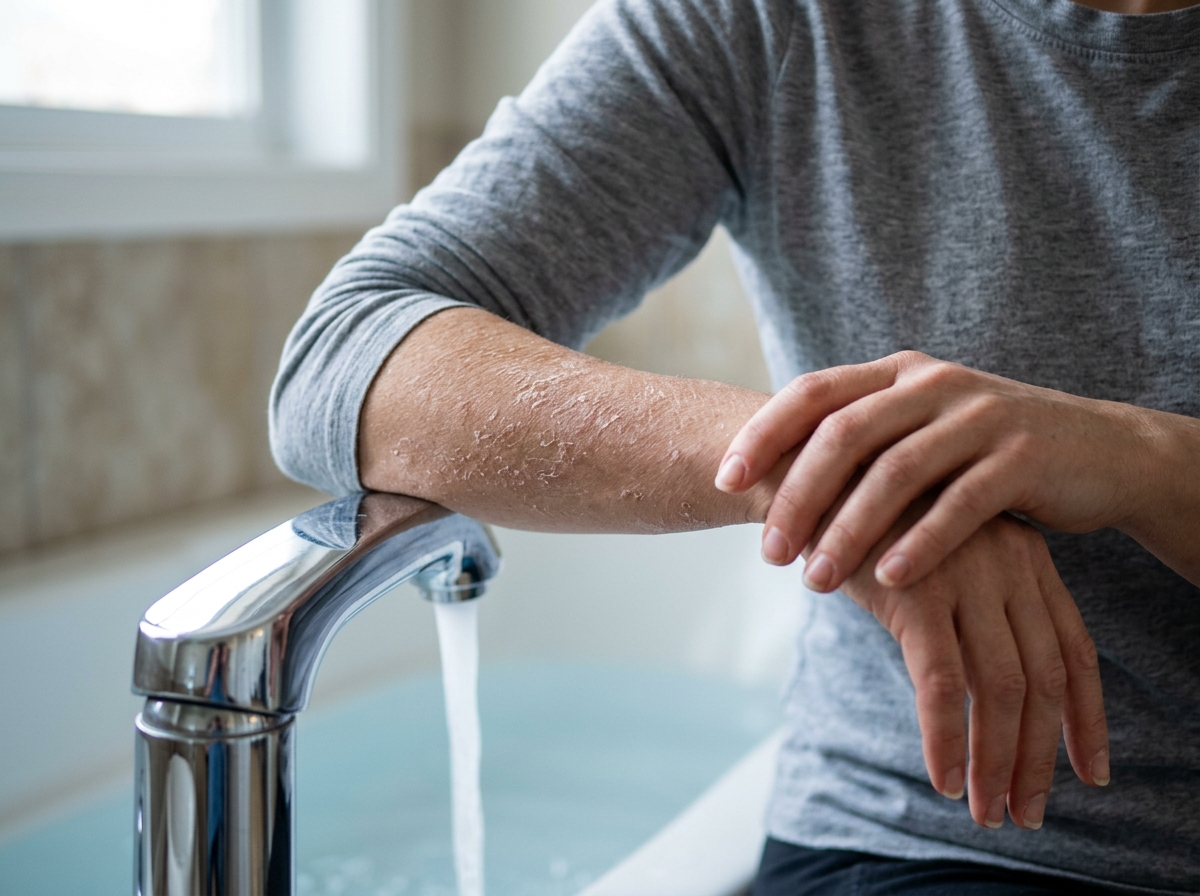
That tight, itchy feeling after a bath isn't your imagination — chlorine and chloramine in unfiltered water are quietly stripping your skin's natural barrier with every soak. Maybe you're managing eczema flare-ups. Maybe you're protecting a baby's delicate skin. Or maybe you're just trying to preserve your K-beauty routine's results. Either way, the water coming out of your tap could be undoing your efforts. It's frustrating. The right bath tap water filter changes that equation, and we've tested seven of the best options to help you choose one that actually protects your skin and hair in 2026.
Why Your Bath Water Might Be Damaging Your Skin
What's actually in unfiltered tap water
Open your tap and you're not just getting H2O. Municipal water carries chlorine and chloramine as disinfectants, plus trace heavy metals, PFAS "forever chemicals," and microplastics that slip through aging pipes and treatment systems. Most of this is invisible and odorless. That's exactly why it's easy to ignore — and exactly why it keeps doing quiet damage every time you shower.
Chlorine is the main offender for skin. It strips natural oils from your skin barrier, leaving it dry, tight, and less able to hold moisture. That weakened barrier also means your $40 serum has less to work with, since chlorine-damaged skin absorbs and retains actives less effectively. If you've read up on tap water effects on hair and skin, you already know the pattern: dullness, breakage, and irritation trace back to the same source.
Chloramine is the trickier cousin. It's more stable than chlorine, which sounds good for water treatment but bad for you — it's genuinely harder to filter out and can linger on skin long after you towel off. Combined with residual bacteria, it's a common trigger for redness and itching that people wrongly blame on soap or weather.
Who is most affected
Hard water minerals like calcium and magnesium react with soap to form a filmy residue. That residue clogs pores, leaves scalp buildup, and dulls hair over time. It's a slow, chalky kind of damage you don't notice until your skin feels perpetually rough. Learning about proven Best Bath Water Filters to Reduce Toxins is a smart first step if this sounds familiar.
Some groups feel it faster. Babies have thinner, more permeable skin, so chloramine and chlorine irritate more easily and quickly. Eczema-prone skin has a compromised barrier to begin with, so any added chemical stress tends to trigger flare-ups. Color-treated hair fades faster under harsh mineral and chlorine exposure, too.
Here's the blunt part: if your skin reacts to "everything," your water might be the real culprit, not your cleanser. Worth ruling out before you spend more on products.
7 Types of Bath Tap Water Filter to Consider
Not every filter does the same job, and that's the part people miss. Some treat your entire home. Others just sit on a showerhead or float in your tub. The right pick depends on your budget, your rental situation, and how seriously your skin reacts to what's coming out of the tap. Knowing the categories first makes every other decision easier.
- Whole house systems treat water at the point it enters your home, so every tap, shower, and appliance gets the same treatment — a bigger investment, but ideal if you own your home and want consistent results everywhere.
- Bath ball or faucet-mounted diffusers attach directly to the tub spout and are a favorite low-commitment option for renters or parents filling a baby's tub without touching the plumbing.
- Standard cartridge showerheads swap in for your existing head and use replaceable filter cartridges, usually rated to handle a set number of gallons before they need swapping out.
- Sink filters handle the water you actually splash on your face each morning and night, which matters more than most people realize since face washing happens far more often than a full shower.
- Multi-stage filters layer KDF media, activated carbon, and sometimes vitamin C infusions together, tackling chlorine, sediment, and heavy metals in one pass rather than relying on a single filtration method.
- Antibacterial micro filters are built specifically to target chloramine and bacterial growth, addressing a gap that plain carbon filters often can't close on their own.
Then there's the low-tech route: adsorbent clay and mineral bath additives poured straight into the tub. They won't filter running water, but bentonite clay and magnesium flakes can bind some impurities and soothe skin during a soak. It's a fine supplement, not a substitute. If you want the mechanics behind why carbon and KDF media actually pull contaminants out of water, it helps to first spend time on understanding filtration science before comparing specific products. And if tub-specific setups interest you more than showerhead options, it's worth researching a bath filter built specifically for soaking rather than showering.
bath tap water filter Comparison: What Each Type Actually Removes
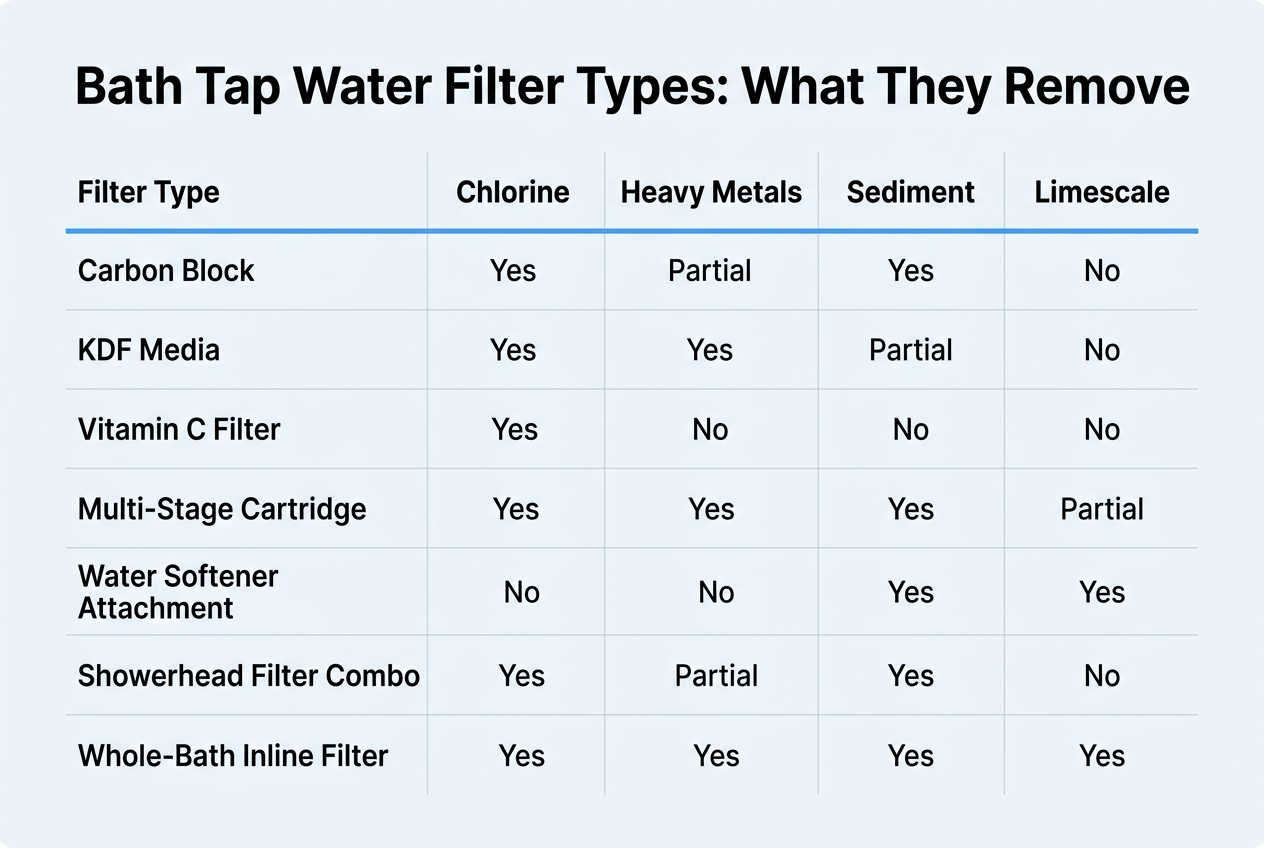
Not all filters fight the same battle. Some knock out chlorine and stop there. Others go after chloramine, heavy metals, PFAS, and microplastics too, which matters a lot if you're dealing with eczema or a baby's sensitive skin. Certification standards like NSF/ANSI 53 and NSF/ANSI 401 give you a way to check claims instead of just trusting a label. Before buying, it helps to understand how chlorine affects breakouts so you know what you're actually solving for.
| Filter Type | Contaminants Reduced | Certification | Flow Rate / Lifespan | Cost Per Month |
|---|---|---|---|---|
| Basic KDF cartridge | Chlorine only | None claimed | 2.5 GPM / 2-3 months | $8-12 |
| Carbon block sink filter | Chlorine, some heavy metals | NSF/ANSI 53 (partial) | 1.8 GPM / 2 months | $12-18 |
| Multi-stage showerhead filter | Chlorine, chloramine, PFAS, microplastics | NSF/ANSI 53 and 401 | 2.0 GPM / 2-3 months | $15-25 |
| Ball-style bath filter, like the Crystal Quest Bath Ball Water Filter | Chlorine, chloramine, sediment | Manufacturer-tested, no NSF listing | Gravity fed / 1 month | $20-30 |
| Antibacterial micro filter add-on | Bacteria, chloramine, rust | Lab-tested independently | 1.5-2 GPM / 1-2 months | $10-15 |
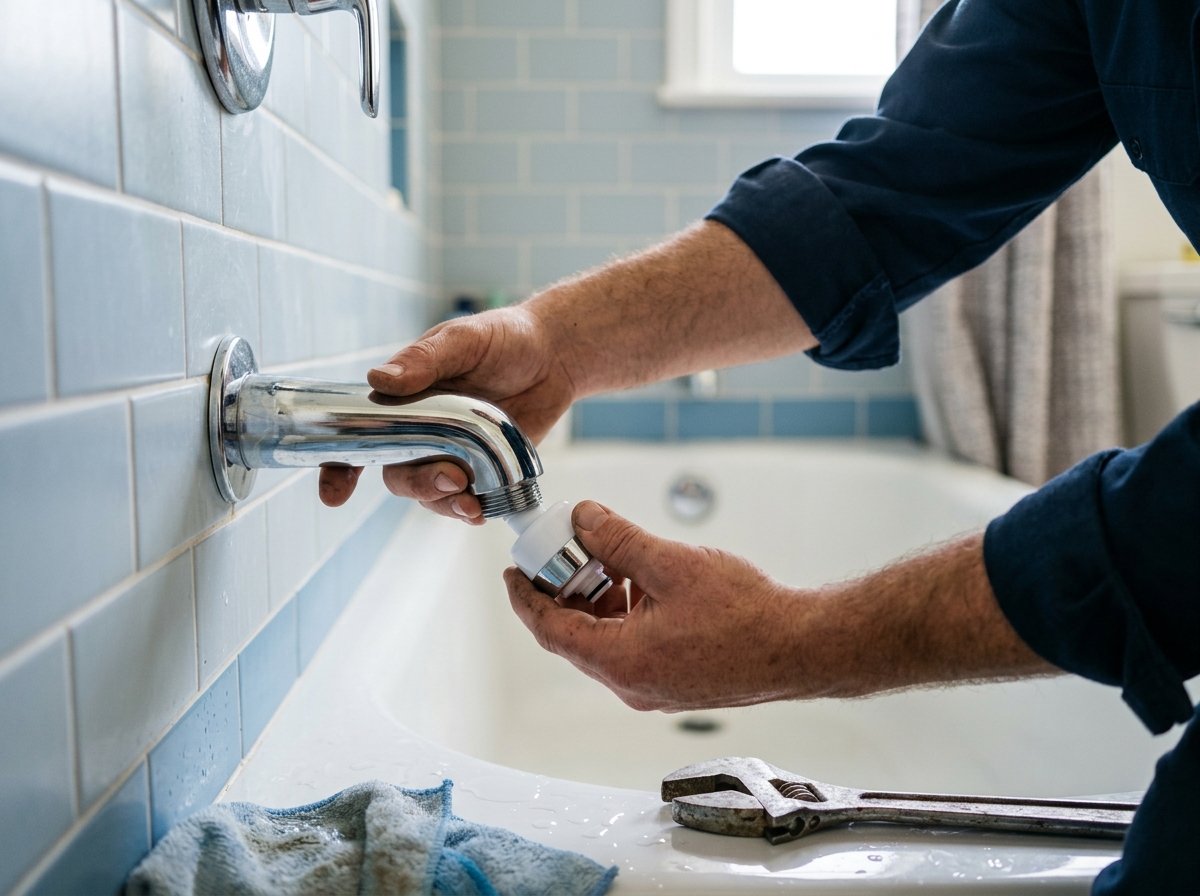
Installation difficulty tracks pretty closely with performance. A basic cartridge screws on in minutes. A multi-stage system usually needs a mount and hose adapter, so budget an extra ten minutes and maybe an adjustable wrench. Flow rate matters too — anything below 1.5 GPM will feel like a weak trickle, especially in older homes with already-low pressure. If a filter promises to remove 75 or more contaminants but skips certification numbers entirely, question that claim. Cheap filters that only tackle chlorine are fine for basic dryness, but if chloramine or PFAS exposure is your real concern, you'll need something built for that specific job.
How Vitamin C and Mineral Additives Support Skin During Bathing
Why vitamin C infusion matters
Chlorine doesn't just disappear once it hits your skin. It keeps reacting, pulling at lipids and proteins in a slow process called oxidative stress. Vitamin C works as a reducing agent, meaning it neutralizes residual chlorine on contact before it can do much damage. That's the whole point of infusing it into a filter cartridge rather than just applying it as a serum afterward.
Some infused filters go a step further and add other antioxidants alongside the vitamin C, aimed at supporting barrier repair and giving skin a visible glow over time. Think of it less as a dramatic overnight fix and more like a cumulative effect, similar to how a vitamin C serum builds results over weeks. The difference is timing: the treatment happens while water is still running, not after you towel off.
This matters most for people with reactive or compromised skin barriers, where every extra minute of chlorine exposure counts. If you already deal with redness or tightness after showers, an infusion-based approach targets the irritant at the source rather than patching things up later. It's a small shift in sequence. But it changes the whole equation.
Combining filters with bath salts and clays
Magnesium-rich bath salts, Epsom salt being the classic example, pair well with filtered water because they're solving a different problem entirely: muscle relaxation and topical mineral absorption, not contaminant removal. Once chlorine and heavy metals are already filtered out, magnesium can do its job without competing against oxidizers in the water. Many people notice better results from soaking rituals once the water itself isn't working against them.
Adsorbent clays, like bentonite or kaolin, work by binding trace metals and oils on the skin's surface, and they add a nice spa-like ritual to a bath. But treat them as a finishing touch, not a filtration substitute. A clay soak can't remove chloramine from the water you're sitting in. For parents bathing infants, it's worth separately learning how a bathtub water filter for babies handles fill-spout exposure, since tub-filling works differently than a showerhead setup.
The smartest sequence is simple: filter first, treat second. Let the filtration handle contaminants, then layer on salts, clays, or oils for the sensory and mineral benefits. Skip the order, and you're just soaking in prettier-smelling chlorine.
Choosing the Right Filter for Sensitive Situations
Not every household needs the same setup. If you're bathing a baby, chloramine and bacterial load should top your checklist, since infant skin has a thinner barrier and reacts fast to disinfection byproducts. Look for stage filtration that specifically names chloramine reduction, not just "chlorine removal" — the two aren't the same thing, and plenty of budget filters skip the harder job. A basic add-on like a Bath Ball Filter for Bathtub Faucet can work as a low-cost supplement for tub fills, though it won't replace a full shower-line filter for daily use.
Eczema is trickier. You want documented results, not marketing copy. Ask whether a filter has been dermatologist-tested and whether flare-up reduction was actually measured, versus just implied. Clinical backing matters more here than fragrance or packaging. Anti-aging shoppers, meanwhile, tend to do better with collagen or antioxidant-infused cartridges that target hair brittleness and skin dullness together, since aging skin and color-treated strands both suffer from oxidative stress in tap water. K-beauty devotees usually have a preference already: filters manufactured and tested in South Korea, where much of the innovation in this category originates. That's not brand loyalty for its own sake — Korean skincare science has driven a lot of what shows up in filtration formulas today.
Color-treated hair has its own rulebook. Chlorine oxidizes dye molecules, which is why colorists so often blame "hard water" when a fresh dye job fades in three washes flat. A filter that meaningfully cuts oxidizer exposure — not just sediment — will preserve tone longer. Bottom line: match the filter to your actual problem, not the prettiest label on the box.
Installing and Maintaining a Filter: Step-by-Step
Most filters go on in under fifteen minutes, no plumber required. That said, the order of operations matters more than people expect — skip a step and you'll end up with leaks, weak pressure, or a mount that wobbles every time you reach for the tap.
Here's the basic sequence, whether you're working on a showerhead, a tub spout, or a sink fixture.
| Step | What You Do | Why It Matters |
|---|---|---|
| 1. Shut off water | Turn off the supply and remove the existing showerhead or tap fitting | Prevents spraying and lets you inspect the old threading for rust or mineral buildup |
| 2. Add adapter if needed | Attach a mount or hose adapter kit for handheld, wall-mounted, or non-standard fixtures | Standard filters use ½-inch NPT threading; irregular fixtures need a bridge piece |
| 3. Attach housing | Screw on the filter housing and hand-tighten with the included seal or plumber's tape | Overtightening with a wrench can crack housing seams |
| 4. Flush the line | Run water for about 60 seconds before use | Clears loose carbon dust left over from the filtration media |
| 5. Set a replacement schedule | Swap cartridges every 2–3 months, or per manufacturer guidance | Spent media stops trapping chlorine and can become a breeding ground for bacteria |
Bathtub filters follow a slightly different path since they attach over the spout rather than in-line. If you're weighing options for a standalone bath rather than a shower system, it's worth comparing a ball-style unit — you can Buy The Tru Bath Water Filter W/Cartridge as one example of that format. Whatever you choose, don't eyeball the replacement timeline. Subscription reminders or a recurring calendar note solve the single biggest failure point in filter ownership: forgetting. A filter running past its lifespan isn't really filtering anymore — it's just an expensive pipe fitting.
Signs a Filter Is Working and When to Replace It
Signs of filter performance decline
You don't need lab equipment to know a filter is doing its job. The first clues show up fast, usually within a week or two of switching to filtered bath water. Water often feels softer against your skin, and you'll notice less of that filmy soap scum ring around the tub. That's a real, physical signal, not a placebo effect.
Give it a few more weeks and the bigger changes show up. Consistency matters more than any single shower when judging whether filtration is actually helping your skin and hair. Here's what longer-term improvement tends to look like:
- Scalp itchiness and flaking ease up, especially if you deal with eczema or a naturally sensitive scalp;
- Eczema patches on the arms, legs, or torso calm down and flare less often after bathing;
- Breakouts along the jawline, chest, and back become less frequent, particularly for those prone to body acne;
- Hair feels less brittle at the ends and color-treated strands hold their tone longer between salon visits;
- Skin stays hydrated longer after towel-drying instead of tightening up within minutes.
On the flip side, watch for fading performance: dropping water pressure, a return of chlorine smell, or visible discoloration in the cartridge itself. Those are your cue that filtration has stalled out. If you want a broader sense of how different systems perform over time, this roundup of tested bath filter options is a useful reference point.
Replacement schedule best practices
Most cartridges are rated for two to four months, depending on your household's water hardness and how many people are showering daily. Hard water and heavy use shorten that window considerably. Set a calendar reminder rather than waiting for symptoms to return. Stocking multi-pack replacements ahead of time keeps your skin protected without a gap in coverage.
If your bath water is quietly undoing the good your skincare routine works so hard to do, it might be time for a simple upgrade. Helios Filter's showerhead and sink filters are clinically tested in South Korea and dermatologist-tested on over 200 adults, reducing 75+ contaminants like chlorine, PFAS, and microplastics so your skin and hair can actually benefit from every rinse. Explore the Helios Filter lineup online today and give your daily shower a gentle, skin-first reset.
Share:
10 Best Sink Water Filter Systems for Cleaner Skin in 2026
The Best Water Filters for Sink Use, Ranked for Skincare