

You've upgraded your serums, swapped in gentler cleansers, and still your skin feels tight, flaky, or breakout-prone by midweek. The culprit might not be your routine at all. It could be what's coming out of your tap. Chlorine, chloramine, and heavy metals in unfiltered water strip natural oils and aggravate sensitive, eczema-prone, or aging skin every time you wash your face or bathe. Finding the best water filter for sink use can quietly fix what your $80 moisturizer never could, and these nine dermatologist-informed picks make choosing one simple.
How sink water quality affects your skin and haircare routine
Why sink filtration matters beyond drinking water
Most people think about filtering water they drink. They forget the sink they wash their face in every morning. That's a mistake. Your skin sits in that water for a full minute or more during cleansing, and whatever's dissolved in it soaks in right alongside your cleanser. Chlorine and chloramine strip natural oils from the skin's surface, breaking down the lipid barrier that keeps moisture locked in and irritants out.
Once that barrier's compromised, skin gets tight, flaky, and more reactive to everything else you put on it. Researching tap water effects on hair and skin makes it clear this isn't a minor cosmetic issue but a daily, cumulative exposure. Think of it like sunscreen: skip it once and nothing happens, skip it for years and you'll notice.
Common contaminants found in unfiltered tap water
Chlorine and chloramine get most of the attention, but they're not alone. Heavy metals, PFAS, and microplastics build up in municipal supply lines and show up in trace amounts at your faucet. None of these show up on the label of your water bill, which is precisely the problem. Over months of daily washing, that exposure adds up, quietly working against whatever routine you've built.
Here's the part skincare fans miss: contaminated water residue sits on your skin before your serum ever touches it. Apply a vitamin C serum or a peptide cream over that film, and you're not getting the absorption you paid for. Shoppers browsing the Best Under sink filtration options often discover this gap only after their products stop performing the way they used to.
Some groups feel it faster and harder. Babies have thinner, more permeable skin, so chloramine exposure hits sooner. Eczema sufferers deal with flare-ups triggered by the same irritants. And color-treated hair fades quicker under mineral-heavy, chlorinated water. If that's you, filtration isn't optional — it's damage control.
What to look for in the best water filter for sink use
Certifications and lab testing explained
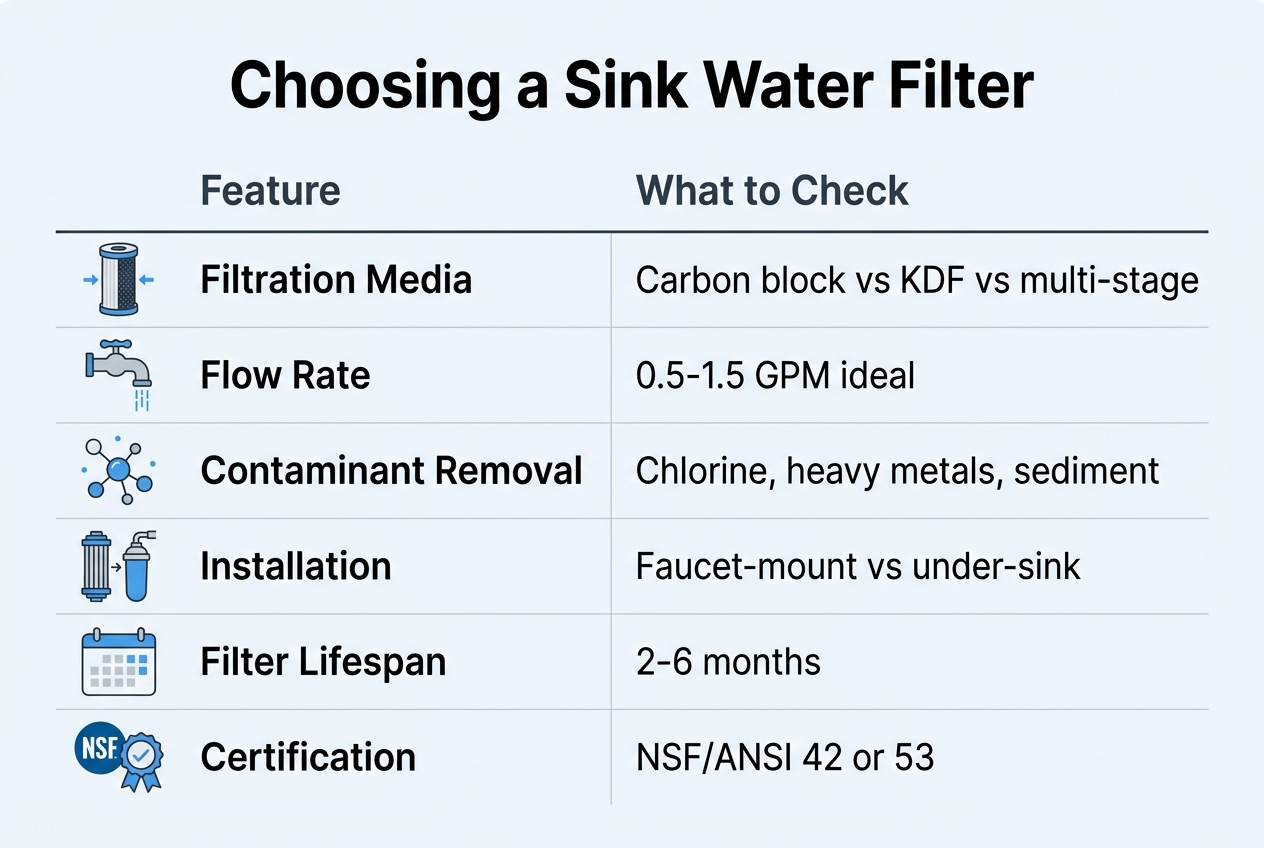
Not all filters that claim to purify are tested the same way. Before you buy, get familiar with the actual standards behind the marketing. NSF/ANSI 53 covers reduction of health-related contaminants like lead and certain volatile chemicals, while NSF/ANSI 401 targets emerging contaminants such as pharmaceuticals and pesticides. A filter carrying both is doing more work than one with vague "purifies water" language and nothing to back it up.
Here's what actually separates a serious filter from a gimmick:
- Look for documented reduction of 75+ contaminants, including PFAS, chlorine, chloramine, and microplastics, rather than a generic "removes impurities" claim.
- Prioritize results from an independent lab over numbers generated by the manufacturer itself, since self-reported data has an obvious incentive problem.
- Check whether dermatological or skin-safety testing was involved, especially if you're buying the filter specifically for eczema, acne, or sensitive skin concerns.
- Confirm the country of manufacture and whether that region has strict water-treatment product standards, which often correlates with more rigorous quality control.
- Read the fine print on which contaminants were actually tested, since some filters are strong on sediment but weak on chemical reduction.
If you want a deeper breakdown of what "skin-safe" filtration should actually mean, it's worth reading how a sink filter for skin is expected to perform under daily use rather than lab-only conditions.
Filter lifespan and replacement costs
Lifespan matters more than sticker price. A cheap cartridge that needs replacing monthly can cost more over a year than a pricier one rated for 3-6 months. Most sink filters fall somewhere in that range, though heavy household use shortens it. Factor in cartridge cost, not just unit cost, and check if subscription or auto-replacement options exist — skipping a swap is the easiest way to undo all the filtration benefit you paid for.
If you're comparing broader systems beyond a single faucet attachment, browsing options like under-sink water filter systems can help you gauge typical pricing and cartridge intervals before committing. Either way, budget for the ongoing cost, not just the initial purchase.

Vitamin C and mineral-infused sink filters for skincare benefits
How vitamin C infusion works in a sink filter
Standard carbon filters trap sediment and reduce chlorine taste through absorption alone. That's fine, but it's a one-trick approach. A vitamin C-infused cartridge adds an active ingredient into the mix, one that reacts chemically with chlorine and chloramine rather than just filtering them out. The result is water that's gentler the moment it hits your skin, not just cleaner on paper.
Vitamin C, or ascorbic acid, neutralizes chlorine through a fast reduction reaction, converting it into a harmless compound. This matters at the sink because facial skin is thinner and more reactive than skin on your body. Some research even points to health benefits you didnt know a water filter provides, beyond the obvious chlorine reduction people expect. Less chlorine contact at the sink can mean less stripping of the skin barrier during your morning and nightly cleanse.
These filters suit anyone washing faces, hands, or baby bottles and pacifiers at the sink, where water contact is frequent but brief. Parents rinsing infant items benefit especially, since babies' skin barriers are still developing. Pair it with your shower filter and you've covered water contact from head to toe. One rinses your body, the other handles your face. That's a complete routine, not a half measure.
Antibacterial and multi-stage core filters compared
Not all cartridges do the same job, and that matters more than people think. A single-stage cartridge usually relies on one media type, often carbon, to catch chlorine and sediment. A 3-stage system layers different media so each stage targets something different: sediment first, then chemical reduction, then a polishing stage for finer particles. It's more thorough, but there's a cost in complexity and sometimes price.
If your municipal supply uses chloramine instead of straight chlorine, you'll want to pay attention here. Chloramine is more stable and harder to strip out than chlorine, which is exactly why antibacterial filters exist. They're built to handle that lingering disinfectant along with bacterial growth risk inside the cartridge itself. For households managing eczema or reactive skin, a purifying core filter that targets a wider contaminant range tends to matter more than raw speed. Anyone doing broader research on under sink water filtration systems will notice this trade-off comes up constantly across brands, not just one.
| Filter Type | Stages | Best For | Flow Rate Impact |
|---|---|---|---|
| Single-stage cartridge | 1 | Basic chlorine/sediment reduction | Minimal |
| 3-stage carbon system | 3 | Broader contaminant reduction | Slight decrease |
| Antibacterial micro filter | 2-3 | Chloramine-heavy municipal water | Moderate decrease |
| Purifying core filter | 3+ | Sensitive skin, eczema-prone households | Noticeable decrease |
So which one wins? Depends what you're optimizing for. More stages generally means slower flow, since water has to work through denser media. That's not a flaw, it's physics. If your skin reacts to nearly everything, slower and more thorough is the better trade. If you just want basic chlorine relief without a plumbing project, single-stage still gets you most of the way there.
Specialty filters for anti-aging, glow, and hydration goals
Not every filter is chasing the same goal, and that's actually good news. Once you know your skin's biggest complaint, you can pick a filter built around that problem instead of grabbing whatever's cheapest. Glow-focused filters usually target mineral buildup — the chalky residue from hard water that sits on skin and dulls it over time, even after a good cleanse. Anti-aging filters lean on marketing around collagen support and barrier repair, often citing reduced oxidative stress from chlorine exposure. Hydration filters are simpler: they're built for dry, tight, flaky skin and promise a barrier that holds moisture better.
Matching a filter to your skin concern
Skip the "one filter fits all" mindset. Different concerns call for different filtration priorities, so it helps to think through what's actually bothering you before you buy anything.
- If your skin looks flat or grayish by midday, a glow-targeted filter addressing mineral scale is probably the better match than a generic carbon filter.
- If fine lines and sagging worry you more, look for filters that mention barrier-support testing alongside collagen claims, not just vague "anti-aging" language on the box.
- If dryness and flaking are your main issue, prioritize hydration-focused options with documented moisture-retention results over ones that only advertise softer water.
- If you're dealing with color-treated hair fading fast, a filter that reduces oxidative chlorine exposure matters more than one built purely for skin glow.
- If sensitivity or redness flares after showers, a barrier-repair filter paired with antibacterial filtration tends to help more than a single-purpose glow product.
Because claims vary so widely between brands, comparing independent testing before you commit is smart; many shoppers start by reading up on personally tested filter performance rather than trusting marketing copy alone. A filter chosen for the wrong concern won't hurt you — it just won't do much either. Match the tool to the actual problem, and you'll get results worth noticing.
Best water filter for sink: top picks ranked by skin and hair benefits
Ranking methodology
Not every sink filter deserves a spot on your countertop. We ranked options using four criteria: how many contaminants they actually reduce, whether independent labs or recognized certifications back those claims, whether skin-safety testing exists beyond marketing copy, and price per month of use. A filter that removes chlorine but ignores PFAS and heavy metals isn't doing your skin many favors. Certifications matter more than star ratings, honestly. NSF/ANSI 53 and 401 standards test for specific health-related contaminants, so a product carrying either badge has cleared a bar that most bargain filters never even approach.
Quick comparison of top picks
Here's a side-by-side look at how each pick performs across the categories that matter most for skin, hair, and household needs.
| Pick | Best for | Key spec | Approx. cost |
|---|---|---|---|
| Dermatologist-tested multi-stage filter | Sensitive skin, eczema households | Reduces 75+ contaminants; tested on 200+ adults | $$ |
| Antibacterial core filter | New parents, chloramine concerns | NSF/ANSI 53-aligned; targets chloramine and bacteria | $$ |
| Vitamin C-infused sink filter | K-beauty and glow routines | Neutralizes chlorine; Korea-manufactured, lab-tested | $$$ |
| Collagen-boost filter | Anti-aging, color-treated hair | Mineral infusion; reduces oxidative water stress | $$$ |
| Basic carbon cartridge filter | Renters, small households | Reduces chlorine taste/odor; easy tool-free install | $ |
For eczema-prone skin, prioritize filters with published dermatology testing rather than vague "gentle formula" claims. Parents worried about chloramine should look for antibacterial-rated cartridges, since standard carbon alone struggles with it. Glow-focused shoppers often prefer vitamin C infusion for the immediate skin-feel difference. If longevity and hair color retention matter, mineral-based filters tend to outperform basic carbon. And if you're renting or just need something functional, a no-frills cartridge does the job without commitment. Before buying anything, it's worth comparing broader market options, and the independently tested roundup on Best Faucet filters offers a useful sanity check on performance claims across brands.

Installation, maintenance, and replacement schedule
Getting a sink filter running isn't a plumbing job. Most faucet-mount units clip onto standard threads in a few minutes, while under-sink systems need a bit more patience since you're working with the cold-water line and a diverter valve. Either way, you don't need a wrench collection or a service call.
Step-by-step installation basics
Start by shutting off the water supply, then remove your existing aerator if you're doing a faucet mount. For under-sink units, you'll connect the inlet tube to the cold line, run the outlet to a dedicated spout or your existing faucet, and secure everything with the included clamps. An adjustable wrench, plumber's tape, and a small bucket for drips are really all you need. Budget 15 to 30 minutes for a faucet mount, closer to 45 for under-sink setups. Curious how this plays out for real households? Plenty of homeowners compare notes on setup snags and results after reading how people with water filter systems under the sink rate the process themselves.
Setting up a replacement subscription
Cartridge life depends on household use, not the calendar. Here's a rough cadence to plan around:
| Pack size | Typical duration | Best for |
|---|---|---|
| 2-pack | 2–4 months | Single users, light use |
| 4-pack | 4–8 months | Couples, small households |
| 12-pack | 12–18 months | Families, heavy daily use |
Watch for weaker water pressure, odd tastes, or a faint sulfur-like odor. Any of those means it's time. Waiting too long just means drinking water that's barely better filtered than the tap, so don't get lazy about it.
Frequently asked questions about sink water filters for skincare
Can a sink filter actually clear up acne and dryness?
Sometimes, yes, but not by itself. Chlorine and hard water minerals strip natural oils and disrupt your skin barrier, which can worsen breakouts and flaking. A quality sink filter reduces that irritation load, so your cleanser and moisturizer work the way they're supposed to. It won't erase hormonal acne or eczema on its own. Think of it as removing one aggravator, not a cure.
Does it remove PFAS and microplastics, and does the testing mean anything?
Good carbon-block or multi-stage filters can meaningfully reduce PFAS, microplastics, and chloramine, though results vary widely between brands and cartridge age. Dermatologist testing on real skin panels is more meaningful than a marketing claim alone, especially when paired with recognized standards like NSF/ANSI 53 or 401. Before buying anything, it's worth learning what's actually in your local supply by checking a water filter buying guide that cross-references contaminants by zip code. That context tells you which claims actually matter for your water.
Sink versus whole-house or pitcher filters
Pitcher filters are cheap but slow and limited in scope. Whole-house systems treat everything, at a much higher upfront cost and with less targeted filtration at the tap. A sink filter sits in the middle: focused, affordable, and easy to swap out every few months.
Are infused filters safe for babies and sensitive skin?
Generally yes, since infusion cartridges typically release trace vitamin C or minerals, not active drugs. Still, check ingredient sheets before using one on a newborn or eczema-prone skin, and introduce gradually.
If you're ready to give your skin a break from the hidden contaminants in your tap water, the Helios Sink Filter enhanced with Vitamin C is a genuinely thoughtful place to start, especially knowing it's been dermatologist-tested on over 200 adults and lab tested to reduce more than 75 contaminants like chlorine and microplastics. Visit Helios Filter online to explore their sink filters and bundles, and see for yourself why over 100,000 customers have made the switch to cleaner water at home.
Share:
Bath Tap Water Filters: Do You Need One for Softer Skin?
Can Hard Water Cause Dandruff? The Science Explained