
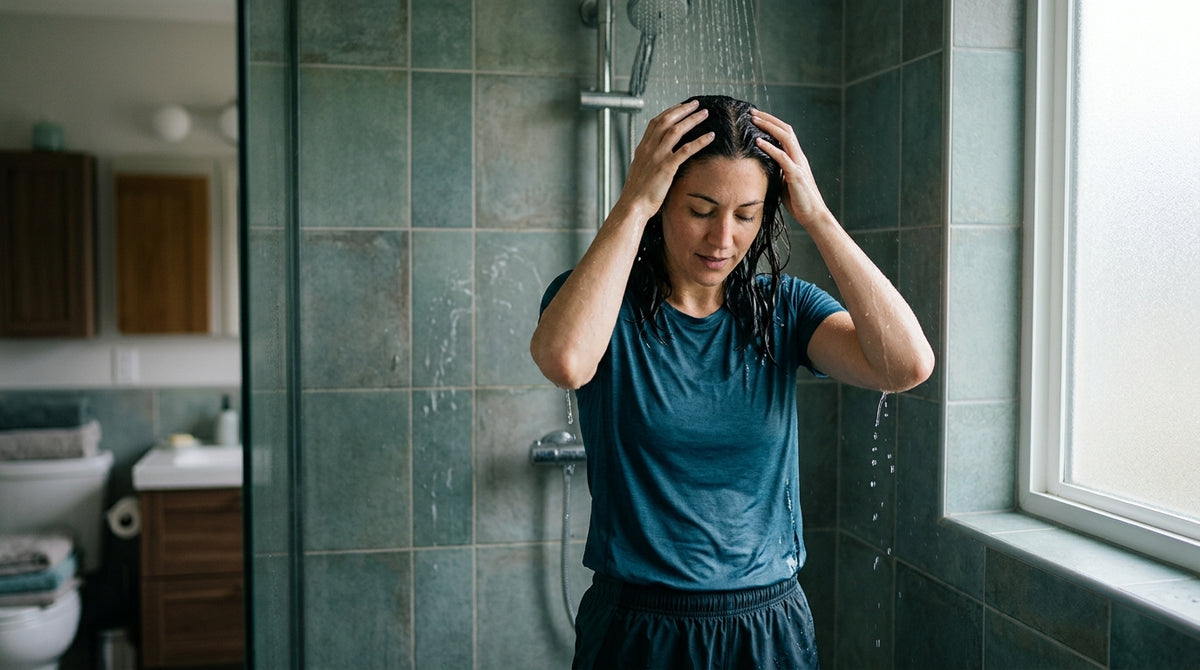
You've bought another clarifying shampoo, and your hair still feels coated, dull, or strangely brittle by day three. Here's the uncomfortable truth: no formula can fully undo what hard water deposits on your strands and scalp every single shower. Below, we've tested and ranked the nine best clarifying shampoos of 2026 for tackling mineral buildup, product residue, and scalp congestion. But we'll also show you why the real fix might not be in the bottle at all. It might be in your pipes.
How to Know You Need a Clarifying Shampoo
Buildup vs. Hard Water Damage: Spotting the Difference
You know the feeling. Your hair looks flat by day two. No volume, no shine, like it's coated in something you can't quite name. That's usually buildup. Watch for shampoo that won't lather properly, conditioner that seems to sit on top of your strands instead of soaking in, and a scalp that flakes even though it doesn't feel dry. Buildup is a physical layer, and it's fixable with the right wash.
The usual suspects are pretty predictable. Dry shampoo is a big one, since that powder has to go somewhere, and it's rarely all rinsed out. Gels, mousses, and heat-protectant sprays layer on similarly. Chlorine from pools adds its own residue, and if you're curious whether it's doing more than dulling your hair, learning about does chlorine in tap water cause acne is worth your time too, since skin and scalp react to the same exposure.
Here's the twist: hard water minerals create a film that looks and behaves almost exactly like product buildup, but no amount of styling gel caused it. Calcium and magnesium bond to the hair shaft and to skin, leaving hair dull and scalp skin drier, sometimes triggering eczema flare-ups that seem to come from nowhere. This film is invisible until you see the effects.
Buildup vs. Hard Water Damage: Spotting the Difference
So how often should you actually clarify? Once a week is the standard rule for most hair types, and it works well for straight, non-treated, low-porosity hair that handles a stronger cleanse without complaint. Anything more frequent risks stripping natural oils you actually want to keep.
Curly and color-treated hair need a lighter touch, though. Every two to three weeks is usually plenty, since curls rely on natural oils for definition and dye jobs fade faster under harsh detergents. If you're weighing specific products against each other, a side-by-side Clarifying Shampoo Showdown ~ Which One WON? comparison can help you gauge strength before committing your color-treated strands to anything too aggressive. When in doubt, start less often. You can always clarify again next week.

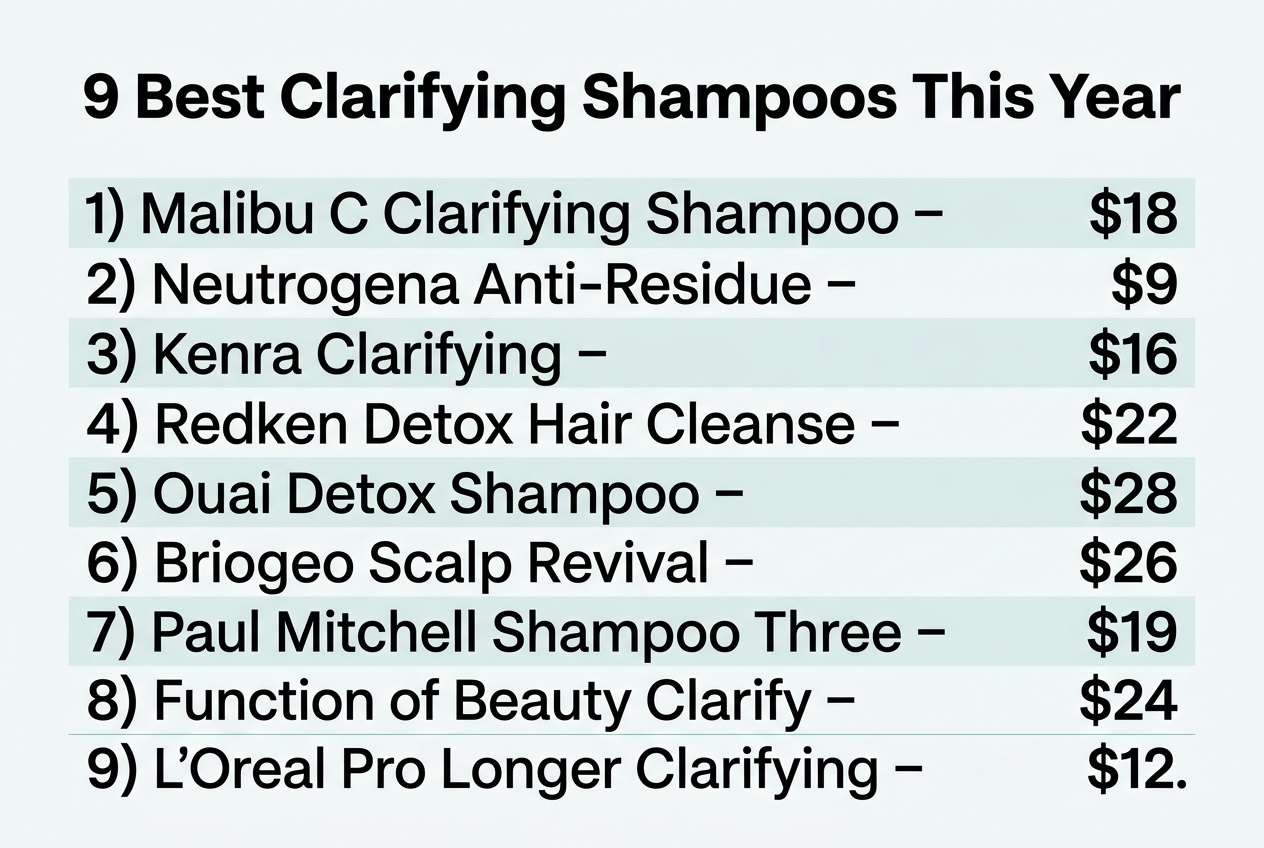
9 Best Clarifying Shampoos to Try This Year
Not every clarifying shampoo is created equal, and picking the wrong one can leave curls crunchy or color faded fast. Some lean on sulfates for a deep, no-mercy cleanse. Others use gentler chelators or apple cider vinegar to lift buildup without stripping everything in sight. Here's a breakdown of nine worth knowing, organized by price, so you can match the product to your hair type and your wallet.
Budget Picks
These options won't break the bank, and most are easy to find at any drugstore. If your hair has color treatments, be cautious with the sulfate-heavy formulas below, since they can fade dye faster than you'd like.
- Garnier Fructis Pure Clean ($5-7) uses sulfates for a strong cleanse, works well for straight or oily hair, but it's too harsh for color-treated strands.
- Aveeno Apple Cider Vinegar ($8-10) relies on apple cider vinegar instead of sulfates, making it a gentler pick for curly or color-safe routines.
- Neutrogena Healthy Scalp Clarify ($9-11) targets oily scalps and mild dandruff, with a light chelating agent that won't overwhelm fine hair.
- Curlsmith Curl Reset Detox ($18-22) sits between budget and salon tiers, formulated specifically for curls needing buildup removal without disrupting curl pattern.
Salon-Quality Options
Spend a bit more and you'll typically get better-balanced formulas, ones that clarify without leaving hair feeling like straw. Estheticians and stylists tend to recommend these when clients mention dullness or scalp buildup during a consultation. If you're curious how far the research goes on this topic, a well-known beauty editorial roundup of very best clarifying shampoo picks breaks down formulas dermatologists and colorists actually favor.
- Paul Mitchell Shampoo Two ($18-20) is a classic sulfate-based clarifier, best reserved for oily or product-heavy hair rather than color-treated strands.
- Kenra Clarify ($16-19) uses chelating agents to remove mineral deposits, a smart choice if hard water is your main culprit.
- Moroccanoil Clarifying ($28-32) is color-safe and gentle enough for weekly use, with a light chelator that suits dry or curly hair types.
- Bumble and Bumble Sunday ($30-34) remains a salon staple, sulfate-based but formulated to be less drying than older clarifying shampoos.
- Ouidad Water Works ($26-29) is built specifically for curls fighting hard water buildup, and it's genuinely color-safe.
Worth noting: no shampoo, however well-formulated, fixes the root problem if your water is loaded with minerals to begin with. That's a maintenance issue, not a product one. Pairing any of these with a filtration step, the kind covered in a broader look at clean water for a healthy complexion, tends to stretch the time between clarifying sessions considerably.
Clarifying Shampoo vs. Chelating Shampoo: What's the Difference
People use these two terms like they're interchangeable. They're not. A clarifying shampoo relies on stronger surfactants to strip away oil, styling product buildup, and everyday dirt. Think of it as a deep clean for your scalp and strands. A chelating shampoo works differently — it uses ingredients like EDTA or citric acid that literally bind to metal ions and mineral deposits, which makes it far more effective against hard water residue and chlorine buildup from pools. Reading up on soft water vs hard water whats the difference helps explain why one formula outperforms the other depending on what's actually in your pipes.
Some products blur the line on purpose. Formulas marketed specifically for hard water, like Kenra's Clarify Shampoo, combine surfactant cleansing with chelating agents so you get both jobs done in one wash. Malibu C's Hard Water Wellness treatment does something similar. Worth knowing before you buy two separate bottles you didn't need.
Ingredient Labels to Check
The label tells you almost everything. Scan for these terms before you check out:
| Ingredient | What It Targets | Best For |
|---|---|---|
| Sodium Lauryl Sulfate | Oil, silicone, heavy product buildup | Weekly deep clean |
| Disodium EDTA | Calcium, magnesium, metal ions | Hard water areas |
| Citric Acid | Mineral deposits, pH balancing | Chlorine or pool exposure |
| Sodium Citrate | Water hardness minerals | Color-treated hair |
| Charcoal or Clay | Surface dirt, excess oil | Scalp buildup, dandruff flakes |
If your scalp feels waxy and your hair looks flat from product, grab the surfactant-heavy clarifier. If your ends feel like straw and color fades fast even with good products, that's a mineral problem. Reach for the chelating formula instead. Chasing the wrong fix just wastes a bottle and your patience.

Pros and Cons of Clarifying Shampoo for Different Hair Types
Not every scalp and strand handles a deep-cleanse the same way. Before you reach for the bottle, it helps to know where your hair type lands on the risk-versus-reward scale.
Best Practices by Hair Type
Color-treated hair takes the biggest gamble. Strong surfactants can strip dye molecules along with buildup, fading a fresh color job in one wash. Curly hair has its own issue: your curl pattern depends on natural oils, and a harsh clarify can leave coils frizzy and confused for days. Fine or oily hair, on the other hand, usually shrugs it off. You can clarify weekly without much drama. Scalp conditions change the math entirely, since fragrance and sulfates can trigger flare-ups rather than solve them.
| Hair Type | Main Risk | Suggested Frequency | What to Look For |
|---|---|---|---|
| Color-treated | Fading, dullness | Every 3-4 weeks | Color-safe, sulfate-free formula |
| Curly | Stripped oils, frizz | Every 2-4 weeks | Low-lather, moisturizing clarifier |
| Oily/fine | Minimal — over-washing rare | Weekly to biweekly | Standard clarifying shampoo |
| Eczema/psoriasis-prone scalp | Irritation, flare-ups | Every 4-6 weeks, or as tolerated | Fragrance-free, dermatologist-tested |
Curl-pattern folks often do better easing in with a gentler option, like a diluted version of Malibu C or a sulfate-free pick from Bumble and bumble, rather than jumping straight to a strong clarifier. If you're unsure where your hair falls, browsing real experiences on r/Haircare can give you a sense of what's worked for similar hair types before you commit to a full bottle. And if your scalp reacts to nearly everything, that's not a hair problem. It's a sign to slow down and simplify.
Why Hard Water Undoes Your Clarifying Routine
Testing Your Water Hardness at Home
Here's the frustrating part: you clarify, your hair feels great for a day, and then it's back to dull and coarse by the third shower. That's because calcium and magnesium in hard water don't rinse away clean. They bond to hair strands and settle into the scalp with every single wash, building a mineral film that gentle daily shampoo simply isn't strong enough to strip. Mineral buildup is why some people find themselves reaching for a clarifying formula weekly, even though they're doing everything else right.
Testing your water hardness takes about five minutes and costs less than a coffee. Drugstore test strips give you a rough number in grains per gallon; anything above 7 counts as hard, and much of the U.S. sits well above that, some regions past 15. Soap that won't lather, chalky residue on shower glass, and a bathtub ring that reappears overnight are all giveaways too. If you want a more thorough comparison of what's actually working right now, a roundup of clarifying shampoos tested for effectiveness is a useful starting point before you buy.
Once you know your number, the pattern makes sense. Higher hardness means faster buildup, means more frequent clarifying, means more stripping of natural oils in between. It's a cycle, not a coincidence. Dermatologists and estheticians increasingly point to that same mineral residue as a contributor to dry, flaky skin, eczema flare-ups, and stubborn dandruff, since the film left behind can irritate skin that's already compromised. Filtering water before it ever reaches your scalp or skin reduces how much mineral load builds up in the first place, which means less reactive irritation and less rebound dullness between washes.
Filtering Your Water to Reduce How Often You Need to Clarify
Here's the thing nobody tells you at the drugstore shelf: you can rotate through every bottle of clarifying shampoo on the market and still fight buildup every week if the water coming out of your shower is the actual source of the problem. A filtered showerhead with a vitamin-infused cartridge cuts down mineral deposits and chlorine hitting your hair and scalp before they ever get the chance to build up. Less mineral load means less buildup, which means less stripping. That's the whole equation.
DIY Install Steps for Renters
You don't need a plumber, a toolbox, or a weekend. Most filtered showerheads twist onto your existing arm in a few minutes, no tools involved, which makes them a genuinely good fit for renters who can't (or don't want to) modify plumbing.
- Unscrew your current showerhead by hand or with a wrench wrapped in a cloth to avoid scratching the finish.
- Wrap the exposed threads with plumber's tape if the new head doesn't include a rubber gasket.
- Twist on the filtered showerhead clockwise until snug, then hand-tighten only — overtightening can crack the housing.
- Run the water for sixty seconds before your first real shower to clear out any loose carbon dust from the cartridge.
- Mark your calendar for cartridge replacement, since performance drops off gradually and quietly once a filter's spent.
For a fuller approach, pair that showerhead with an under-sink filter for face and hand washing. The same hard water drying out your scalp is touching your skin every time you wash up. A subscription for replacement filters keeps performance steady instead of letting it fade unnoticed over months. It's also why estheticians increasingly recommend filtered water alongside in-office treatments: the session only works as well as what touches your skin every day after.
Building a Weekly Hair Care Routine Around Clarifying
Sample 7-Day Routine
Think of your week in layers, not chaos. Days one, three, and five call for a gentle, sulfate-free cleanse that keeps scalp and strands clean without stripping them raw. On day four, or whenever buildup feels heaviest, bring in the deep-cleaning wash. If you're shopping for one, browsing a solid clarifying shampoo lineup will show you the difference between light detox formulas and the heavier-duty ones meant for product buildup or chlorine.
The rest of the week is recovery. Days two and six get a moisture-focused conditioner, and day seven is a good night for a hydrating mask, especially if you color-treat or use heat tools often. Skipping days isn't lazy. It's smart. Overwashing is the fastest way to undo everything a good clarifying session accomplishes.
Keep a mental note of how your hair feels by Friday. Squeaky, tight, or flyaway? That's your cue to dial back frequency next week, not push through it.
Adjusting for Sensitive or Eczema-Prone Scalps
For kids or anyone with an eczema-prone scalp, clarifying should happen far less often. Every two to three weeks, not weekly. Their skin barrier is thinner and reacts faster to sulfates and fragrance. Always follow a clarifying wash with a moisture treatment or mask, no exceptions, since skipping that step is what turns a clean scalp into an itchy, flaking one by morning.
Here's the part people miss: clarifying is a once-in-a-while reset, but water quality works on you every single day. Filtered water is a passive, daily complement, not a substitute for the occasional deep clean. It softens what hits the scalp between washes, so there's less mineral residue for a clarifying formula to fight later.
For sensitive or eczema-prone scalps specifically, that daily softening matters more than any single product choice. Pair a mild routine with consistently gentler water, and you'll likely need clarifying sessions less often. And each one will do its job faster, with less irritation afterward.
Before you commit to anything, it's worth getting a clear picture of what your water actually contains — an independent hardness and mineral test, or a lab analysis if you're on a private well, will tell you far more than guesswork about whether minerals, chlorine, or something else entirely is behind the dryness and dullness you've noticed. From there, the question becomes one of scope: a whole-home softener installed by a licensed plumber treats every tap and appliance and carries the cost and plumbing work to match, while point-of-use filters on a showerhead or under the sink address only the water that touches your skin and hair, without any installation labor. Neither path is a medical fix, so if a persistent scalp or skin condition is driving the search, it's reasonable to talk to a dermatologist first and treat any water change as a supporting adjustment rather than the answer.
Share:
Why Hard Water Wrecks Your Skin (And How a Filtration Shower Head Fixes It)
Sulfate-Free Shampoo for Curly Hair: Does It Really Beat Hard Water Dullness?