
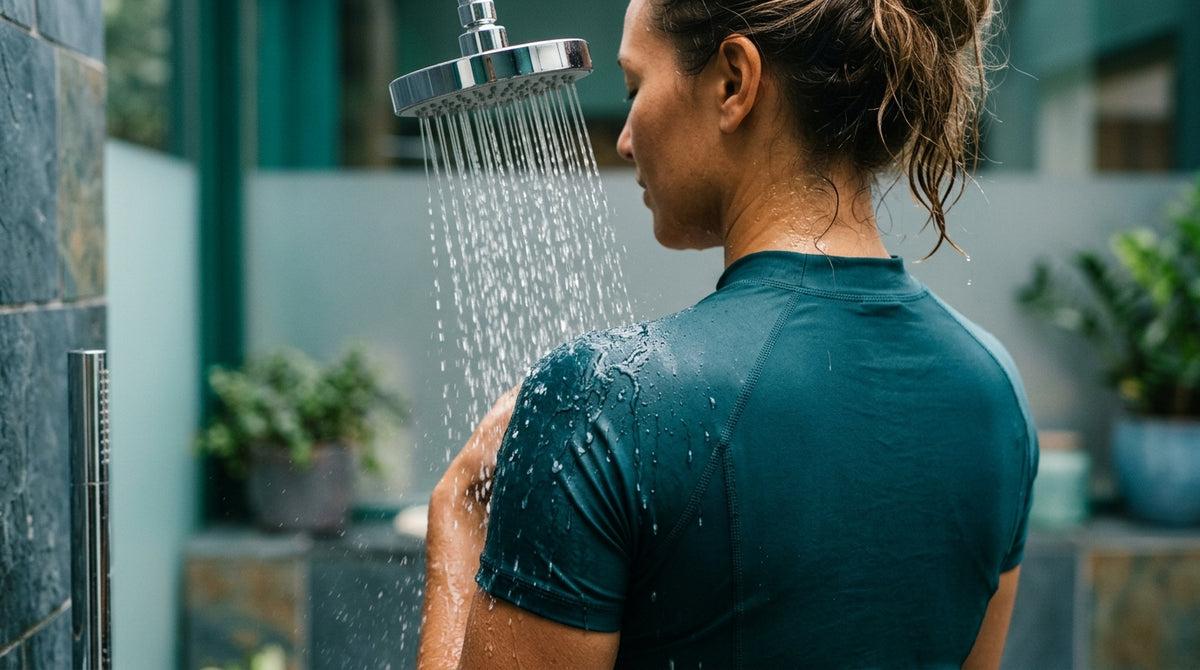
That tightness in your skin after every shower, the dull, brittle strands, the eczema flare that won't quit no matter how many creams you try — chances are, your water is working against you. Hard water minerals build up on skin and hair daily. They undo even the best routines. A quality filtration shower head can change that, and it doesn't require a plumber or a renovation budget. Below, we break down the seven best options worth installing this year, so you can start seeing (and feeling) the difference in days.
Why Hard Water Is Wrecking Your Skin and Hair
How mineral buildup affects the skin barrier
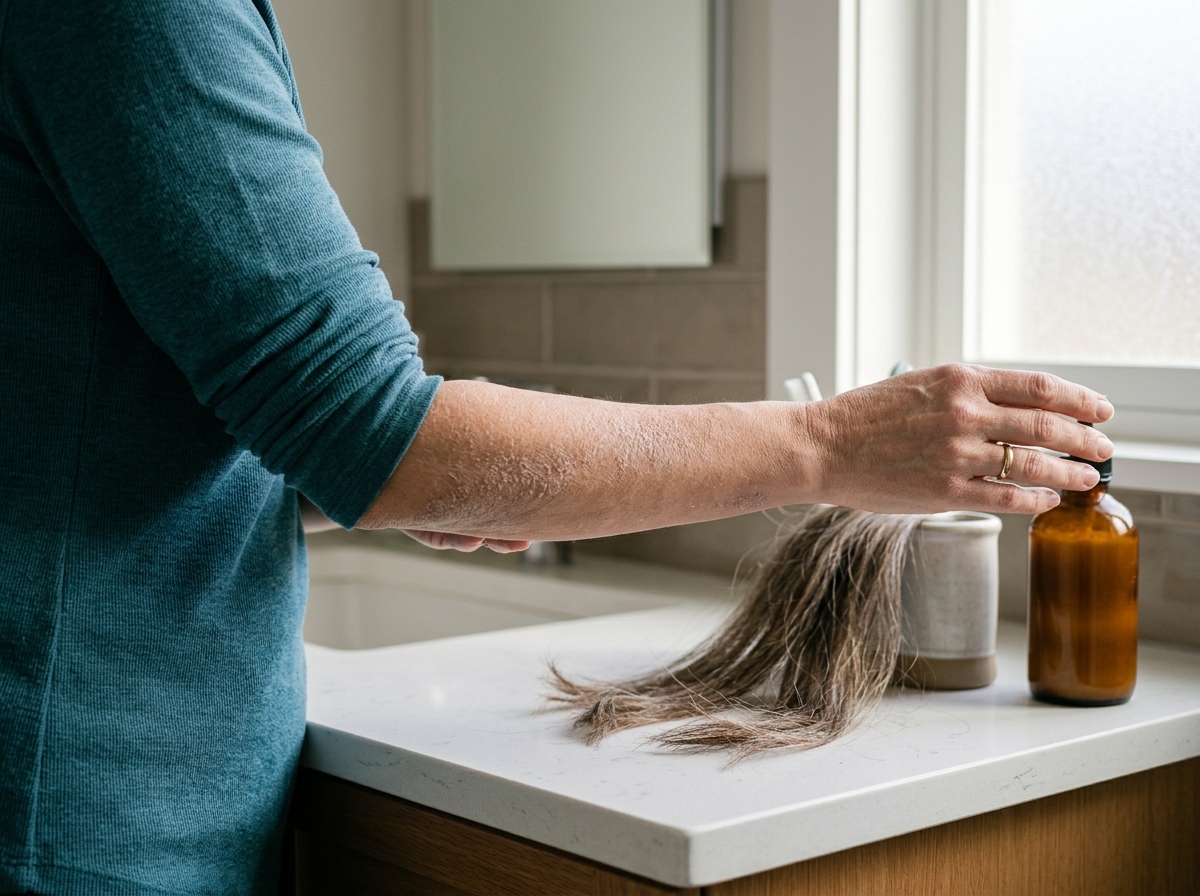
Every time you shower, calcium and magnesium in hard water settle onto your skin and hair like a fine, invisible crust. Add chlorine or chloramine, and you've got a one-two punch that strips away natural oils faster than your moisturizer can replace them. Dermatologists have started pointing directly at tap water quality when patients ask does hard water cause dry skin, and the answer is almost always yes. That mineral film also interferes with how soap rinses off, leaving residue that clogs pores.
Over time, this buildup damages the skin's outer barrier — the thin layer that keeps moisture in and irritants out. Once that barrier's compromised, eczema flares get worse. Redness lingers longer. Dandruff becomes a near-constant nuisance instead of an occasional bother. It's not just dryness. It's inflammation stacking on inflammation, week after week, shower after shower.
Signs your water might be the real culprit
Notice a white, chalky ring around your drain or faucet? That's hard water leaving its signature. If your skin feels tight within minutes of towel-drying, or your child's eczema flares mostly after bath time, mineral-heavy water is a likely suspect. Hair tells its own story too — dull, brittle strands, color that fades in weeks instead of months, curls that feel coated rather than defined. Some people even try a Filtered Shower Head with Handheld, 12 Replacement cartridge setup just to see if symptoms improve before assuming it's a product or skincare routine problem.
This is exactly why estheticians and dermatologists increasingly recommend filtering shower water before anything else. It's a cheap, low-effort fix compared to overhauling your entire routine. Many local businesses now mention water quality during consultations, especially for clients with stubborn, unexplained flare-ups. If your skin routine hasn't changed but your results have, the water's worth a second look.
How a Filtration Shower Head Works
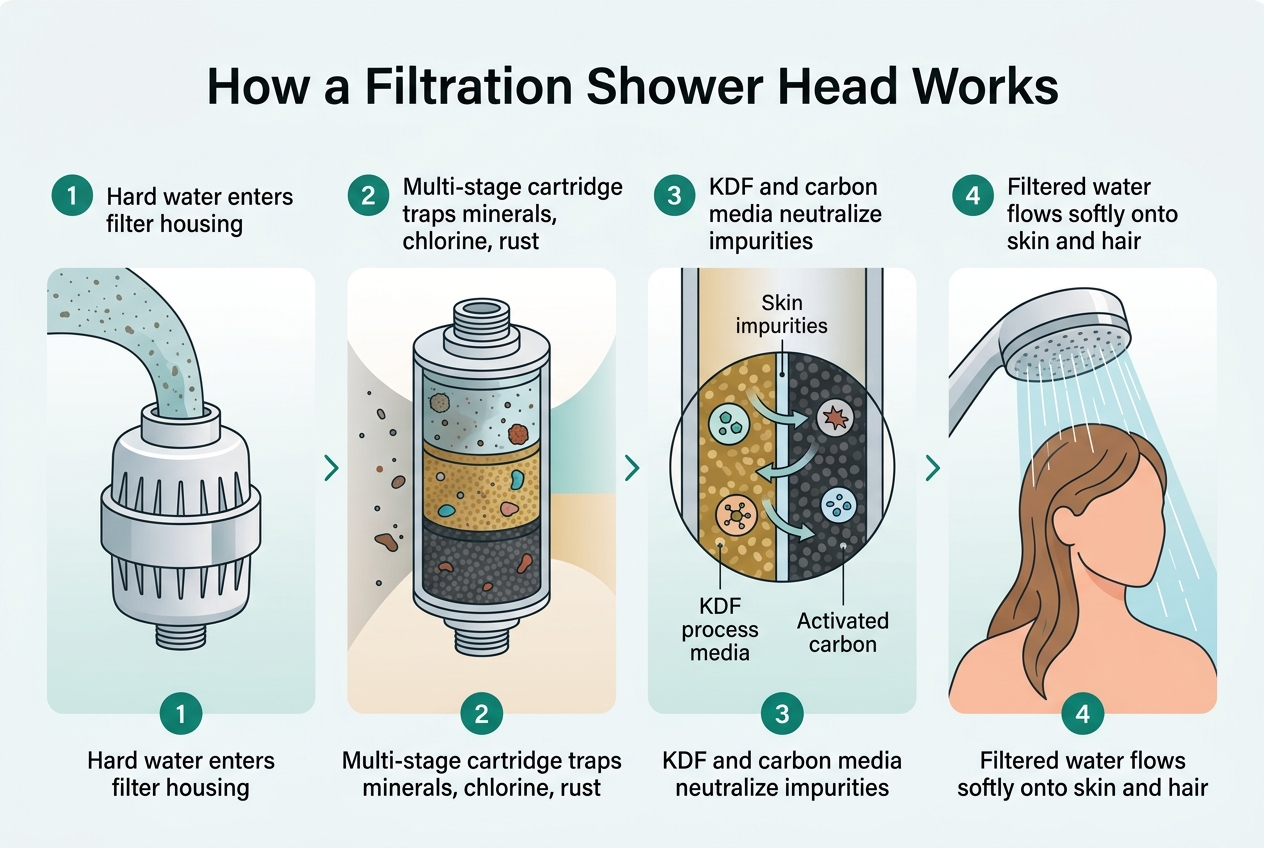
What's inside a typical filter cartridge
Pop open a cartridge and you'll usually find three players working together: KDF media, activated carbon, and a vitamin C or E infusion. KDF (a copper-zinc alloy) uses a chemical reaction to knock out chlorine and reduce trace heavy metals like lead or mercury. Activated carbon backs it up by trapping sediment and organic compounds that would otherwise sit on your skin and scalp all shower long.
The vitamin dose is the part most people don't expect. It's not there to soften water in the mineral sense — it's there to counteract chlorine's drying effect on your skin as the water passes through. Chlorine strips natural oils, and that's a big part of why hard-water showers leave skin tight and flaky. Understanding vitamin c shower filter benefits helps explain why this combination shows up in nearly every serious cartridge on the market, not just niche ones.
Some cartridges add calcium sulfite or activated alumina for extra chlorine capacity. More layers generally mean more contact time, which means better reduction. It's basic chemistry, not magic.
From shower arm to skin: the water's path
Water enters the cartridge chamber first, before it ever reaches the nozzles. It's forced through the layered media — carbon, then KDF, then the vitamin layer, depending on the design — at whatever pressure your pipes deliver. Slower flow generally means more contact time with the filter media, which is why some filtered heads feel gentler than your old one. That's not a flaw. It's the tradeoff for actually treating the water instead of just spraying it.
Only after passing through does the water hit the nozzle plate and come out as spray. Nothing about the fixture itself changes; it's the same rubber jets and pattern you're used to. The filtration work happens entirely upstream, hidden in that cartridge housing behind the showerhead. If you're comparing options, reviewers evaluating best filtered showerheads of 2026, tested and reviewed tend to measure exactly this: flow rate before and after filtration, plus how much pressure you actually lose.
No plumbing required
Here's the part renters care about most: nothing here requires a plumber. The cartridge housing threads directly onto your existing shower arm, right where your current showerhead already screws off. Most installs take five minutes with nothing but hand-tightening and maybe a wrench for the last turn.
No cutting pipe, no soldering, no calling the landlord. Swap it, twist it, done.
7 Best Filtration Shower Heads to Try This Year
Not every filtered showerhead is built for the same problem. Some are made to strip chlorine down to near nothing. Others focus on flow rate for people who refuse to give up water pressure. Here's a rundown of the picks worth knowing about, sorted by who actually needs them.
- The sensitive-skin all-rounder — a multi-stage cartridge rated to cut chlorine by 90% or more, ideal for anyone with reactive or flaky skin who wants a low-fuss upgrade.
- The eczema-focused pick for kids — softer flow settings plus a filter life around 6 months, built for small bodies and thinner skin barriers that flare easily.
- The curly-hair and color-safe option — designed to reduce mineral buildup that fades dye and roughens curl pattern, without weakening water pressure.
- The renter-friendly, no-tools install — twists onto existing plumbing in minutes and travels with you when the lease ends, no plumber or deposit risk involved.
- The budget option — a single-stage carbon filter, cheaper upfront but typically needing replacement every 2-3 months to keep chlorine reduction rates meaningful.
- The high-pressure model for hard-water households — wider nozzle spacing keeps flow strong even as sediment builds, a good fit for older homes with mineral-heavy supply lines.
For families juggling more than one skin issue, a combined showerhead-and-sink filter bundle often makes more sense than buying pieces separately. It covers bathing and face-washing water in one purchase, which matters since a lot of breakouts and dryness trace back to sink water nobody thinks to filter. Chlorine exposure isn't just a shower problem, either — how to protect your hair skin from chlorine damage is worth understanding before you pick a filter, since it explains why lifespan and reduction percentage matter more than price alone.
Best for eczema-prone skin
Look for a filter that pairs chlorine reduction with a gentler spray setting. Harsh, high-pressure streams can aggravate already-inflamed skin, so a model with adjustable pressure and a filter life of 4-6 months tends to work best for eczema flare-ups, especially in kids who bathe daily.
Best for color-treated or curly hair
Hard water minerals bind to hair shafts and dull both color and curl definition over time. A filtration head with a longer-lasting cartridge, rated for 10,000-12,000 gallons, keeps performance consistent between replacements. Frizz-prone or bleached hair benefits most from consistent filtration, not sporadic filtering that fades halfway through the cartridge's life.
Comparing Filter Types, Lifespan, and Chlorine Reduction
Not all cartridges are built the same, and the media inside makes a real difference to how your skin and hair feel by week two. Some use a single material. Others stack several layers to catch different contaminants. Here's how the main types stack up on lifespan, cost, and chlorine performance.
| Filter Media | Average Lifespan | Cost per Month (est.) | Chlorine Reduction | Pressure Impact |
|---|---|---|---|---|
| Carbon (KDF) | 2-3 months | $8-$12 | 70-80% | Minimal |
| KDF only | 4-6 months | $5-$8 | 85-90% | Very low |
| Vitamin C infused | 2-3 months | $9-$14 | 90-95% | Low to moderate |
| Multi-stage (carbon + KDF + mineral) | 3-4 months | $10-$16 | 90-97% | Moderate |
Vitamin C cartridges neutralize chlorine through a chemical reaction rather than absorption, which is why they hold up well even in hot showers. Multi-stage filters reduce chlorine best overall, but stacking media means water has more to push through, so you'll notice a slightly softer spray. If pressure is non-negotiable for you, a KDF-only cartridge is the safer bet. Before buying anything, it helps to compare an option like the Filtered Shower Head against multi-stage units to see how build and flow rate differ. Carbon-only filters are cheap but need replacing often, which adds up. Do the math on cost per month, not just the sticker price. That's the number that actually matters.
Installing Your Showerhead Filter Without a Plumber
Here's the good news: you don't need a toolbox for this. Most filtered showerheads thread onto your existing shower arm the same way your current head does, and the whole thing takes less time than your morning shower. Below is a simple walkthrough you can follow the first time you unbox one.
Step-by-step installation guide
The process is nearly identical across brands, but small differences in sealing and hand-tightening matter more than people expect. Follow the order below to avoid the drips and wobble that cause most complaints.
| Step | What You Do | Time |
|---|---|---|
| 1. Remove old head | Twist counterclockwise by hand; use a cloth for grip if it's stuck | 1–2 min |
| 2. Clean the threads | Wipe old tape or mineral crust off the shower arm | 1 min |
| 3. Wrap plumber's tape | 2–3 wraps clockwise around the threads for a tight seal | 30 sec |
| 4. Attach filter unit | Screw on clockwise until snug, then hand-tighten only | 1 min |
| 5. Test for leaks | Run water 10 seconds, check base for drips | 1 min |
Plumber's tape (also called PTFE or Teflon tape) is the one extra item worth keeping on hand; it's cheap, sold at any hardware store, and solves 90% of leak complaints. Skip pliers and wrenches — over-tightening cracks fittings and strips threads, which causes more leaks than it prevents. For those weighing options before buying, browsing the Hydroviv Filtered Showerhead listing gives a useful sense of how these units are typically packaged and installed. If water sprays from the connection point after testing, unscrew, add one more tape wrap, and reattach. That's usually all it takes. Because nothing is glued, soldered, or permanently fixed, renters can remove the whole setup in under two minutes and hand back a completely untouched shower at move-out.
Choosing the Right Filter for Your Skin, Hair, or Family's Needs
Matching filter strength to your water hardness level
Before you buy anything, get a real number. A cheap test strip from a hardware store or a report from your local water utility will tell you your grains-per-gallon hardness, and that number should drive your filter choice, not marketing copy. Anything above 7 grains per gallon counts as hard, and above 10 is where skin and hair really start to suffer. Don't guess here — guessing is how people end up with the wrong cartridge and blame the showerhead instead.
If eczema or chronic dry, itchy skin is the issue, lean toward a filter with a higher KDF or carbon media volume, since these reduce chlorine and chloramine more aggressively, and pair it with a lower water temperature. Curly and color-treated hair benefits most from filters that also manage mineral scale, because calcium buildup is what flattens curls and strips dye faster than plain chlorine exposure does. Kids' bathrooms call for simpler, low-maintenance units — fewer parts to fumble with, fewer excuses to skip a filter swap. If you love strong pressure, check the flow rate spec before buying; some filters trade pressure for filtration, though well-designed ones, including a handheld filtered showerhead, hold close to standard flow while still filtering effectively.
Replacement scheduling depends on household size: a single person might stretch a cartridge to four months, while a family of four showering daily should plan on replacing every six to eight weeks to keep performance from quietly declining. For whole-home coverage — drinking water, cooking, hand washing — pairing your showerhead filter with an under-sink unit closes the gaps a shower filter simply can't reach.

Pros and Cons of Filtered Shower Heads
Before you buy anything, it helps to get honest about what these devices can and can't do. A filtered showerhead is a genuine upgrade for most hard water households, but it's not magic, and it's not a whole-house solution. Setting expectations now saves you disappointment later.
Most people notice less flaking and tightness in the skin within a week or two, and hair often feels softer and looks glossier fairly quickly. Installation is simple enough for a renter to handle in ten minutes with no tools beyond a wrench you probably already own. Compared to a whole-house system costing thousands, a filtered showerhead is a fraction of the price. That affordability is the real draw. But no cartridge strips out everything, cartridges need swapping every two to six months depending on usage, and some models drop water pressure slightly as the filter media does its job.
| Factor | Benefit | Limitation |
|---|---|---|
| Skin dryness | Noticeably less tightness and flaking | Won't fix conditions unrelated to water minerals |
| Hair texture | Softer, less dull-looking strands | Color fade from sun or heat still happens |
| Installation | No plumber, done in minutes | Some threading mismatches need an adapter |
| Cost | Far cheaper than whole-house filtration | Ongoing cartridge expense adds up over a year |
| Water flow | Consistent, gentle stream | Minor pressure drop on older plumbing |
Chlorine and scale are the usual targets, but heavy metals or bacterial contamination need separate testing and treatment. If you want harder data before choosing a unit, an independent breakdown of the best shower head filter of 2026 lays out lab-tested reduction rates by brand. Think of a filtered showerhead as skin and hair insurance, not a cure-all. Realistic expectations make it far more likely you'll actually stick with the routine.
Getting the Most Out of Your Filtered Shower
Signs it's time to swap your cartridge
Most cartridges are rated for about 2-3 months of typical use, but that number shifts depending on how hard your water is and how many people are showering. If your water starts smelling faintly of chlorine again, or your skin feels tighter than it did a few weeks ago, that's your cue. Don't wait for a full failure — filtration media degrades gradually, so the drop-off is easy to miss if you're not paying attention.
A simple fix: mark your calendar or set a phone reminder the day you install a new cartridge. Some households actually track results by comparing notes with roundups like the best filtered shower heads 2026 guide to see how their setup's lifespan stacks up against other models on the market. It's a small habit, but it keeps performance consistent instead of tapering off quietly.
Pair the swap schedule with a gentle, pH-balanced cleanser rather than a harsh sulfate-based body wash — the two work together, and one without the other cuts your results in half. Give it 4-6 weeks before judging results; skin and scalp changes are gradual, not overnight. And if eczema or dermatitis flare-ups persist despite consistent filtration, loop in an esthetician or dermatologist. Many local businesses offering skin consultations can help you figure out whether it's a water issue, a product issue, or something that needs medical attention.
Before you commit to anything, it helps to know what you're actually dealing with — a lab analysis or a simple hardness test kit from a testing service will tell you whether minerals, chlorine, or something well-specific like iron is behind the dry skin and dull hair, and that answer points to very different solutions. A whole-house softener installed by a licensed plumber treats every tap and appliance in the home, which is a bigger investment and a real plumbing project; point-of-use filters on your showerhead and under-sink tap take a narrower aim at the water that actually touches your skin and hair, with no installer required. And if a persistent scalp or skin condition is what started this search, it's worth talking to a dermatologist first — filtered water can be a helpful change alongside proper care, but it isn't a substitute for it.
Share:
Can Hard Water Cause Dandruff? The Science Explained
Clarifying Shampoo 101: When and Why to Strip Hard Water Buildup