

You've swapped shampoos, tried every anti-dandruff formula on the shelf, and still can't shake those persistent white flakes. The real culprit might not be your hair care routine at all. It could be flowing straight out of your shower head. So, can hard water cause dandruff? The science says yes, and understanding exactly how mineral buildup irritates your scalp is the first step to finally fixing it for good.
Can hard water cause dandruff, or is it just coincidence?
The difference between mineral buildup and true dandruff
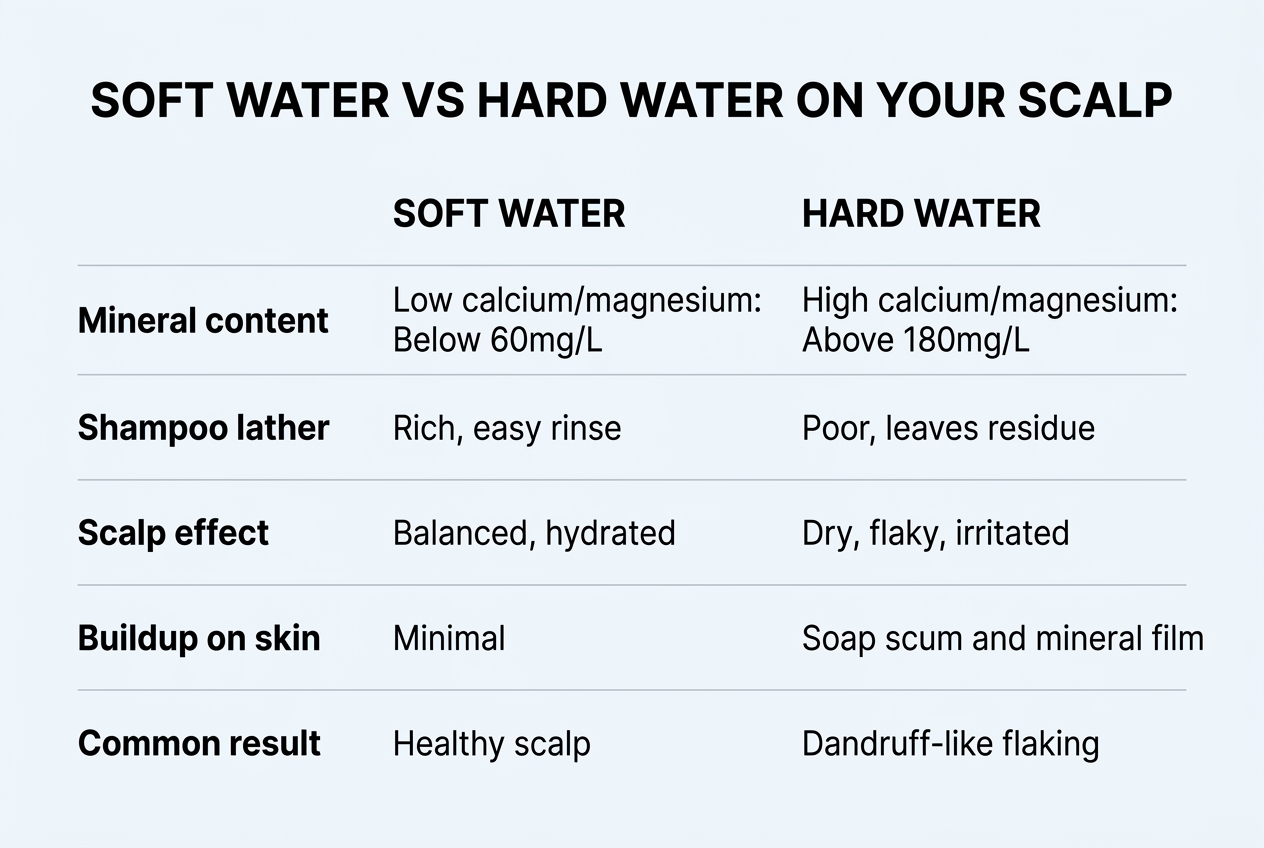
Let's clear something up first. Hard water doesn't cause the fungus, Malassezia, that's behind clinical dandruff. That yeast lives on everyone's scalp already. It feeds on scalp oils and flares up when conditions favor it. What hard water does is stack the deck. It strips natural oils and roughs up the scalp's surface, leaving skin more prone to irritation, dryness, and the kind of flaking that looks a whole lot like dandruff even when it isn't.
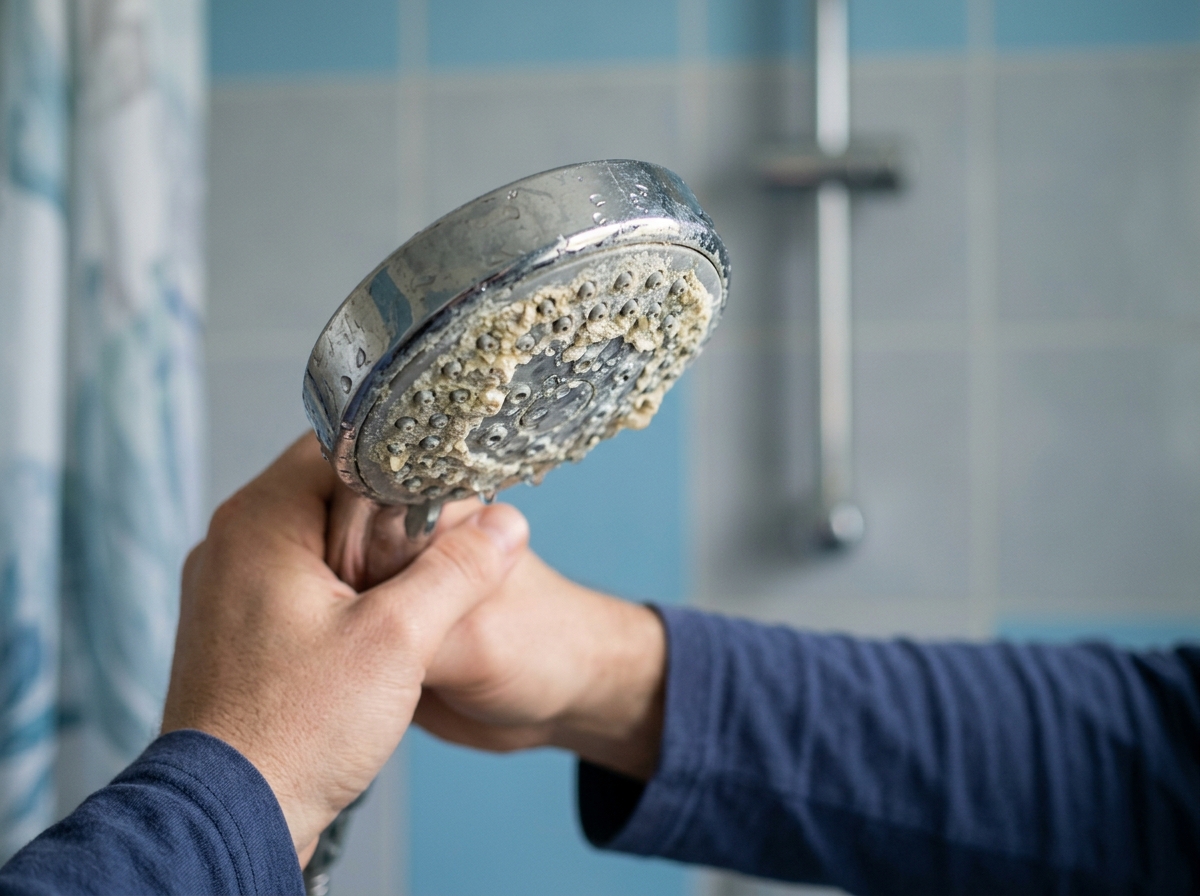
Here's the mechanical part. Calcium and magnesium in hard water react with shampoo and soap to form a chalky scum, the same film that dulls glass shower doors. That residue settles onto your scalp, clings to hair follicles, and traps dead skin cells underneath it. The result is flaking and tightness that mimics dandruff but is really just mineral buildup sitting on an irritated surface. Research on how hard water affects your hair and skin backs this up, showing measurable changes in oil balance and surface texture after repeated exposure.
Chlorine and chloramine, added by municipal treatment plants to keep water safe, add another layer of trouble. Both compounds are effective disinfectants. But they're also drying, and they can inflame skin that's already compromised by mineral scale. Combine chlorine exposure with calcium deposits, and you get a scalp that's dry, itchy, and flaking for reasons that have nothing to do with fungus at all.
How dermatologists view the hard water-scalp connection
Most dermatologists will tell you hard water is a contributing factor, not a root cause. It doesn't trigger seborrheic dermatitis or fungal dandruff on its own. But it does compromise the barrier that normally keeps your scalp balanced, and a weakened barrier makes existing conditions worse. Someone with mild dandruff in soft-water conditions might notice significantly more flaking, redness, and itch after moving somewhere with harder water, even without any change in shampoo or diet.
This is why distinguishing the two matters so much for treatment. Clinical dandruff usually responds to antifungal shampoos containing zinc pyrithione or ketoconazole. Mineral buildup doesn't care about antifungals; it needs clarifying treatment and, ideally, softer water. Using the wrong fix wastes money and time. Plenty of people cycle through medicated shampoos for months with no real improvement, simply because buildup was the actual problem the whole time.
A quick way to sort this out: check whether flaking improves after a trip somewhere with softer water, or worsens right after a shower rather than building gradually over days. Dermatologists often point patients toward that kind of pattern-tracking before recommending prescription treatment. It's also worth reading up on does hard water cause dry skin, since dryness and flaking frequently travel together and share the same underlying cause. Get the diagnosis right, and the fix usually follows pretty easily.
What is hard water and why your scalp reacts to it
How water hardness is measured
Water picks up passengers on its way to your shower. As it moves through rock, soil, and limestone deposits, it absorbs calcium and magnesium ions. The more it absorbs, the "harder" it becomes. This isn't a contaminant in the traditional sense — it's mineral buildup. But your scalp doesn't much care about the label. It just reacts.
Hardness gets measured in grains per gallon (GPG) or parts per million (ppm). Anything under 1 GPG counts as soft. Cross 7 GPG and you're in hard territory; some regions push past 15 GPG, which is considered very hard. The higher that number climbs, the more mineral residue gets left behind on your skin and hair after every single rinse. Over weeks, that residue adds up — even if you can't see it happening in real time.
Here's the part people miss: hard water messes with your shampoo before it even touches your hair. Calcium and magnesium react with soap molecules and block proper lathering, so instead of rinsing clean, you're left with a filmy residue sitting on the scalp. That film traps oil, dead skin, and product buildup right at the surface — a decent recipe for irritation. In fact, understanding hard water effects on hair helps explain why strands feel coated even after a "clean" wash.
Water hardness also isn't uniform — it swings wildly by region. Someone relocating from a soft-water city to a hard-water suburb can go from zero scalp issues to persistent flaking within a month, with no other change in routine. That timing isn't coincidence. And it's not always about the water alone — some flare-ups trace back to broader water contaminants that may irritate your skin, working alongside hardness rather than instead of it. Bottom line: your zip code has more to do with your shower's effect on your scalp than most people ever suspect.
Signs your flaky scalp is a hard water problem
Not sure if your scalp is fighting minerals or something else entirely? There's a pattern worth checking. Hard water flaking tends to show up alongside a few other complaints, not on its own. If you notice several of these together, that's your clue.
- Your scalp feels dry and tight almost immediately after showering, even when you've used a rich conditioner or leave-in treatment.
- The flakes themselves look white and waxy, appearing greasy or clumped together rather than the fine, powdery flakes typical of a dry scalp.
- Hair feels dull, brittle, and strangely coated no matter which shampoo you switch to, as if product just sits on top instead of rinsing clean.
- Itchiness and redness concentrate in the exact spot where water hits hardest, usually the crown or hairline, rather than spreading evenly.
- Color-treated hair fades faster than expected while the scalp underneath stays irritated, since mineral deposits affect the hair shaft and skin at the same time.
- Everything calms down when you travel somewhere with soft water, or when you rinse with bottled or filtered water for a few days.
That last one is the real tell. Product allergies don't magically disappear on vacation. Mineral buildup does. Reading up on filtered water vs tap water differences can help you connect the dots between your symptoms and what's actually coming out of the showerhead. It's also worth comparing notes with a dermatologist, since distinguishing mineral-related irritation from a genuine skin condition matters before you overhaul your routine. Many people researching this also look into the broader impact of hard water on scalp and hair health to understand why the same water source can hit both strands and skin at once.
Hard water dandruff vs. other causes of flaking
Not every flake tells the same story. Before you spend money on the wrong fix, it helps to line up the usual suspects side by side and see how their symptoms, triggers, and treatments actually differ.
Quick comparison table
Flakes that show up dry and powdery, especially near your hairline, don't always mean the same thing as flakes that come with grease and redness. The table below breaks down the four most common culprits.
| Cause | Typical symptoms | Main trigger | Best first response |
|---|---|---|---|
| Hard water buildup | Dull, tight scalp; dry flakes; mineral film on hair | Calcium and magnesium residue | Clarifying rinse or filtered shower |
| Seborrheic dermatitis | Greasy, yellowish flakes; redness; itching | Fungal overgrowth (Malassezia) | Medicated shampoo (ketoconazole, zinc) |
| Dry scalp | Small, white flakes; tightness; no odor | Cold weather or over-washing | Moisturizing shampoo, reduce wash frequency |
| Product buildup | Flaky scalp with waxy residue; dull hair | Styling products, dry shampoo overuse | One or two clarifying washes |
Seborrheic dermatitis is the one people confuse most with hard water damage, since both cause flaking and irritation. But it's fungal, not mineral, and won't budge until you treat it medically. Dry scalp from weather or frequent washing looks similar on the surface yet lacks that gritty, mineral residue hard water leaves behind. Product buildup is the easiest to rule out: switch to a clarifying shampoo for a week, and if flakes vanish, water wasn't the problem. If you've tried everything and nothing sticks, you're not alone; entire threads exist of people who've said hard water is making me crazy after ruling out every shampoo on the shelf. Ruling things out methodically saves you money, and sanity.
How hard water damages the scalp barrier and hair over time
Why sensitive scalps and eczema-prone skin react faster
Every shower with mineral-heavy water leaves a little residue behind. On its own, that's no big deal. But repeated exposure, day after day, slowly wears down the scalp's protective lipid barrier — the thin layer of fats and oils that keeps moisture in and irritants out. Once that barrier gets compromised, your scalp becomes more permeable. Things that used to bounce off, like fragrance in shampoo or leftover product residue, start getting in and causing trouble.
Chlorine and chloramine make this worse. Both are added to municipal water to kill bacteria, which is great for safety but rough on skin. They strip sebum, your scalp's own natural moisturizer, leaving it dry and more prone to flaking. Anyone comparing notes on this topic will find that a well-known writeup on whether hard water dandruff is a real issue lines up with what dermatologists have observed clinically for years.
Over months, calcified mineral buildup can actually clog follicles. That's not cosmetic — it can contribute to inflammation, persistent itchiness, and in some cases, noticeable hair thinning. Color-treated or chemically processed hair takes the hit hardest, since it's already weaker structurally. Hard water accelerates fading and dryness on strands that have less natural protection left to give.
Babies and people with eczema feel this faster than most. Their skin barrier is thinner and more reactive by nature, so irritation shows up sooner and more visibly. A baby's scalp redness after bath time, or an eczema flare that seems to track with shower frequency, often isn't random. It's usually the water talking.
Steps to protect your scalp from hard water buildup
You don't have to overhaul your entire routine overnight. Small, consistent changes make the biggest dent in mineral buildup and flaking. Start with what you can control right now, then work up to bigger fixes.
- Switch to a gentle, sulfate-free cleanser that cleans without stripping the natural oils your scalp needs to stay balanced and calm.
- Use a weekly clarifying rinse, like diluted apple cider vinegar or a chelating shampoo, to dissolve mineral film left behind by calcium and magnesium.
- Apply a leave-in moisturizer or lightweight scalp oil right after showering, while skin is still damp, to lock in whatever hydration survived the rinse.
- Choose shampoos and conditioners formulated with chelating agents like EDTA, which are built specifically to bind minerals before they can settle on strands and skin.
- Exfoliate the scalp gently once a week with a soft brush or scrub to lift trapped flakes, product residue, and mineral dust.
- Install a shower filter to reduce minerals, chlorine, and chloramine before they ever touch your skin and hair.
Think of these as layers, not a single fix. A clarifying rinse undoes damage that's already happened; a filter stops it from happening again. Skip the filter and you're just mopping the floor with the tap still running. If you're also dealing with dullness, tangles, or color fade, it helps to read a doctor's guide to reduce hair damage due to hard water, since scalp and strand health are tied together more than most people realize.
None of these steps need to be expensive or complicated. A $12 clarifying shampoo and a five-minute weekly habit can outperform a cabinet full of random products. Consistency matters more than intensity here — a little effort weekly beats a big effort once a month.
Why filtering your shower water solves the problem at the source
Anti-dandruff shampoo treats the itch. It doesn't touch the mineral scale or chlorine hitting your scalp every single day. That's the real gap. A dandruff shampoo works on symptoms after the fact, but filtration intercepts the cause before water ever touches skin. Understanding what hard water does to your hair and skin makes the case pretty clearly: it's ongoing chemical exposure, not a one-off irritation.
What to look for in a shower filter for scalp health
Not all filters do the same job, and that's where people get confused. Look for multi-stage systems that pair KDF media with activated carbon and mineral balancing. That combination cuts chlorine and reduces hardness residue at the same time, rather than tackling just one. Clinical validation matters too. A filter tested to NSF/ANSI 53 and 401 standards, and checked on real skin rather than just in a lab beaker, gives you numbers instead of guesses.
Comparing filter types by what they target
Different filter types solve different pieces of the puzzle, so it helps to see them side by side before you buy.
| Filter type | Primary target | Best for |
|---|---|---|
| Vitamin C infusion filter | Chlorine neutralization | Sensitive, chlorine-reactive skin |
| Antibacterial micro filter | Chloramine and bacteria | Homes on chloraminated municipal water |
| Purifying core filter | Sediment, rust, heavy metals | Older plumbing, visible discoloration |
| Mineral-balancing multi-stage filter | Hardness scale buildup | Flaking, dull hair, product buildup |
| Collagen/antioxidant boost filter | Barrier support during rinsing | Anti-aging and hair color preservation |
Vitamin C variants do double duty: they neutralize chlorine on contact while feeding antioxidants to scalp and skin. Antibacterial and purifying filters catch what standard carbon filters miss, namely chloramine and bacterial residue. Give it a few weeks. Most people notice a softer scalp, fewer flakes, and hair color that holds instead of fading fast.
If your scalp has been itchy, tight, or flaky lately, it might be worth looking at what's coming out of your showerhead before reaching for another anti-dandruff shampoo. Helios Filter's Vitamin C Infusion Showerhead uses a 3-stage filtration process that's been clinically tested in South Korea and dermatologist-tested on over 200 adults to reduce chlorine, chloramine, and other irritants known to disrupt the scalp's natural balance. Visit Helios Filter today to see which filter fits your routine, and enjoy free shipping on orders over $99.
Share:
The Best Water Filters for Sink Use, Ranked for Skincare
Why Hard Water Wrecks Your Skin (And How a Filtration Shower Head Fixes It)