
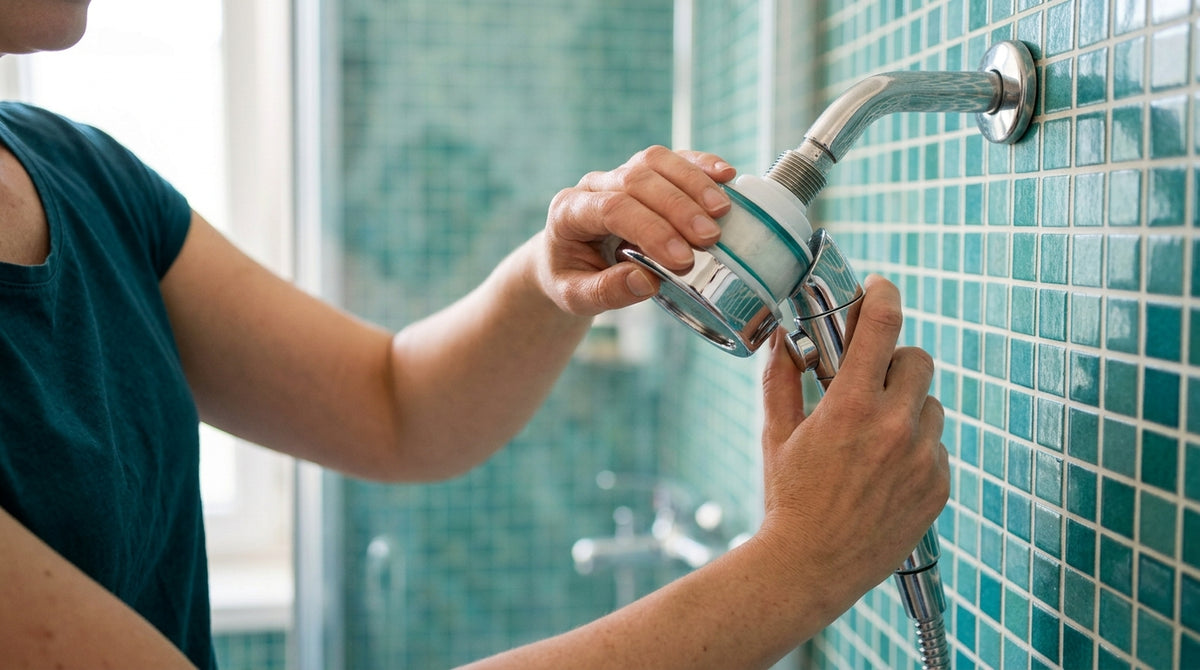
An itchy, flaking scalp doesn't just feel uncomfortable — it can chip away at your confidence every time you catch yourself scratching in public. You've probably already started searching for the best medicated shampoo for itchy scalp relief, only to find a crowded market of options that all claim to work. Here's the catch: even the right formula struggles when hard water and chlorine are working against it in the shower. This guide breaks down seven standout picks and the science behind why they actually help.
7 Best Medicated Shampoo for Itchy Scalp Picks to Consider
How these picks were grouped by active ingredient
Before you scroll through seven bottles, it helps to know why they're sorted this way. Every medicated shampoo worth buying leans on one main active ingredient. That ingredient decides what it's actually good at. Grouping by active first, rather than by brand or scent, makes comparison shopping a lot less confusing.
Here's the short version of what each category does before you get into individual picks:
- Ketoconazole is an antifungal that targets the yeast overgrowth behind stubborn dandruff and seborrheic dermatitis, often working faster than gentler options.
- Zinc pyrithione also fights fungus and bacteria, making it a solid everyday pick for mild-to-moderate flaking without the stronger smell some antifungals carry.
- Salicylic acid works more like an exfoliant, breaking down thick, scaly buildup on the scalp, which makes it a favorite for psoriasis-prone skin.
- Coal tar slows down skin cell turnover, so it's often reached for with psoriasis or chronic seborrheic dermatitis that hasn't responded to lighter treatments.
- Hydrocortisone calms inflammation and itch directly, which helps with flare-ups tied to eczema or irritated folliculitis, though it's not meant for long stretches of daily use.
- Selenium sulfide slows oil production and fungal growth at once, a combo that shows up often in prescription-strength dandruff formulas.
None of these ingredients are interchangeable, even though marketing sometimes makes them sound that way. A shampoo built for flaking isn't necessarily built for inflamed, painful folliculitis. Using the wrong one can waste weeks. If you want to get specific about what's actually in the bottle you're holding, learning to read a shampoo ingredients glossary makes label-reading far less of a guessing game.
One more thing, and it's not optional: patch test first. Apply a small amount to your inner arm or a small scalp section, wait 24 to 48 hours, and check for redness or burning before committing to daily use. Medicated doesn't mean mild. Follow the label's frequency guidance, too — some of these are meant for twice-weekly use, not every shower.
How to Match the Shampoo to Your Scalp Condition
Signs it's time to see a dermatologist instead of self-treating
Not all flaking is the same. Lumping it together is how people end up wasting months on the wrong bottle. Dandruff shows up as fine, white flakes with mild itching and no real redness. Seborrheic dermatitis goes further: greasy yellow scales, red patches, and itching that flares with stress or cold weather, often spreading to the eyebrows and sides of the nose. Psoriasis brings thick, silvery plaques with defined borders that can bleed if picked. Folliculitis looks like tiny red or white bumps around hair follicles, sometimes tender or filled with pus. Mixing these up means treating the wrong problem entirely.
For fungal-related flaking, ketoconazole and zinc pyrithione are the workhorses. Ketoconazole 1% (over the counter) or 2% (prescription) targets the yeast Malassezia, a major driver of both dandruff and seborrheic dermatitis. Zinc pyrithione does something similar with antimicrobial action, which is why it's a common ingredient in drugstore staples. Both need consistent use, twice weekly for several weeks, before you'll see real change. One wash won't do it.
Salicylic acid and coal tar work differently. Salicylic acid breaks down thick scale so other ingredients can actually reach the scalp. Coal tar slows skin cell turnover, which helps with stubborn psoriasis plaques but comes with a strong smell and can stain light hair. If your scalp burns, cracks, bleeds, or the itching disrupts sleep, that's your cue. A shampoo can't fix inflammation that's gone systemic, and self-treating folliculitis with the wrong product can make a bacterial issue worse. Persistent hair loss, spreading rashes, or symptoms that laugh off two months of consistent OTC treatment all point toward a dermatologist visit rather than another shampoo swap. A filtered showerhead can support the routine around this, but it won't stand in for that medical visit.
Comparing Active Ingredients: Strength, Scent, and Side Effects
Not all "medicated" labels mean the same thing. Ketoconazole 1% sits on open shelves, while stronger versions need a prescription. Scent is another sorting factor — some formulas smell clinical and sharp, others go fragrance-free for sensitive skin. Here's how the common options stack up.
| Active Ingredient | Strength | Typical Scent | Common Side Effects |
|---|---|---|---|
| Ketoconazole 1% | Over-the-counter | Mild medicated | Dryness, mild irritation |
| Ketoconazole 2% | Prescription | Stronger medicated | Dryness, scalp discoloration |
| Selenium sulfide 2.5% | Prescription | Sulfur-like | Oiliness, hair discoloration |
| Zinc pyrithione 1% | Over-the-counter | Scent-free options common | Mild irritation, rare buildup |
| Coal tar 0.5–5% | Over-the-counter | Strong, tar-like | Sun sensitivity, staining |
Higher strength doesn't automatically mean better results. It usually means a bigger tradeoff in dryness or smell. Prescription ketoconazole works faster for stubborn cases, but that jump from 1% to 2% often brings noticeably more irritation for sensitive scalps. Got color-treated or curly hair? Selenium sulfide's discoloration risk is worth knowing before you commit to a bottle. Scent-free formulas exist for a reason — plenty of people can't tolerate medicated smell lingering for hours after a shower.
Worth noting: mineral buildup on the scalp can mimic or worsen these same side effects, which is why some people research tap water effects on hair and skin before assuming a shampoo is failing them. Dryness that won't quit, flaking that returns fast — sometimes it's the water, not the formula. Either way, side effects are a signal to adjust, not push through.
Why Hard Water Might Be Undoing Your Shampoo's Work
What hard water does to an already-irritated scalp
Here's the frustrating part. You spend money on a good medicated shampoo, follow the directions, and your scalp still itches. Hard water might be why. Calcium and magnesium in hard water bond with soap residue and settle onto the scalp as a fine mineral film. That film traps flakes, oils, and dead skin cells against the skin instead of letting them rinse away — exactly the opposite of what a zinc or salicylic acid shampoo is trying to do. The active ingredient never gets a clean shot at your skin. If you want to know for sure whether your water is the culprit, a hardness or mineral test through a water testing service will tell you far more than guessing ever could.
Chlorine adds a second problem. Municipal water often carries enough chlorine to disinfect the supply, and that same chemical strips natural oils and dries out skin between washes. On a scalp that's already inflamed or flaking, that daily low-grade exposure keeps irritation simmering even on days you're not shampooing at all. Anyone researching this topic should start by reading what to know about shampoos for an itchy scalp before assuming the product itself is the problem.
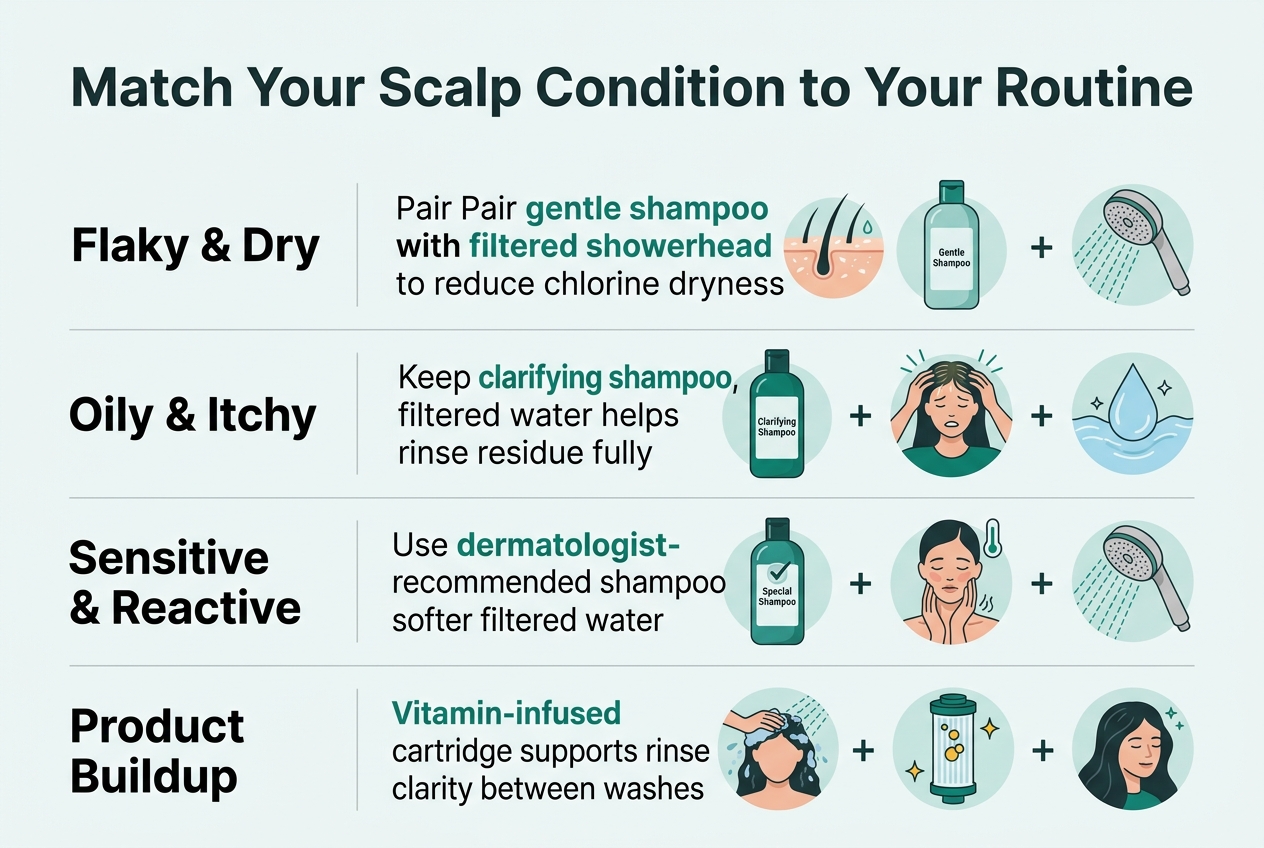
This is where point-of-use filtration comes in. Helios makes filtered showerheads and under-sink filters, not a whole-home softening system — but for the water that actually touches your scalp, that's the part that matters here. A filtered showerhead reduces chlorine and hardness right where water leaves the pipe, before it ever touches your scalp, and it swaps on without a plumber. No whole-home softener, no appliance rerouting, just an upgrade at the fixture. Some cartridges are vitamin-infused, meant to support water quality at the point of daily contact rather than treat any condition. Worth saying plainly: filtered water is a complement to your medicated shampoo, not a substitute for it. The shampoo still does the treating. The water just stops working against it.

Steps to Get the Most Out of a Medicated Shampoo
A simple weekly routine for stubborn flaking
Medicated shampoo only works if you actually give it a chance to. That means fully saturating your hair with warm water first — a quick splash won't cut it, since the active ingredients need water to spread evenly across the scalp. From there, the routine is short but strict. Skipping steps is the most common reason people think a formula has "failed" them.
Here's a weekly framework worth following for the first month, then adjust based on what your scalp tells you.
| Day | Action | Why it matters |
|---|---|---|
| Day 1 | Wet hair fully, apply medicated shampoo, massage in, let sit 3-5 minutes | Contact time lets active ingredients like ketoconazole or zinc pyrithione actually work |
| Day 2-3 | Use a gentle daily shampoo instead | Prevents dryness or irritation from over-using strong actives |
| Day 4 | Repeat medicated wash, rinse thoroughly | Residue left behind can trigger more itching, not less |
| Day 5-7 | Daily shampoo, note flaking/itching levels | Tracking flare-ups tells you if frequency needs adjusting |
Some people need medicated washes twice weekly; others do fine with once. Consistency matters more than intensity. If flaking barely improves after three weeks, it may be worth comparing notes with a resource on shampoo options for seborrheic dermatitis before assuming the product itself is the problem. Rinse for a full 60 seconds — most people stop at 15.
Over-the-Counter vs Prescription-Strength Options
When to escalate beyond drugstore shelves
Most flaky, itchy scalps respond fine to what's on the shelf. OTC ketoconazole 1% and zinc pyrithione formulas handle mild-to-moderate dandruff for a large share of people, usually within two to four weeks of regular use. These are the workhorses. They're cheap, they're everywhere, and for garden-variety flaking, they do the job without any fuss.
Severe seborrheic dermatitis or scalp psoriasis is a different animal. That's when prescription ketoconazole 2% or a corticosteroid shampoo enters the picture — stronger doses, tighter usage windows, and results dermatologists actually track. If your scalp is thick with plaques, bleeding from scratching, or spreading onto your forehead and ears, drugstore strength probably won't cut it.
So when do you stop DIY-ing it? Give an OTC product a fair six-to-eight week trial. If symptoms haven't budged, or they're getting worse, a dermatology consultation is worth the copay. Don't cycle through five different bottles hoping one sticks — that's just expensive guesswork. A quick visit to a skin specialist can save months of trial and error, and it's the only way to get a corticosteroid or 2% formula legally anyway.
One thing worth saying plainly: filtered water is a supportive change, not a treatment. Softer, lower-chlorine water at the showerhead can help medicated shampoo rinse cleaner and may ease general dryness, but it doesn't replace a dermatologist's plan for eczema or psoriasis. Think of it as backup, not the main act.
Everyday Habits That Support a Healthier Scalp
Medicated shampoo does the heavy lifting, but what you do the rest of the week matters too. A scalp that's already calm handles active ingredients better. One that's inflamed from other habits fights you the whole way.
Small changes that reduce irritation between washes
None of this is complicated. It's mostly about removing small, repeated stressors before they add up to a flare-up.
- Cut back on hot water and long showers, since heat strips natural oils and can leave the scalp tighter and itchier by the time you towel off.
- Stick to fragrance-free products for conditioner, styling cream, and body wash, because added fragrance is one of the most common triggers for scalp irritation, even in products marketed as gentle.
- Watch stress and diet patterns that tend to line up with flare-ups; poor sleep, high stress weeks, and heavy alcohol or sugar intake are frequently reported alongside worse scalp symptoms.
- Swap in a filtered showerhead as a simple upgrade to your existing shower arm — no plumber needed, and it works whether you rent or own, which matters if you're not about to remodel a bathroom you don't plan to stay in.
- Set up a replacement filter subscription so cartridges arrive on a schedule instead of relying on you to remember the last change date, which, honestly, nobody does.
- Keep a simple symptom log for a few weeks, noting flare-ups next to water temperature, product changes, or stress spikes, so patterns actually show themselves instead of staying a guess.
None of these replace medicated shampoo or medical advice for a diagnosed condition. Think of them as the quiet groundwork that helps the actual treatment work harder.
FAQs About Choosing and Using Medicated Shampoo
How often should you use it?
Most medicated shampoos work best two to three times a week, not daily. Ketoconazole formulas often call for twice weekly, spaced a few days apart, while milder zinc pyrithione options can handle more frequent use. Overdoing it strips natural oils and can leave your scalp drier and itchier than before. Follow the label's frequency, not your instinct to scrub harder. Between medicated washes, a gentle regular shampoo keeps hair clean without undoing the treatment.
Can you condition afterward?
Yes, and you should. Apply conditioner after rinsing the medicated shampoo out, focusing on the ends rather than the scalp. Some brands sell a matching conditioner designed not to coat the scalp with residue; if yours doesn't, any gentle, silicone-light conditioner works fine.
Why does dandruff keep coming back?
Because medicated shampoo manages symptoms — it doesn't cure the underlying cause. Malassezia yeast, oil production, and skin cell turnover all reset once you stop treatment, usually within a few weeks. That's not failure, it's biology. Many people need ongoing, lower-frequency use indefinitely rather than a short course.
Does water quality actually matter?
Genuinely, yes. Hard water leaves mineral deposits that can dry out the scalp and interfere with how shampoo rinses clean, leaving residue behind that fuels flaking. It won't replace medicated treatment, but softer-feeling water at the shower can make that treatment work harder for you.
None of this has to be decided in one sitting: it's worth being honest about whether what's really going on is a taste preference, a skin or scalp concern, or something that calls for an actual water test before spending on anything. If it's the water touching your skin and hair day to day that bothers you, that's a narrower, more answerable question than whole-home treatment, and one worth separating out before you shop. Whatever you choose, start from what's actually bothering you — dry skin, dull hair, spots on the glass — and let that, not the marketing, point you toward the right fix.
Share:
8 Best Anti-Dandruff Shampoos to Pair With Filtered Water in 2026
Best Clarifying Shampoos for Curly Hair Battling Hard Water Buildup