
You've tried the clarifying shampoos. You maybe even stared down a quote for a whole-home softener. And your skin still feels tight the second you step out of the shower. Hard water has a lot of fixes floating around — salt-based systems, plumber installs, RO units, well treatments — and most of them solve problems you don't actually have. This comparison breaks down where a water tap filter system earns its place against every other hard water solution on the market, and where it doesn't. No plumber, no guesswork — just a clear-eyed look at what actually changes the water touching your skin and hair every day.
Water Tap Filter System vs. Whole House Water Softener: Which Fixes Skin and Hair Faster
Whole-Home Coverage vs. Point-of-Use Precision
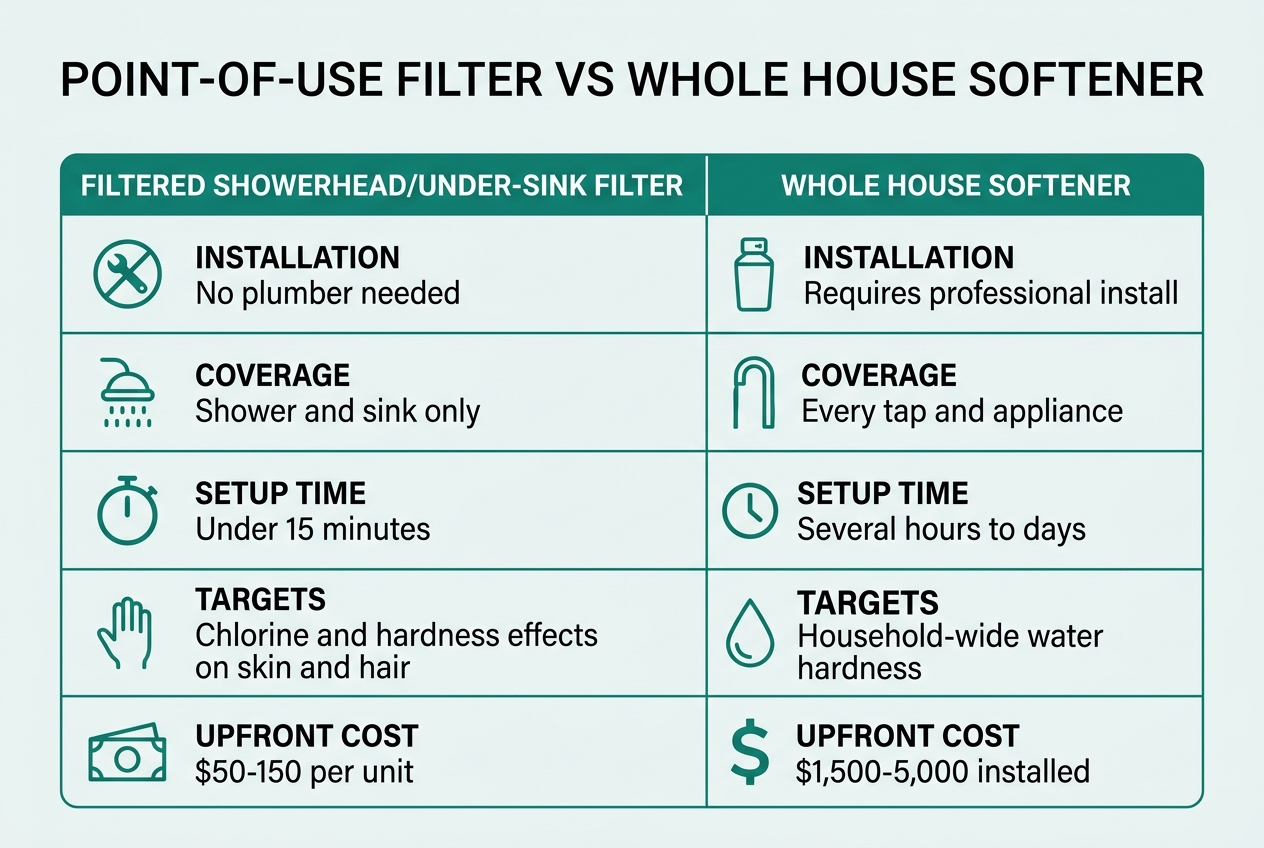
A whole house softener works at the main line. It swaps calcium and magnesium for sodium through salt-based ion exchange. It treats everything: your dishwasher, your washing machine, every faucet in the house. That's a real advantage if scale buildup is wrecking appliances too. But it's a big, professionally installed system. It treats hardness broadly rather than targeting the chlorine exposure and mineral deposits that actually dry out skin and dull hair in the shower.
A tap filter system works differently. It sits right where water touches you — showerhead, sink — and focuses on chlorine reduction and scale right at the point of contact. No main-line plumbing, no salt tank in the garage. If your goal is softer skin and shinier hair rather than protecting your pipes, that precision matters more than blanket coverage. Many people test their water first (often through a local lab or hardware-store kit) and then decide which approach fits; either way, an under sink water filter system skin guide is worth reading before you commit to either route.
| Factor | Whole House Softener | Tap Filter System |
|---|---|---|
| Coverage | Every tap and appliance | Shower and sink only |
| Install time | Full day, professional required | Minutes, DIY |
| Ongoing upkeep | Salt refills every few weeks | Cartridge swap every few months |
| Renter-friendly | No | Yes |
| Primary target | Hardness minerals, house-wide | Chlorine and scale at skin contact |
Who Actually Needs Each Option
Own your home? Have hard water wrecking appliances and pipes? Don't mind a multi-day install and recurring salt bags? Then a softener earns its cost. It's a long-term infrastructure fix, not a quick one.
Renting, or just trying to stop the dry skin and dandruff before your next shower? A point-of-use filter is the faster answer. Apartment dwellers usually can't touch the main line anyway, so a softener isn't even on the table. A filtered showerhead or under-sink unit installs in minutes, needs no landlord approval, and comes with you when you move. That's not a small thing if you're renting. For skin and hair specifically, it's also just the more direct fix.
Showerhead Filter vs. Under-Sink Filter: Picking the Right Point-of-Use Option
Shower-First Priority for Dry Skin and Dandruff
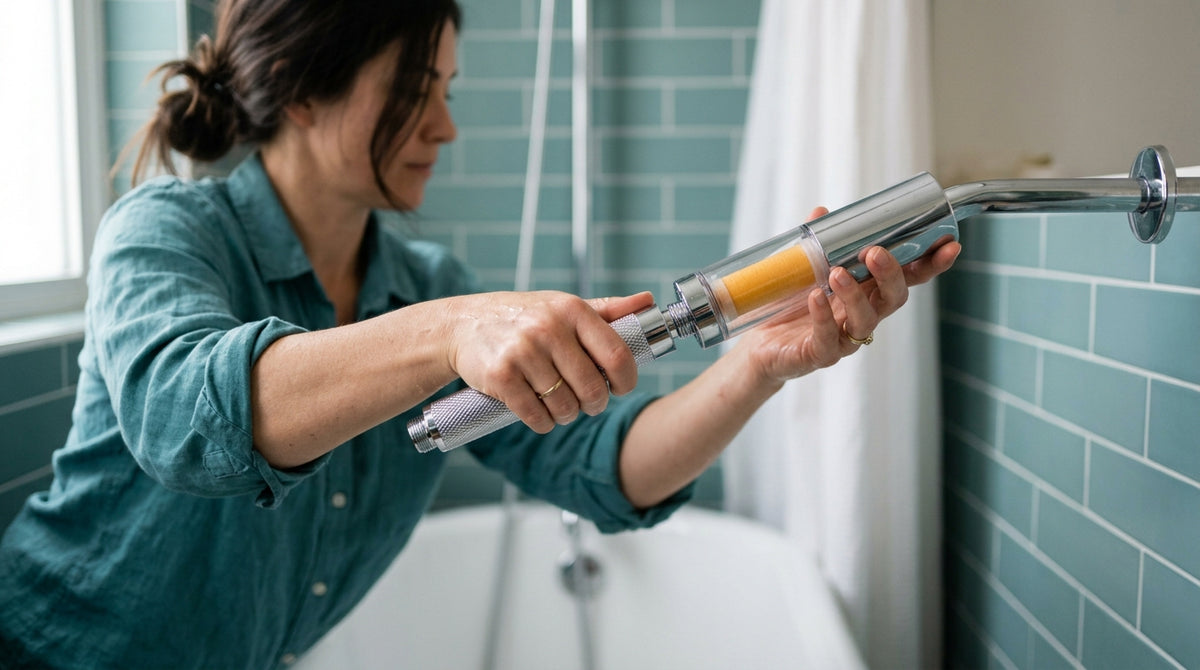
If you had to pick one spot to filter first, make it the shower. That's where hard water sits longest on skin and scalp. It soaks into hair follicles and strips natural oils for ten minutes at a time, every single day. A showerhead filter treats the water right as it hits you, which is exactly why it's the first move for dryness, flaking, and dandruff-prone scalps. It's also the easiest DIY swap in the house: unscrew the old head, thread on the new one, done. No tools beyond maybe a wrench, no plumber, no drama.
Under-sink filters work differently. They treat water at the tap, which matters for washing your hands and face without swapping out the whole faucet fixture. Good for facial cleansing routines. Not built to cover the volume of water a shower dumps on you daily.
When Adding a Sink Filter Makes Sense
Here's a quick way to see where each option actually earns its keep, based on daily contact points rather than marketing claims.
| Scenario | Better Fit | Why |
|---|---|---|
| Dry, itchy skin after every shower | Showerhead filter | Full-body contact time, highest exposure point |
| Child's eczema flare-ups during bath time | Showerhead filter | Reduces harsh water contact during washing |
| Dull, color-treated hair losing vibrancy | Showerhead filter | Treats water at the point hair is rinsed |
| Face washing and skincare routine at the sink | Under-sink filter | Targets water used for facial cleansing specifically |
| Whole-household coverage across skin and hair | Both, bundled | Consistent filtered contact at shower and sink |
Notice what's missing from that table: drinking water performance. Neither option is a reverse osmosis system, and judging them on purification claims misses the point entirely. The vitamin-infused cartridges inside are built to support skin and hair, not to certify the water safe to drink. If that's your goal, a dedicated provider of filtered drinking systems is a separate conversation, and is tap water safe to drink is worth reading separately before you assume one filter does both jobs.
So when does the sink filter earn its spot? Mostly for people doing serious skincare at the tap — splash washing twice a day, following an esthetician-recommended routine, or just wanting one less variable while treating a flare-up. Many people researching this skim a skincare blog or two before deciding, and the consistent advice is the same: treat the water touching your skin most often, then expand. For most households, that means shower first, sink second, bundle if budget allows.
DIY Filter Install vs. Hiring a Plumber for Whole-Home Filtration
Whole-home filtration sounds appealing until you learn what it actually takes. Most systems get installed at the point where water enters the house, which means cutting into main lines, soldering pipe, and in many municipalities, pulling a permit before a licensed plumber can even start. That's real construction work. It can take hours or even a full day, and if you rent your place, it's simply not your call to make. A point-of-use filter at your existing showerhead or sink skips all of that entirely.
Step-by-Step: Swapping a Showerhead Without a Plumber
A filtered showerhead or under-sink filter is built for exactly this: tool-light installation at a fixture you already have, no cutting, no permit, no appointment window to wait around for. Here's roughly what the process looks like for most households:
- Unscrew the existing showerhead by hand or with a wrench, wrapping the pipe threads once with plumber's tape to prevent drips.
- Thread the new filtered showerhead on clockwise until snug, then run water for a few seconds to clear any loose carbon dust from the cartridge.
- For an under-sink filter, shut off the cold-water supply valve, attach the included connector, and route the short line to the filter housing tucked beneath the basin.
- Test for leaks at every connection point before considering the job done, since a loose fitting is the most common first-week issue.
- Keep the original showerhead or faucet aerator in a drawer so the whole setup reverses in minutes when you move out.
That reversibility matters most for renters. You get the upgrade now and your deposit back later. Curious what's happening inside that cartridge? It helps to read up on how water filters work understanding filtration science before you buy, so you know what the media is actually removing.
Homeowners planning to stay put long-term, though, still have a reason to consider whole-home plumbing work. Point-of-use filters only treat the tap they're installed on. If you want every shower, sink, dishwasher, and laundry line protected at once, that's a job for a plumbed-in system, not a swap-in fixture. Time-wise, there's no real contest: a showerhead swap takes under 15 minutes, an under-sink filter maybe 20, while whole-home installs run hours and often require scheduling around a permit inspection.
Filtered Water vs. Water Hardness Testing: What to Do First
Reading Your Results Before You Buy a Filter
Before you spend money on any fix, find out what's actually in your water. A home test strip or a lab analysis will tell you mineral content measured in grains per gallon, chlorine or chloramine levels, and whether you're on a municipal line or a private well. That last part matters more than people think. Municipal water usually means hardness and chlorine are your main irritants. Well water can bring iron, sulfur, or bacteria into the mix, and that's a different problem entirely.
Here's the part worth repeating: testing doesn't fix anything. It just confirms what you're dealing with. A strip that turns a certain shade or a lab report with a number on it won't soften a single drop coming out of your shower. It's diagnostic, not corrective. Skipping this step and guessing at a solution is how people end up buying the wrong equipment twice. Research on factors related to household filter adoption suggests people are far more likely to stick with a filtering habit once they understand what's actually in their tap water.
Once results are in hand, the path splits. Many skincare-conscious shoppers test first, then install a showerhead or under-sink filter to target chlorine and hardness effects on skin and hair — that's a reasonable, proportionate response for most municipal households. But if your report shows iron staining, sulfur odor, or bacterial contamination from a well, a point-of-use skin filter won't touch it. That calls for a dedicated well treatment system built for those contaminants, not a cartridge under the sink. Testing results are really a sorting tool: they tell you whether point-of-use filtration is enough, or whether whole-home treatment is the honest answer. Skip that sorting step, and you're just guessing with better packaging.

Filtered Showerhead vs. Bathtub Faucet Filter for Sensitive Skin and Baby Baths
Matching the Filter to the Fixture You Actually Use
Here's the thing nobody tells you upfront: a filtered showerhead only filters water that comes through the shower. If your family mostly bathes rather than showers, especially with a baby or toddler, that filter is doing nothing for bath time. Bathtub faucet filters are a separate category entirely, built to attach to the tub spout and filter water as it fills, including the lukewarm baby baths where little bodies sit soaking for twenty minutes at a stretch.
That distinction trips up a lot of parents. You install a nice filtered showerhead, feel good about it, then realize the tub spout across the room is still delivering straight hard water. If your household showers for adults and baths for kids, you're effectively running two separate water experiences, and only one fixture at a time addresses each.
So think about actual daily use before buying anything. A household that only showers needs just the showerhead. One that only baths needs a tub-specific filter instead. Most families with young kids do both, which usually means pairing a filtered showerhead for the grown-ups with a dedicated tub filter for bath time, rather than assuming one fixture covers the whole bathroom.
For eczema flare-ups specifically, parents often need both pieces running at once. Mineral-heavy, chlorinated water can aggravate already-irritated skin whether it hits your child during a quick rinse or a long soak. One quick gut check, though: filtered water supports a skin care routine, it doesn't replace one. Persistent flare-ups still call for a dermatologist's input. Filters are a helpful backup, not a diagnosis.
Point-of-Use Filter vs. Countertop Pitcher vs. RO System: Comparing Purpose and Performance
Three products, three very different jobs. A countertop pitcher like a Brita or PUR filters small batches for drinking taste — that's it. It never touches your shower or your sink's full flow, so it does nothing for skin or hair contact. A reverse osmosis system, by contrast, forces water through a membrane to strip out a broad range of contaminants, built for drinking purity at one tap. An under-sink skin-and-hair filter sits between those two in plumbing complexity but serves a completely different goal.
Comparing Install Effort and Maintenance
Here's where the three actually diverge in daily life.
| System | Install | Maintenance | Primary Goal |
|---|---|---|---|
| Countertop pitcher | None — fill and go | Swap cartridge every 2-4 months | Drinking taste |
| RO system | Under-sink, often needs a plumber | Membrane and pre-filters, yearly checks | Drinking purity |
| Under-sink skin-and-hair filter | DIY, no plumber needed | Cartridge subscription, self-swapped | Softer skin and hair |
| Filtered showerhead | Screws on in minutes | Cartridge swap every 3-4 months | Softer skin and hair in the shower |
Notice the RO system is the only one that routinely needs professional labor. The others are weekend projects, nothing more.
Which Goal Matches Which System
Ask yourself what you're actually solving. Want better-tasting coffee water? A pitcher's fine. Worried about broader water purity at the tap? RO is the stronger purification choice. But if your real complaint is dry skin, flaky scalp, or hair that won't hold color, neither one helps — they're not built for that. Vitamin-infused cartridges in a tap filter system exist for skin and hair benefit, not purification claims, and they're not trying to compete with RO on contaminant removal. Match the tool to the actual complaint, not the one with the most impressive spec sheet.

Replacement Filter Subscription vs. One-Time Cartridge Purchase vs. Rental Plans
Three ways to pay for point-of-use filtration, three very different cost structures. Understanding them now saves you from a surprise bill later.
How Often Cartridges Need Swapping
Rental or lease plans charge an ongoing fee for the hardware itself, not the filter media inside it. You're renting a box, basically, with the unit eventually returned or bought out at the end of the term. A replacement filter subscription works differently: you buy the showerhead or under-sink unit outright, once, and the subscription just automates cartridge delivery timed to normal usage. That's a meaningful distinction most shoppers miss.
Here's how the three approaches actually play out day to day:
- Rental plans keep monthly costs tied to the equipment, meaning you're still paying even in months you forget to swap anything;
- One-time cartridge purchases suit someone who showers at a second home or uses a unit occasionally, but they rely entirely on you remembering a replacement date;
- Skipped swaps quietly reduce filtration performance, so the shower water looks and feels the same while doing less work;
- Customer-performed swaps take a couple of minutes and remove any need for a technician visit or scheduled appointment;
- Bundled showerhead and sink subscriptions track two different cartridge types on one shared calendar, instead of two separate reminders;
- Most cartridges are rated for two to three months of typical household use before capacity drops off.
Forgetting a swap isn't dramatic. Nothing floods, nothing breaks. It just quietly stops doing its job, which is arguably worse.
Final Verdict: Which Hard Water Solution Fits Your Situation
No single fix works for every bathroom. Your situation decides the right call, not trends. Here's the shortcut version, so you don't have to re-read the whole comparison.
Quick Decision Checklist
Match yourself to the scenario that fits, then act on it.
- Renters wanting a fast, reversible fix should look at a point-of-use showerhead filter that installs without a plumber and unscrews just as easily when you move out.
- Parents addressing a child's eczema-prone skin can add a filtered showerhead as a supportive change, but it's not a standalone cure — keep pediatric or dermatology guidance in the loop.
- Households wanting every tap treated, including washing machines and tubs, need a whole house softener, a plumber-installed system that works at the point of entry, not a point-of-use filter.
- Curly-hair or color-treated hair owners fighting dullness get the best results pairing a showerhead filter with an occasional salon clarifying treatment to strip existing mineral buildup.
- Skincare enthusiasts following an esthetician's recommendation usually do best with a showerhead and under-sink bundle, so treated water hits both the shower and the sink daily.
If you tested your water first and confirmed hardness is the culprit, that's not wasted effort. It just means you'll pick with confidence instead of guessing.
Before deciding anything, it's worth getting clear on what you're actually trying to solve: is this about every tap and appliance in the house, or specifically about how water feels on skin and hair in the shower and at the sink? The first calls for a whole-home approach and often a professional's hands; the second is a narrower, more personal fix that someone can set up themselves. Either way, a little honesty about the scope of the problem — and the budget and effort you're willing to put toward it — will do more to guide the right choice than any single product feature.
Share:
Medicated Dandruff Shampoo: A Complete Guide for Stubborn Flaking