
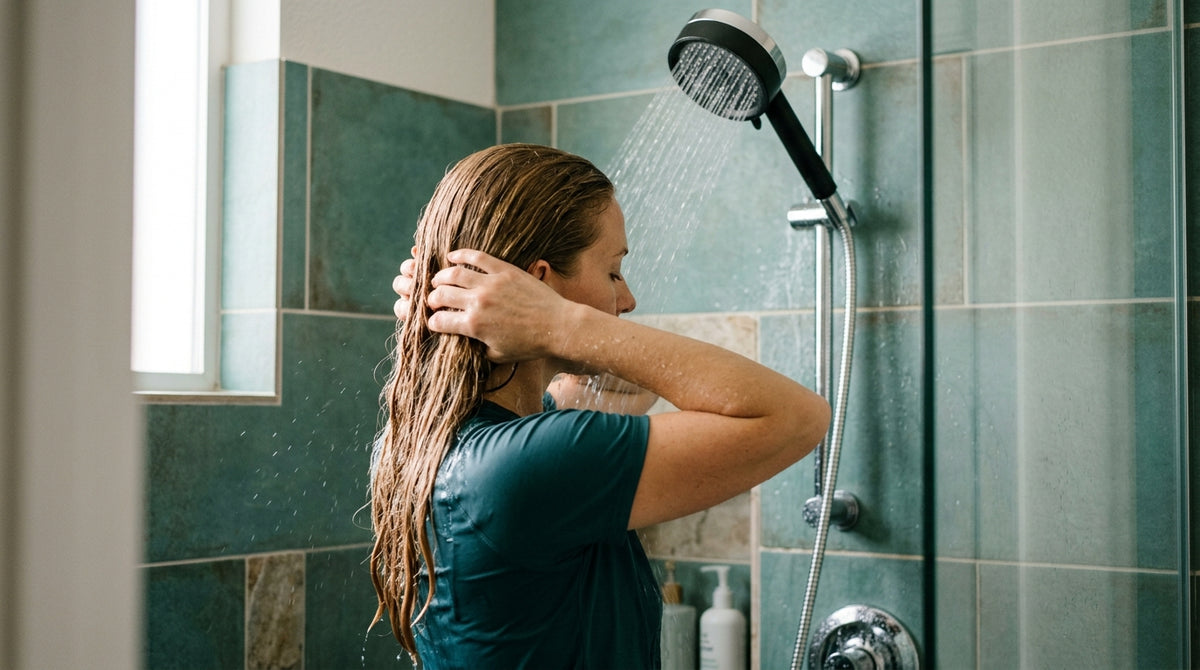
No matter how many bottles you cycle through, your hair still feels waxy, dull, and resistant to lather. That's usually mineral buildup talking, not your shampoo's fault. This roundup breaks down the best clarifying shampoo options worth your money in 2026, from drugstore picks to salon-grade formulas. But we'll also get honest about the real fix: the hard water hitting your scalp every single shower.
What Clarifying Shampoo Actually Does to Your Hair
Clarifying shampoo is a deep-cleansing formula. It strips away what regular shampoo leaves behind: excess oil, styling product residue, chlorine from pool water, and mineral deposits that cling to the hair shaft. It uses stronger surfactants than your daily shampoo — the detergent-like molecules that lift grime off each strand. Daily formulas are diluted on purpose. They're gentle enough for frequent use without wrecking your scalp's natural oils. Clarifying versions trade that gentleness for strength. They're meant for occasional use, not every wash.
Think of it as a reset button. One wash won't leave hair stripped forever, but it will leave it squeaky-clean for a day or two. That's the tradeoff: more cleaning power, less moisture retained. If you're also managing dry, irritated skin, it's worth understanding whether does chlorine in tap water cause acne factors into your routine too, since the same water hitting your scalp is hitting your face.
Signs you need a deep clean
Your hair usually tells you before you notice consciously. Dullness that doesn't budge with conditioner is one sign. A waxy or coated feel right after washing is another. Flakes that look like dandruff but brush off dry count too. Color-treated hair turning brassy faster than expected is another red flag. So is product buildup that makes your scalp feel tight and itchy by day three.
Curly hair has its own tell: curls that clump less and frizz more, even with the same products you've always used. If your shampoo isn't lathering the way it used to, that's not a weaker formula. It's buildup blocking the surfactants from doing their job. These signs mean your hair needs more than a rinse.
Why hard water speeds up buildup
Calcium and magnesium — the two minerals that make water "hard" — don't just wash away after your shower. They bond to the hair shaft and to each other, forming a film that traps oil and product on top of it. That's why people with hard water often feel like they need to clarify weekly instead of monthly. The mineral layer makes hair feel coated almost immediately after washing, even with a fresh bottle of shampoo.
Here's the frustrating part. Clarifying shampoo removes the buildup that's already there. But it does nothing to stop the next shower from redepositing more minerals. You're cleaning the same mess on repeat. Many local businesses that specialize in hair health see this exact pattern in clients who clarify constantly and still complain about dullness. The shampoo isn't failing. The water refilling the problem is the root cause, and no amount of scrubbing changes what's coming out of the tap.
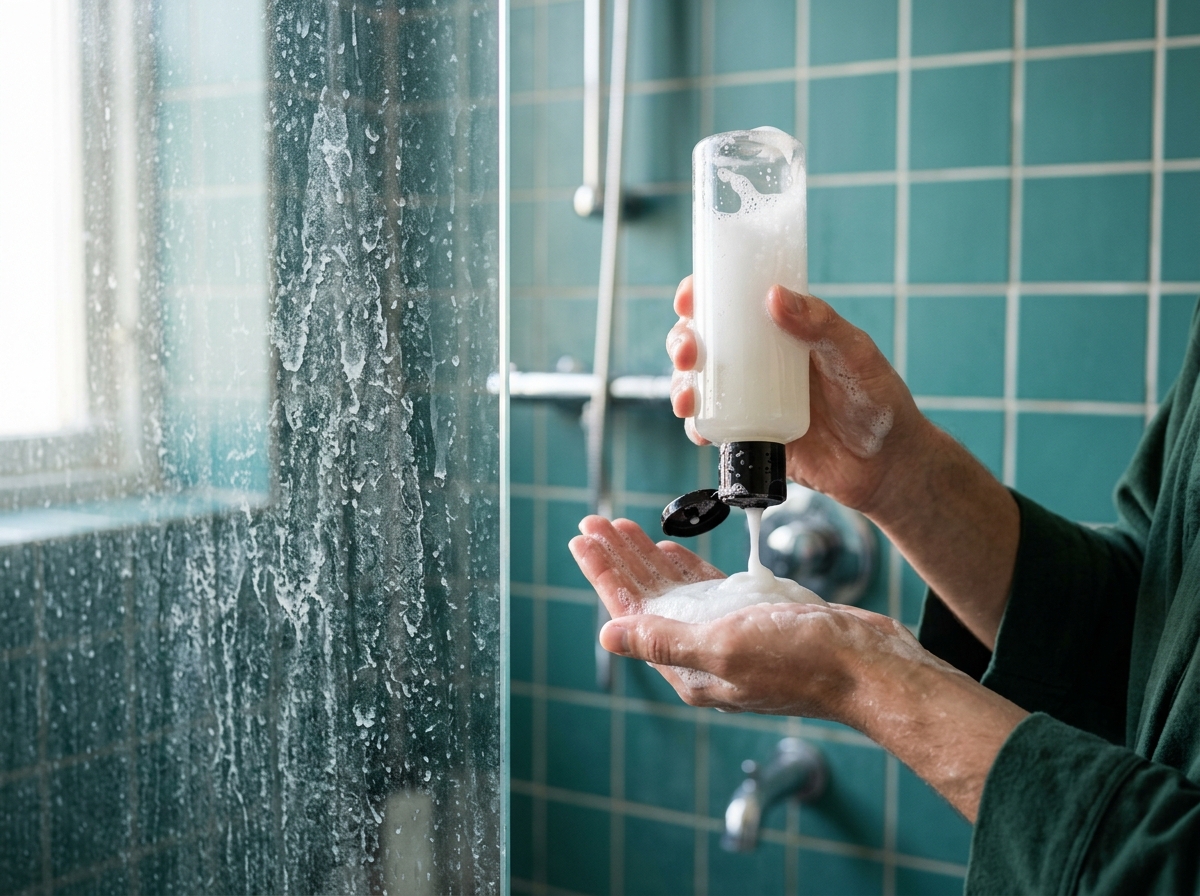
The 9 Best Clarifying Shampoos
Best overall and best budget picks
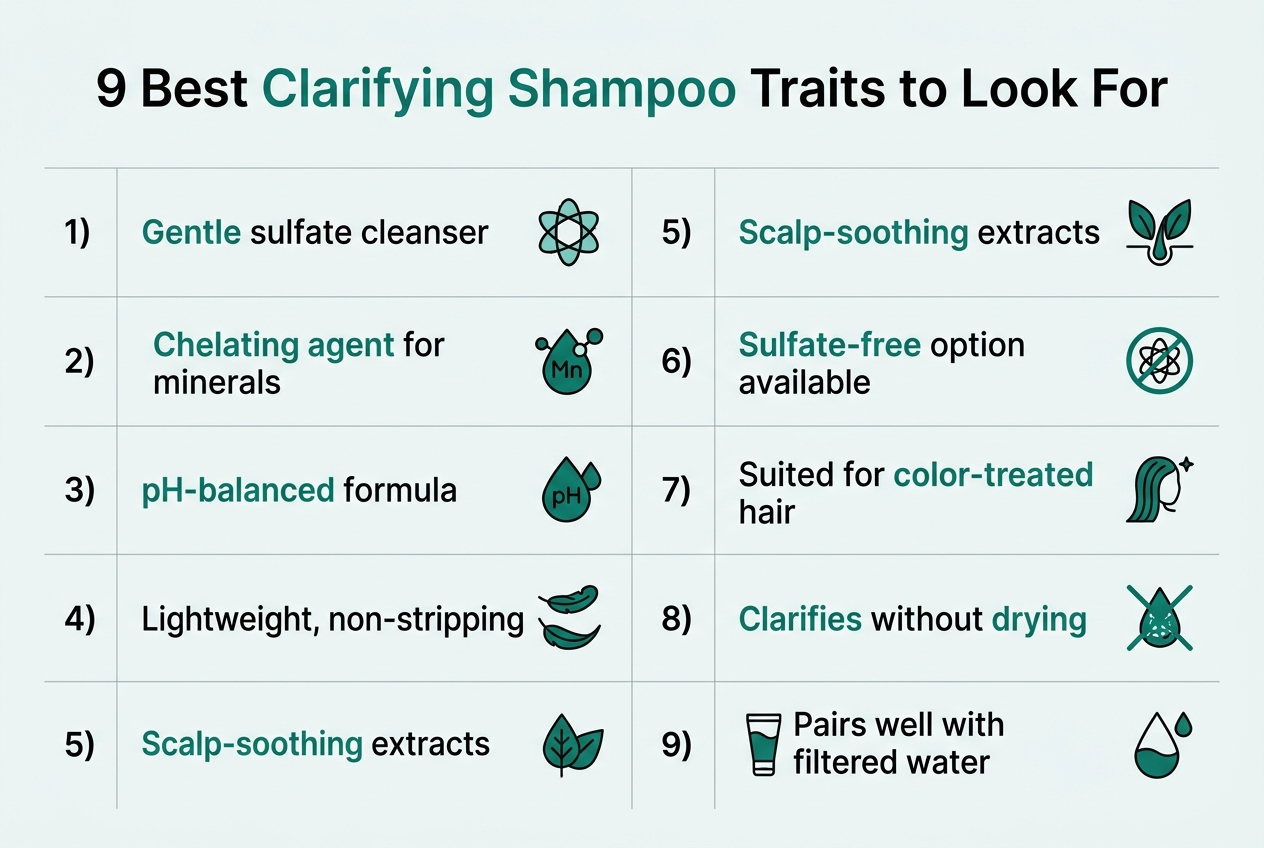
Not every scalp needs the same strength of clarifying formula, so this list spans drugstore shelves to salon counters. Price and ingredient list matter more than brand name here. A chelating agent like EDTA binds to mineral deposits and rinses them away, while apple cider vinegar and charcoal work more gently on everyday buildup.
- Malibu C Hard Water Wellness Shampoo (salon tier, $) — a chelating-forward formula built specifically for mineral-heavy water; great first pick if you shower under hard water daily and notice dullness within a day or two of washing.
- Neutrogena Anti-Residue Shampoo (drugstore, $) — the budget workhorse; a bare-bones surfactant clarifier that strips product and scalp oil fast, best for oily scalp types who clarify weekly.
- Head & Shoulders Royal Oils Scalp Clarify (drugstore, $) — gentler than most anti-residue shampoos, with charcoal to pull out impurities without torching sensitive, flaky scalps.
- Briogeo Scalp Revival Charcoal + Coconut Oil (specialty, $$) — a sulfate-free charcoal detox that's kinder to sensitive skin while still lifting buildup; a solid pick if other clarifiers leave your scalp tight and itchy.
Best for color-treated and curly hair
Curly and color-treated hair both hate stripping, which is exactly what aggressive clarifiers do. The trick is finding formulas potent enough to cut mineral film but mild enough to skip sulfates. If you're unsure which camp your scalp falls into, clarifying shampoo for oily hair options differ quite a bit from what color-treated strands can tolerate.
- Kristin Ess Weekly Clean Shampoo (salon tier, $$) — a low-sulfate clarifier gentle enough for color-treated hair, so it won't fade tone the way harsher drugstore options can.
- DevaCurl Buildup Buster (specialty, $$) — formulated for curls specifically, using a micellar base instead of harsh sulfates to avoid disrupting curl pattern or moisture balance.
- Ouidad Water Works Deep Conditioning Clarifying Shampoo (specialty, $$$) — pairs clarifying agents with conditioning oils in one step, built for curly or coily hair that can't afford a dry, stripped-out wash day.
- Pureology Strand Renewal Shampoo (salon tier, $$$) — a premium pick for color-treated hair, light on sulfates and formulated to clarify without dulling vibrancy.
- Function of Beauty Scalp Detox Shampoo (specialty, $$) — customizable for swimmer's hair or chlorine buildup, with chelating agents tuned to your specific water and scalp profile.
Whichever formula you land on, remember clarifying shampoo treats symptoms, not the source. Skin routines face a similar mismatch — plenty of people exfoliate on a schedule that doesn't actually suit their skin, and understanding how often should you exfoliate your skin type is a comparable lesson in matching the fix to the actual problem rather than habit.
How to Choose the Right Formula for Your Hair and Water
Hair type matchups
Not every head of hair needs the same muscle. Fine, color-treated hair can get stripped and brittle fast. Thick, curly, or heavily product-laden hair can shrug off a mild formula without any real change. Before you buy, run through this checklist: How often do you wash? How mineral-heavy is your water? Is your hair chemically treated? Those three answers decide whether you need a gentle monthly reset or a stronger weekly intervention.
| Hair Type | Recommended Strength | Wash Frequency | Watch For |
|---|---|---|---|
| Fine or thin hair | Mild chelating | Every 2–3 weeks | Over-drying, flyaways |
| Curly or textured hair | Moderate chelating | Every 3–4 weeks | Frizz, loss of curl pattern |
| Color-treated hair | Mild, sulfate-free | Every 4 weeks | Fading, dullness |
| Thick or oily scalp | Strong chelating | Weekly | Scalp tightness |
| Eczema-prone scalp | Fragrance-free, mild | As tolerated | Flaking, redness, itch |
Ingredient red flags to avoid
Chelating agents aren't one-size-fits-all. EDTA and citric acid are gentler, while stronger formulas lean on sulfates that can leave sensitive scalps raw. If you're dealing with eczema or chronic flaking, fragrance-free and sulfate-free versions aren't a luxury. They're often the only thing standing between you and a flare-up. For curly hair specifically, learning more about sulfate free shampoo for curly hair can help you avoid formulas that undo your curl definition while still clearing buildup. One honest note: no shampoo ingredient list fixes what's coming out of your showerhead in the first place. That's a separate problem, and it needs a separate fix.
How to Use Clarifying Shampoo Without Drying Out Your Strands
Clarifying shampoo works hard. That's the whole point. But used carelessly, it'll strip moisture right along with the buildup, leaving strands rough and prone to breakage. The fix isn't skipping it. It's using it with intention.
Step-by-step application
Five steps, done in order, make the difference between a reset and a disaster. Skip the conditioner step and you'll feel it by lunchtime — tight scalp, frizzy ends, regret.
| Step | What to do | Why it matters |
|---|---|---|
| 1. Wet hair fully | Saturate hair for 30–60 seconds under warm water | Clarifying shampoo needs water to activate its surfactants evenly |
| 2. Apply to scalp first | Massage into roots, not mid-lengths | Oil and buildup concentrate at the scalp, not the ends |
| 3. Work down gently | Let lather run through lengths as you rinse | Avoids over-scrubbing fragile, drier ends |
| 4. Rinse thoroughly | 60+ seconds, until water runs clear | Leftover residue causes the exact dullness you're fixing |
| 5. Deep condition | Leave a rich mask on for 5–10 minutes | Replenishes moisture the clarifying step removed |
How often is too often
Frequency depends entirely on your hair type. Fine or oily hair can usually handle a weekly clarify without complaint. Curly, coily, or color-treated hair is a different story. Stretch it to every two to four weeks, since these textures hold onto moisture more tightly and lose it faster once stripped.
The most common mistake? Treating clarifying shampoo like a daily cleanser. It's not. A close second: rinsing, toweling off, and walking away without conditioner. If buildup's especially stubborn — thanks to hard water minerals coating every strand — pair the shampoo with a clarifying mask once a month for a deeper reset.
Why Clarifying Shampoo Alone Doesn't Solve Hard Water Dullness
What hard water does beyond hair dullness
Clarifying shampoo cleans up a mess that's already happened. It doesn't touch what's coming out of your showerhead five minutes later. That's the whole limitation in one sentence: you're scrubbing off calcium and magnesium deposits, but the water making tomorrow's shower is exactly as hard as today's. Nothing upstream has changed.
Here's the part people miss: those minerals don't just dull hair. The same hard water strips your skin's natural lipid barrier and leaves chlorine residue sitting on the surface, which is a big reason so many people deal with dry, flaky patches or eczema-type flare-ups that seem to get worse after every shower. Hard water and chlorine exposure hit skin and scalp together, not separately.
So the buildup you're clarifying away isn't a one-time event. It's a daily redeposit. Wash your hair with hard water today, and mineral residue starts forming again within hours. Most people notice the dullness returns within three to five days, which is exactly why clarifying shampoo becomes a weekly chore instead of a one-and-done fix.
Treating the water vs. treating the symptom
Think of it this way: clarifying shampoo treats the symptom, filtered water treats the cause. One scrubs residue off after the damage; the other reduces how much residue forms in the first place. You still need both. Filtering doesn't mean you stop clarifying, it just means you're not fighting the same battle from scratch every single week.
A filtered showerhead with a vitamin-infused cartridge is the practical version of "treating the water." It installs without a plumber — most people swap it on in under ten minutes — and it works alongside whatever shampoo is already in your shower. You're not replacing your routine. You're reducing the load it has to deal with.
This won't replace a salon chelating treatment if your hair's already got months of buildup, and it's not a medical fix for diagnosed eczema — that still calls for a dermatologist's input. What it does is cut down how much hardness and chlorine reach your skin and scalp between washes, so the clarifying shampoo you already own has less to undo.
Testing Your Water Before You Buy More Products
Simple ways to check your water hardness
Before you buy another bottle of clarifying shampoo, figure out what you're actually dealing with. Dullness, flaking, and that tight, dry feeling on your skin can come from hard water, sure. But they can also come from product buildup, over-washing, or just a new styling habit you picked up. Guessing wastes money.
Two easy options exist, and neither requires a dedicated provider to show up at your door. A drugstore or online water hardness test kit uses test strips dipped into tap water, and it gives you a grains-per-gallon reading in under a minute. Alternatively, most local water utilities publish an annual water quality report online, often called a Consumer Confidence Report, listing mineral content, chlorine levels, and hardness for your specific area.
If you're on well water, a basic strip test won't catch everything. Iron, sulfur, or bacterial concerns need a proper well water testing service, not a home kit. That's a separate issue entirely, and one worth taking seriously.
What your results mean for your routine
Once you've got a number, the picture gets a lot clearer. Anything above 7 grains per gallon counts as hard water, and above 10 is considered very hard. At that point, cycling through shampoos is treating a symptom while ignoring the cause. A point-of-use filter at the shower or sink becomes a far more targeted fix than another clarifying formula, because it addresses what's hitting your hair and skin every single day.
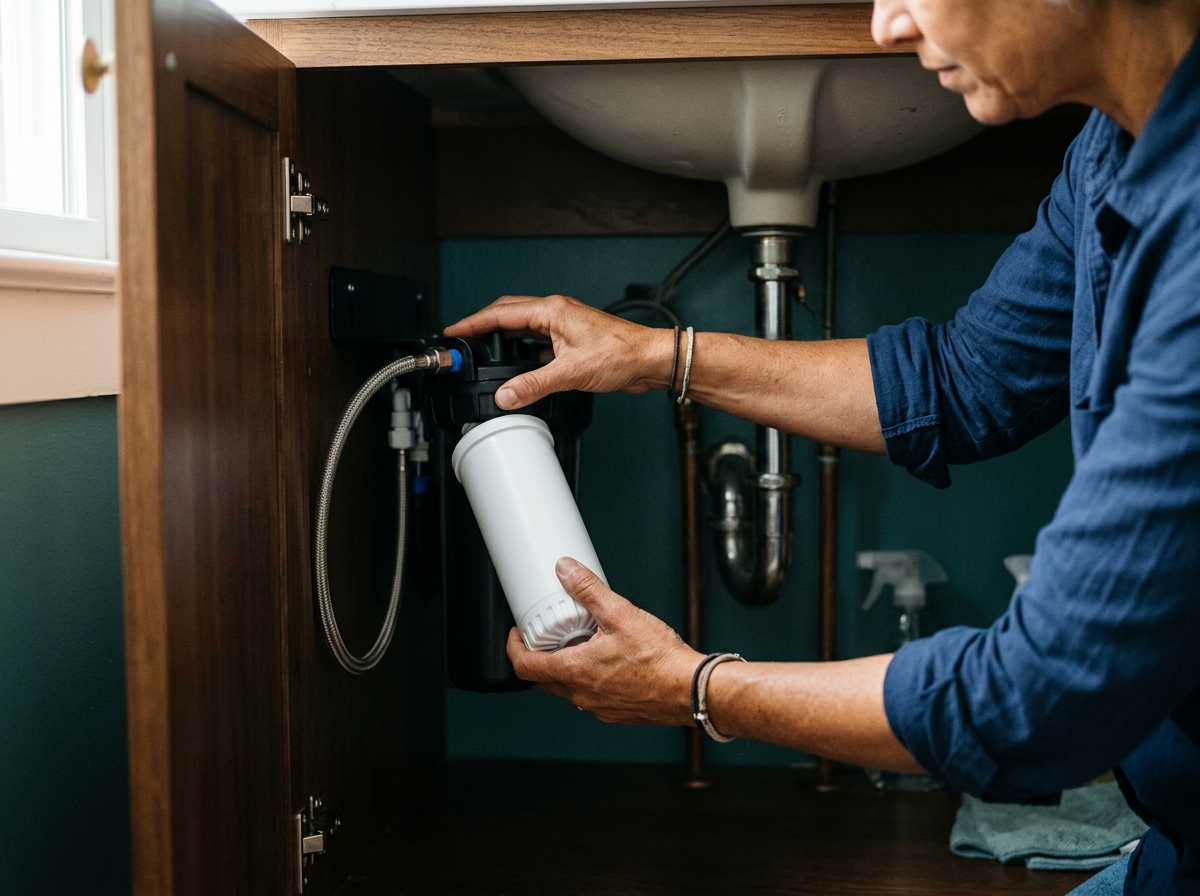
It's worth separating the two spaces in your home. A filtered showerhead handles the water touching your scalp and body daily. An under-sink filter serves the sink tap specifically, for face-washing and hand-washing, which matters if your skin reacts more at the mirror than in the shower. Neither is a drinking water purification system; that's a different category of product with a different job.
If your test comes back high, a whole-house softener is the only route that treats every tap and appliance in the home. Point-of-use filters won't do that. What they will do is target the two places your skin and hair actually make contact with water, without a plumber or a renovation.
Building a Routine That Actually Protects Hair Long-Term
One good wash won't fix hard water. It's a habit, not a one-time cure. The real win comes from pairing a clarifying shampoo with water that isn't loading your hair back up with minerals the second you rinse.
Pairing filtered water with your shampoo routine
Clarifying shampoo strips buildup. Filtered water keeps it from piling back on between washes. Use both, and you stop fighting the same battle every week. A filtered showerhead reduces the mineral and chlorine load hitting your scalp before it ever touches your strands, which means your shampoo has less to undo next time. Here's how the pieces typically fit together:
- Run a clarifying wash every one to two weeks to clear existing mineral film and product residue from your scalp and lengths.
- Install a point-of-use shower filter to cut the ongoing hardness and chlorine exposure that causes dullness in the first place.
- Keep whatever leave-in treatment, oil, or mask already works for you — vitamin-infused filter cartridges support the water side, not the product side.
- Swap cartridges every two to three months, since performance drops as minerals saturate the media over time.
- Set up a replacement filter subscription so fresh cartridges arrive automatically, the same way a conditioner refill reminder keeps you from running dry.
- Watch for faster color fade or increased frizz, both signs mineral buildup is creeping back in before your next scheduled swap.
For renters, this matters even more. A filtered showerhead swaps onto your existing arm in minutes. No tools, no plumber, no landlord conversation required.
When to bring in a professional
Filters handle the daily grind. They don't replace expert help when things get serious. If an esthetician or stylist recommended filtered water, keep that relationship going — they're watching your results up close and can adjust other parts of your routine accordingly. Severe, long-standing buildup may still need an in-salon chelating treatment first; think of filtration as what keeps that result from unraveling in a month. And if you're seeing eczema-like patches or scalp irritation that won't quit, see a dermatologist alongside any water or product changes. Filters support healthier hair and skin. They're not a medical fix.
Before deciding, it's worth asking what you're actually trying to solve: is it the water hitting your skin and hair every day, or a bigger structural issue that calls for testing, a plumber, or a dedicated whole-home system? Point-of-use filters can meaningfully change how water feels at the shower and sink without any installation hassle, but they're not a stand-in for professional diagnosis, medical care, or house-wide treatment. Getting clear on the actual goal — softer showers versus solving hard water at its source — makes the right next step much easier to see.
Share:
Water Tap Filter Systems Compared: Which Type Actually Helps Your Skin?