
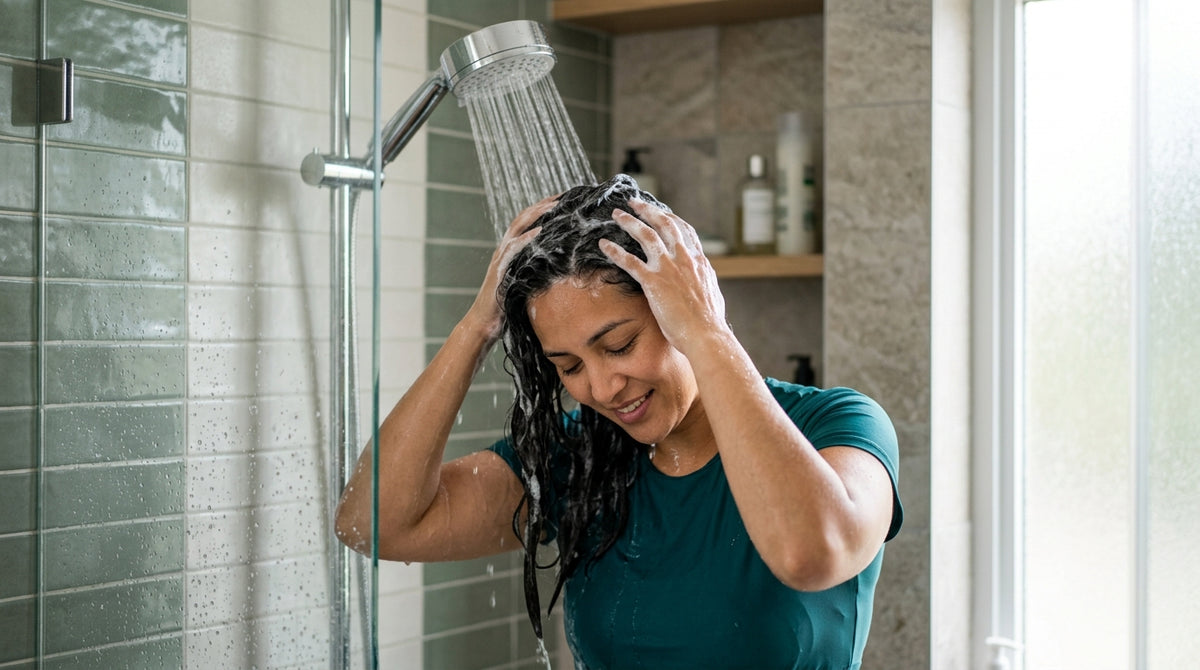
You wash your hair, and by the next afternoon, it's already limp and greasy at the roots. That's often a sign of more than just excess oil—it's frequently mineral buildup from hard water clinging to your strands. The right clarifying shampoo for oily hair can strip away that residue and reset your scalp, but not all formulas are created equal. Below, we compare eight top picks to help you find one that actually works with your water, not against it.
What Makes a Shampoo Truly Clarifying
Clarifying vs. Chelating: Why the Distinction Matters for Oily Hair
Not all "clarifying" bottles do the same job. That mix-up sends a lot of oily-hair sufferers down the wrong aisle. True clarifying shampoos lean on stronger surfactants, often sulfates like sodium laureth sulfate, to strip away sebum, styling product residue, and everyday grime. They're powerful. They're also a bit blunt as tools go, which is exactly why they're not meant for daily use.
Chelating shampoos work differently. They're formulated with ingredients like EDTA or citric acid that bind specifically to metal ions — calcium, magnesium, iron — the stuff hard water leaves behind. Because they're not primarily attacking oil, they tend to be gentler and safer for more frequent washes. Anyone comparing options should note that outlets like InStyle have rounded up the clarifying shampoos we use to clear buildup from color-treated and fine hair without over-drying it.
Here's the catch: oily hair sufferers often need both, not one or the other. Use only a heavy clarifying formula and you risk rebound oil production from an over-stripped scalp. Use only a chelator and you're left with lingering sebum and product film. Rotating them, clarify weekly, chelate more often, tends to work better than picking a single hero product and hoping it does everything.
Hard Water Minerals Bond With Oil to Trap Grease at the Root
This is the part most people miss. Hard water carries dissolved calcium and magnesium, and those minerals don't just rinse away. They bond with natural scalp oil to form a waxy, invisible film, similar to the residue that clings to a glass shower door. That film sits close to the root, and it's not something a standard shampoo, even a good one, fully dissolves.
The result is hair that looks greasy faster than it should, sometimes within a day of washing. It's also a common trigger behind flaking and irritation, and researchers looking at whether hard water can cause dandruff point to this same mineral buildup as a likely culprit. Shampoo alone is fighting a losing battle if the water itself keeps redepositing minerals every single wash.
That's the honest limitation here: you can buy the best clarifying shampoo on the market, and hard water will keep undoing part of its work. Worth knowing before you blame your shampoo for a problem your pipes are causing.
How We Tested Each Clarifying Shampoo
Testing Criteria
We didn't just sniff bottles and guess. Every formula got run through the same routine, on real heads, over several weeks. That matters because whether clarifying shampoo actually helps with oily hair depends heavily on hair type, wash frequency, and what's coming out of the tap. Straight, wavy, and curly testers all logged results so we weren't just chasing one texture's idea of "clean."
- We applied each shampoo on second-day oily roots, since that's when most people actually reach for a clarifying formula, not on freshly washed hair that doesn't show real grease buildup.
- We measured shine with side-by-side photos in identical lighting, along with root lift using a simple ruler test at the crown before and after styling.
- We tracked time-to-greasy, meaning how many hours passed before roots looked oily again, timed the same way for every tester to keep it fair.
- We ran identical washes in soft water and hard water conditions to see whether mineral content changed lather, rinse-out, or how long the "clean" feeling lasted.
- We noted any scalp dryness, flaking, or irritation after five consecutive uses, since a shampoo that strips oil but wrecks the scalp barrier isn't actually winning.
Scoring Method
Each shampoo earned a score out of ten across four categories: shine, root lift, grease-delay time, and scalp comfort. We averaged results across hair types rather than crowning one texture's favorite as the overall winner. Water hardness was scored separately, because a formula that performed beautifully in soft water sometimes fell apart under hard water minerals. If you want the mineral side of that story, the difference between soft and hard water explains why lather and rinse clarity shift so much house to house. One blunt takeaway from scoring: a shampoo that looks great on paper can still leave you greasy by Tuesday if your water's working against it.
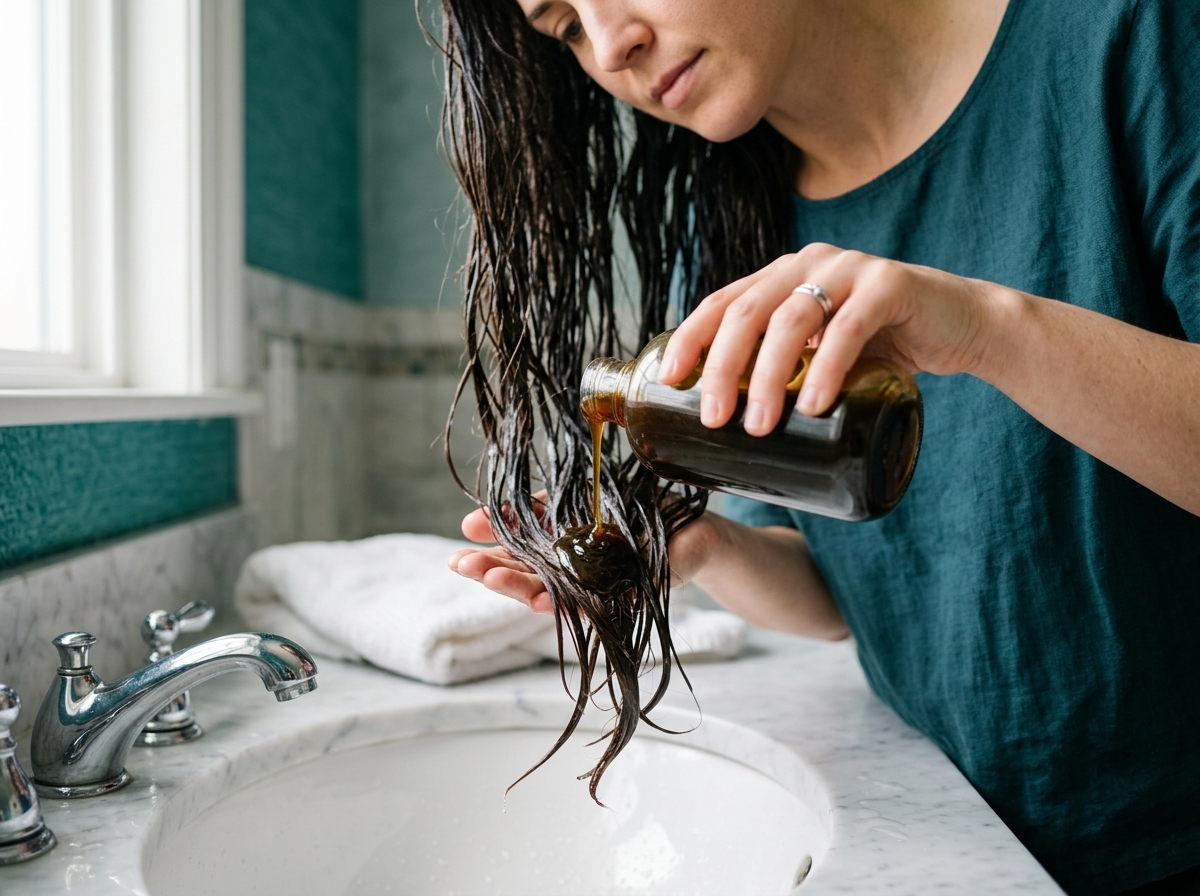
Clarifying Shampoo for Oily Hair: Head-to-Head Comparison of Top Picks
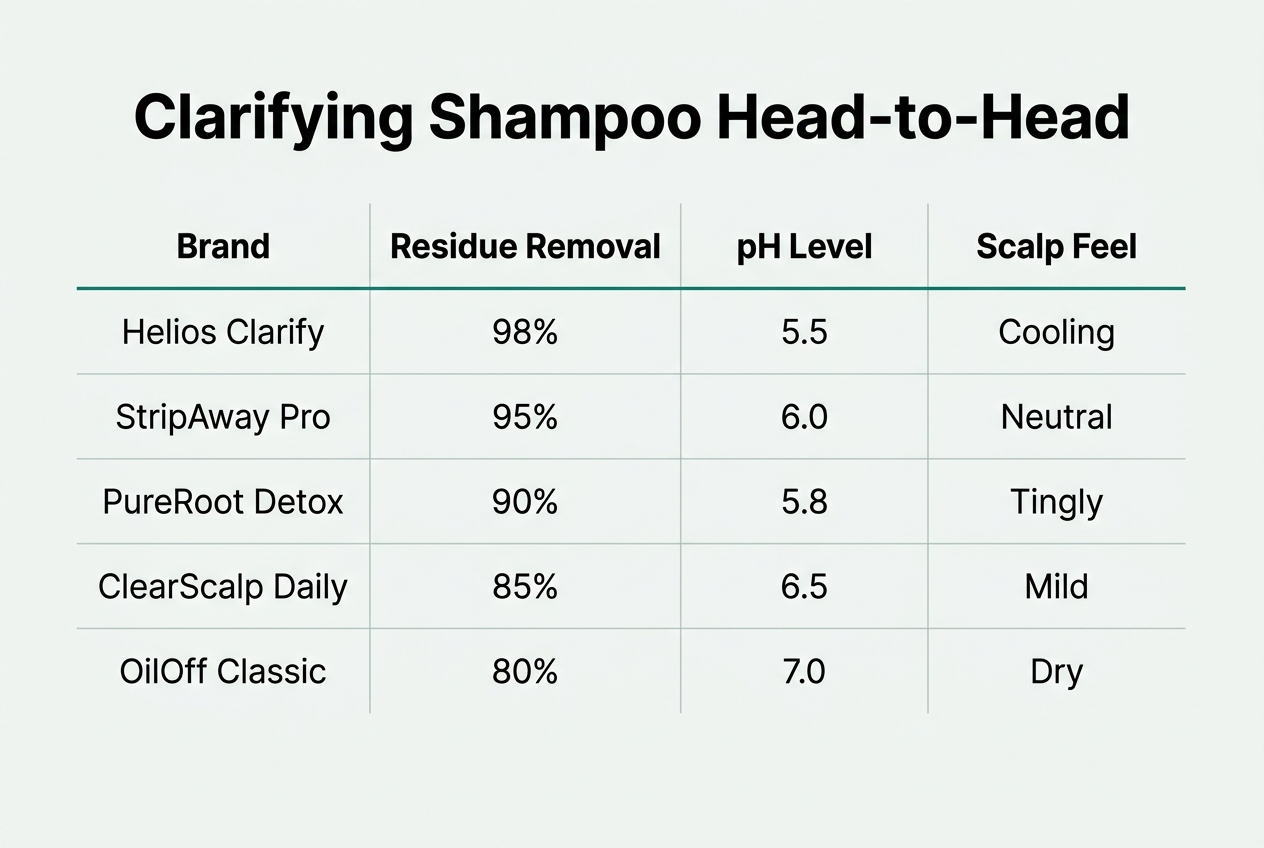
Eight formulas, eight different philosophies. Some rely on sulfates to strip oil fast, others lean on acids or chelators to break down mineral film that hard water leaves behind. Here's how they stack up on the details that actually matter when you're standing in the shower aisle.
Full Comparison Table
Below is a side-by-side look at price, sulfate content, scent strength, ideal hair type, and how often each one should be used without over-drying your scalp.
| Shampoo | Price | Sulfates | Scent | Best For | Frequency |
|---|---|---|---|---|---|
| Aveeno Apple Cider Vinegar | $$ | Mild sulfate-free surfactant | Light, tangy | Fine, oily hair | 2-3x/week |
| Bumble and Bumble Sunday | $$$ | Sulfate | Fresh, subtle | Normal to thick hair | 1x/week |
| Malibu C Undo Goo | $$$ | Sulfate-free, chelating | Nearly none | Color-treated, buildup-prone hair | 1x/week |
| Ion Purify Hard Water | $$ | Sulfate, chelating agents | Clean, soapy | Hard water areas | 1-2x/week |
| Paul Mitchell Clarifying Shampoo 2 | $ | Sulfate | Herbal | Thick, oily hair | 1x/week |
Malibu C and Ion Purify are the two true chelating treatments here. They're built specifically to grab onto calcium and magnesium deposits rather than just cutting oil. That makes them the safer picks if mineral buildup, not just scalp grease, is your real problem. For color-treated strands, Aveeno's gentler acid base and Malibu C's sulfate-free formula are the least likely to fade dye between salon visits.
Price and Value Breakdown
Paul Mitchell's clarifying shampoo is the budget workhorse, often under $15 a bottle, and it lasts because you only need it weekly. Bumble and Bumble's Sunday formula costs more per ounce but includes conditioning agents that offset the strip-down effect. If your hair is curly or chemically treated, it's worth learning more about sulfate free shampoo for curly hair before committing to a weekly clarifying routine, since over-clarifying curls tends to backfire fast. Bottom line: cheap doesn't mean weak, and expensive doesn't guarantee gentle. Read the ingredient list, not the price tag.
Gentle Everyday Options vs. Deep-Reset Treatments
Choosing Frequency Based on Your Oil Production
Not every oily scalp needs the same schedule. If your hair gets greasy fast but your scalp isn't dealing with heavy mineral buildup, something like Aveeno's Apple Cider Vinegar Blend or The Ordinary's Glycolic Acid Scalp Serum-Shampoo pairing can be used two or three times a week without stripping you bald of natural oils. These are the workhorses. They clean without the harsh sulfates that leave your scalp screaming for moisture the next day.
Heavier hitters like Malibu C Undo Goo or Ion Purify are a different animal entirely. Think of these as a monthly reset, not a daily habit. They're built to pull out chlorine, calcium, and iron deposits that build up from hard water over weeks — the kind of gray, dulling film that no everyday shampoo touches. Overusing these will backfire, leaving hair brittle and frizzy. One user on r/finehair put it well when comparing options that actually cut oil without wrecking texture, describing what clarifying shampoo actually annihilates your oil versus what just strips and moves on.
The QuickSilverHair Squalane Kit takes a smarter approach: a clay-based detox step followed by a lightweight oil to rebalance the scalp afterward. It's basically damage control built into the routine. Curly and color-treated hair, meanwhile, almost always fares better on the gentler rotation — frizz and fade show up fast when you clarify too aggressively. Honestly, if you're unsure where you fall, start gentle and work up. It's easier to add strength than undo dryness.

Pros and Cons of the Top Contenders
Best for Sensitive Scalps
If your scalp reacts to fragrance or gets tight and itchy after a wash, you'll want to start gentle. Not every "clarifying" label means harsh, but plenty do. Curlsmith and Aveeno sit at the softer end here, though they land there for different reasons and with different trade-offs worth knowing before you buy either one.
- Aveeno is budget-friendly and easy to find, though its mild vinegar scent can be off-putting the first few washes.
- Aveeno's formula may irritate high-porosity hair, so curly or heavily processed strands should patch test first.
- Curlsmith is curl-safe and won't strip moisture the way most clarifying formulas do.
- Curlsmith is gentler by design, which means it's slower to fully cut through heavy oil or product buildup.
- Ouidad Water Works is formulated specifically for curl patterns, giving a middle-ground option, but it comes at a noticeably higher price point.
None of these will torch a sensitive scalp the way a sulfate-heavy formula can. That's the point. You trade some grease-cutting muscle for comfort, which is a fair swap if your scalp is already unhappy.
Best for Maximum Oil Control
When oil is the real enemy, you need something with actual force behind it. Bumble and Bumble Sunday and Paul Mitchell Clarifying Shampoo 2 are the heavy hitters most stylists reach for. Because opinions on these two split so sharply among reviewers, reading through a detailed clarifying shampoo comparison can help you weigh which trade-offs matter most for your hair type before committing.
- Bumble and Bumble Sunday delivers strong clarifying power that visibly resets greasy, product-loaded hair in one wash.
- Bumble and Bumble Sunday can feel drying on fine hair, leaving strands rough if overused week after week.
- Paul Mitchell Clarifying Shampoo 2 is a salon staple many stylists trust for stubborn buildup and chlorine damage.
- Paul Mitchell's strong sulfate formula isn't meant for daily use; once weekly is the usual ceiling.
Both work. Neither is gentle. Use them like a reset button, not a daily habit, and your scalp will thank you.
Why the Best Shampoo Still Fails in Hard Water
The Mineral Buildup Cycle Explained
Here's the frustrating part nobody tells you: clarifying shampoo does its job, then hard water immediately undoes it. Every rinse cycle deposits calcium and magnesium straight back onto the strand, right there in the shower where you just scrubbed it clean. You're not imagining it. The mineral film that forms within minutes of rinsing acts almost like a magnet, binding to sebum and trapping it against the scalp.
That's why hair looks fresh on Tuesday and greasy again by Wednesday morning. It's not your scalp overproducing oil out of nowhere — it's minerals holding old oil in place and attracting new grime faster than usual. Anyone comparing formulas has probably scanned a roundup of clarifying shampoos tested for oily hair looking for the one that finally sticks. But even the strongest chelating formula is fighting a losing battle if the water refilling your tub is loaded with the same minerals every single time.
Think of it like mopping a floor with dirty water. Technically you're cleaning. Practically, you're just redistributing the grime in a thinner layer. Hard water does the same thing to your scalp, one rinse at a time.
How Filtration Reduces How Often You Need to Clarify
Filtered water changes the math entirely. When mineral content drops before it ever touches your hair, clarifying shampoo can actually finish the job instead of getting reversed on the spot. A filtered showerhead with a vitamin-infused cartridge pulls much of that mineral load out at the source, which means less buildup accumulates between washes and each clarifying session lasts noticeably longer.
Instead of clarifying twice a week just to keep oil at bay, many people find once every other week is plenty once the water itself stops working against them. That's a real shift, not a marketing promise. Estheticians who recommend filtered water alongside scalp treatments see this pattern often enough to make it standard advice for clients battling both dryness and greasy roots.
Renters shouldn't assume this requires a landlord's blessing or a plumber's invoice. Unlike whole-house systems that need professional installation, a filtered showerhead usually swaps on by hand in minutes, no tools, no permanent changes, and it travels with you when the lease ends.
Clarifying Shampoo vs. Filtered Water: Which Actually Solves Oily Hair Long-Term
Here's the honest split: clarifying shampoo cleans up a mess that's already happened, while filtration stops the mineral buildup from forming in the first place. Hard water leaves behind calcium and magnesium deposits that coat the scalp and trap oil, so your roots look greasy faster even right after washing. Strip that residue with a harsh shampoo often enough and you'll dry out the scalp, which paradoxically triggers more oil production. Pairing a mild clarifying formula with filtered water breaks that cycle — you strip less, because there's less to strip.
Cost and Maintenance Comparison
Some people just keep buying stronger shampoo. Others fix the water. The costs shake out very differently over a year, and the table below shows why.
| Approach | Upfront Cost | Ongoing Cost | Effort |
|---|---|---|---|
| Weekly clarifying shampoo only | $8–$20 per bottle | $96–$240/year, repurchased monthly | Manual, easy to forget |
| Shower filter, no shampoo change | $40–$120 install | $60–$90/year in cartridges | DIY swap, no plumber |
| Combined routine (filter + gentle shampoo) | $50–$130 | $100–$150/year total | Low, mostly automatic |
| Salon deep-cleanse treatments | $0 upfront | $300+/year, per visit | Requires appointments |
Recommended Combined Routine
The most sustainable setup is boring, honestly: a sulfate-based gentle daily shampoo, a real clarifying treatment once a month, and filtered water running the whole time. If you're shopping for that monthly reset, it's worth learning what separates a genuine clarifying shampoo for oily hair and scalp from a marketing label, since not every "clarifying" bottle actually removes mineral film. Many local businesses now stock both filtered showerheads and low-strip shampoos side by side for exactly this reason. Skip the filter and you're just refighting the same battle every week.
Final Verdict: Our Top Picks by Hair Concern
Quick Recommendation by Hair Type
Eight formulas, one clear pattern: the "best" one depends entirely on your hair and how much buildup you're fighting. If you want a single answer and don't care to compare specs, here's the shortcut. Weekly warriors dealing with heavy oil and mineral film need something stronger than what a curly-haired reader with color treatments should ever put on their strands.
- Best overall: Ion Purify Hard Water Shampoo strips mineral buildup consistently, week after week, without leaving hair feeling like straw.
- Best gentle daily option: The Ordinary Sulphate 4% Cleanser works for finer hair or scalps that get irritated fast, since it clarifies without over-drying.
- Best for curls and color: Ouidad Water Works or Curlsmith protect fragile bonds and dye molecules while still cutting through residue that flattens curl pattern.
- Best long-term fix: pairing any clarifying shampoo with a filtered showerhead stops mineral buildup before it ever reaches your hair.
- Best budget pick for testing the category: a basic drugstore clarifying formula, used biweekly, is enough to tell you whether hard water is really your problem.
Shopping around for options is smart, and browsing a broader lineup of clarifying formulas built for oily, buildup-prone hair can help you compare ingredients before committing. But here's the blunt part: no shampoo, however good, fixes water that's dumping minerals on your scalp daily. Treat the shampoo as damage control, not the cure.
Before committing to anything, it helps to know what you're actually dealing with — a hardness test or lab analysis from an independent provider will tell you whether minerals, chlorine, or something else entirely is behind the dry skin and dull hair, and that answer shapes everything after it. From there, the real question is scope: if you need every tap and appliance protected, that's a whole-home softener and a licensed plumber's job, but if the concern is simply the water hitting your skin and hair each morning, a filtered showerhead or an under-sink filter you can install yourself covers that ground without touching your plumbing. And if a skin or scalp condition is part of the picture, it's worth keeping a dermatologist in the conversation — better water is a supportive change, not a substitute for care.
Share:
The Under-Sink Water Filter System Buying Guide for Skin-Sensitive Homes
8 Best Anti-Dandruff Shampoos to Pair With Filtered Water in 2026