
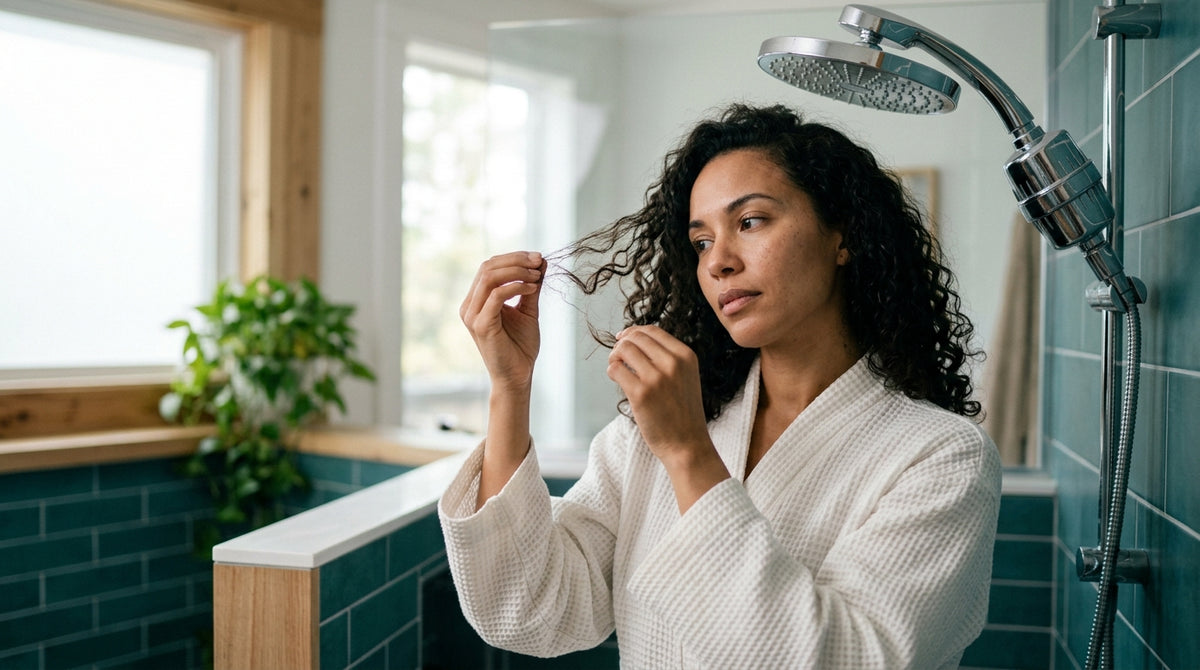
You've switched shampoos three times and your scalp still feels tight, your ends still look parched, and nothing seems to stick. The real culprit might not be your shampoo at all — it's often the hard water running through it. This guide walks you through choosing a sulfate free shampoo for dry hair that actually works, plus what's quietly undermining it before it ever reaches your scalp. Get both right, and dryness stops being a guessing game.
Before you start: what causes your hair dryness in the first place
Hard water vs. sulfates: telling the two apart
Sulfates get blamed for everything. But they're only half the story. These cleansing agents do strip natural oils from your scalp and strands — that's their job, honestly. If you swap to a gentle sulfate free formula and your hair still feels like straw, something else is probably going on. That something is usually the water itself, not the bottle in your shower caddy.
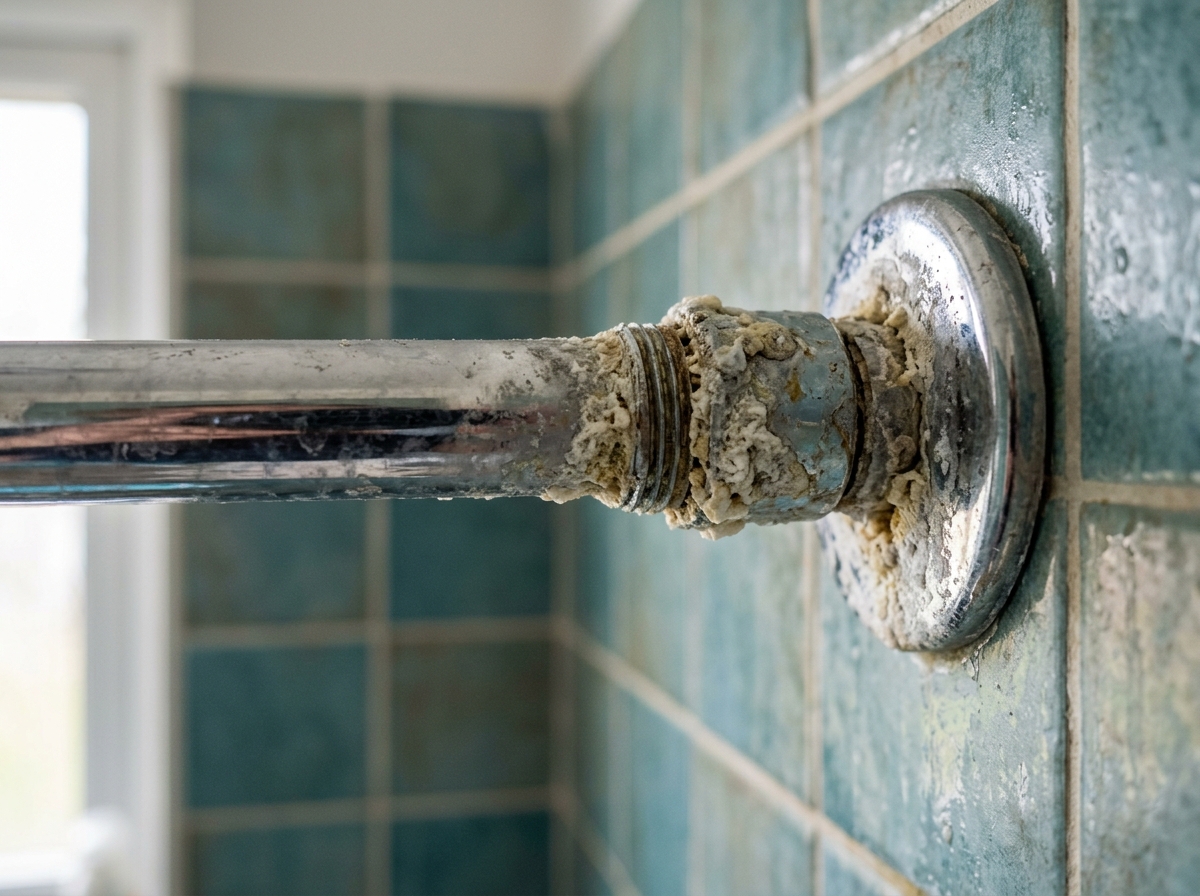
Hard water carries dissolved calcium and magnesium. Every time you rinse, these minerals settle onto your hair shaft, forming a thin film. That coating happens regardless of which shampoo you use, sulfate free or not. It traps dryness underneath and blocks moisture from actually absorbing into the strand. You could buy the gentlest, most expensive bottle on the shelf and still end up disappointed.
This is why so many people cycle through five or six "miracle" shampoos with no real change. They're treating a symptom while ignoring the actual input hitting their scalp daily. Checking signs your home has hard water is a quicker diagnostic than another trip down the shampoo aisle.
Spotting the clues that water, not product, is the real problem
A few tells give it away fast. Filmy residue on shower glass or faucet fixtures is one. If you have color-treated hair, look for fading that seems way too quick, especially around three to four weeks post-color, when it should still look vibrant. Dull, brassy tones creeping in early are a classic mineral-buildup signature, not just normal fade.
Scalp tightness right after rinsing is another big one. Soap and mineral deposits react in hard water to form a sticky residue that clings to skin and hair alike, leaving that tight, squeaky feeling people mistake for "clean." It's not clean. It's buildup. Curly hair shows this especially clearly, with strands that feel coated, look limp, and lose definition no matter how much product you layer on.
Why fixing the water matters as much as fixing the shampoo
Here's the blunt version: changing shampoo without changing your water is half a fix. You're cleaning up downstream while the source keeps adding the problem back in, shower after shower. If you're curious how hard your water really is, a separate testing provider can confirm it with an actual water quality test, since the formula only performs as well as what it's mixed with.
Many local businesses, salons included, see clients re-damage freshly treated hair within weeks simply because the tap water undoes the work. That's not a product failure. It's a prerequisite nobody addressed. Treating the water first gives any shampoo, sulfate free or otherwise, an honest shot at actually working.
Step 1: Read the label — what to look for in a sulfate free shampoo for dry hair
Ingredients that help vs. ones that quietly undo the benefit
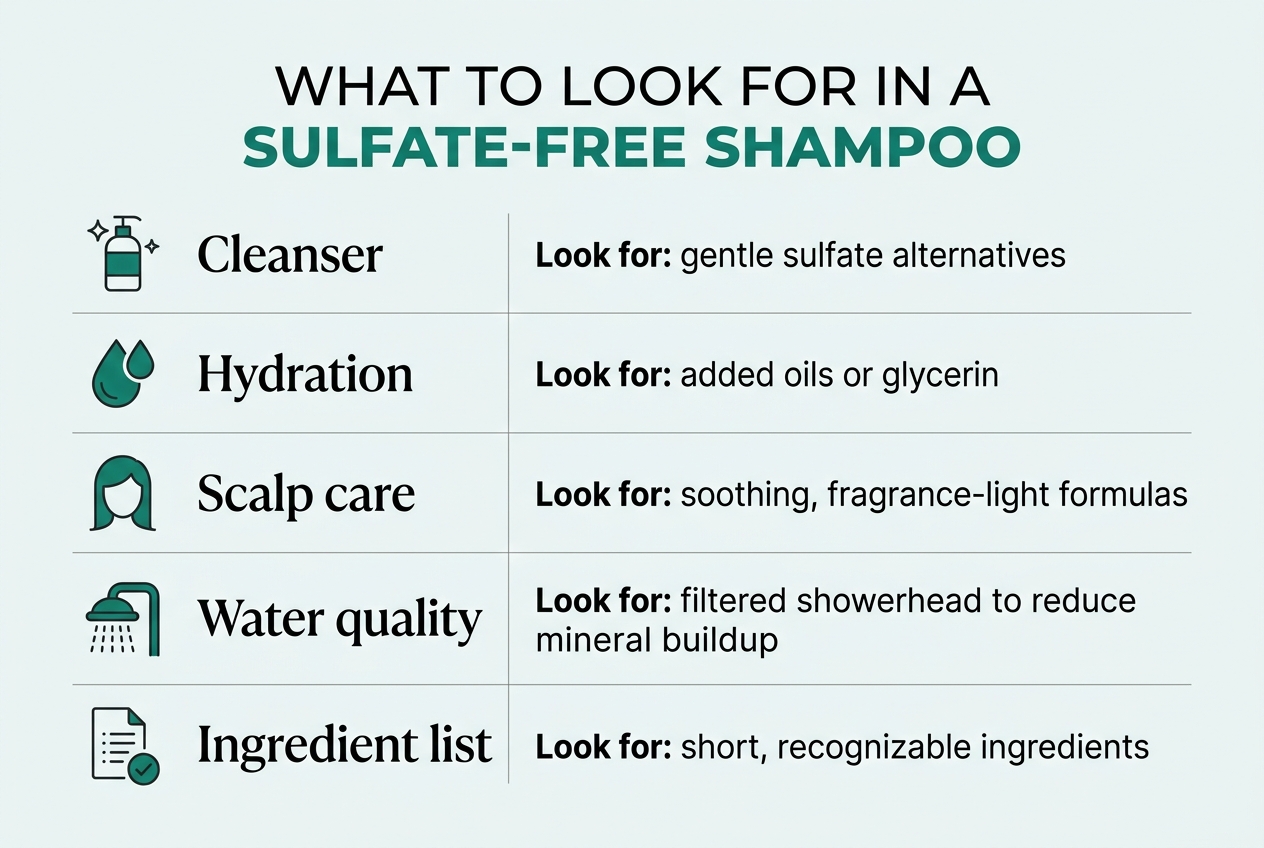
Flip the bottle over before you buy. The ingredient list tells you more than any front-label claim ever will, and for dry hair, that list is the whole ballgame. Avoid sodium lauryl sulfate and sodium laureth sulfate specifically — both strip natural oils fast and leave strands feeling like straw within a wash or two. Look instead for gentle surfactants like cocamidopropyl betaine and decyl glucoside, which clean without the harsh scrub. Then check for humectants and oils: glycerin, argan oil, shea butter. These pull moisture in and seal it there.
Here's the catch: plenty of bottles say "sulfate free" right on the front and still pack a punch with other harsh alternatives, like sodium coco sulfate or ammonium lauryl sulfate. Same irritation, different name. The table below breaks down what to scan for on an actual label.
| Ingredient type | Example names on label | Effect on dry hair |
|---|---|---|
| Harsh sulfates to avoid | Sodium lauryl sulfate, sodium laureth sulfate | Strips oils, worsens dryness |
| Hidden harsh alternatives | Sodium coco sulfate, ammonium lauryl sulfate | Still strips moisture despite "sulfate free" label |
| Gentle surfactants | Cocamidopropyl betaine, decyl glucoside | Cleans gently, preserves oils |
| Humectants | Glycerin, panthenol | Draws in and holds moisture |
| Emollient oils/butters | Argan oil, shea butter | Seals in moisture, adds softness |
If your hair is curly on top of dry, the stakes get higher, since curls already struggle to hold onto moisture down the shaft. It's worth learning the specific formulation traits that matter for curl pattern by reading up on sulfate free shampoo for curly hair before you commit to a bottle. One blunt truth: marketing teams know "sulfate free" sells, so they'll slap it on anything. Read past the label copy, straight to the ingredient panel. That's the only part that doesn't lie.
Step 2: Match the formula to your hair type and concern
Not every sulfate free formula works the same way. Once you've ruled out the harsh stuff, the real job is matching texture and ingredients to your specific hair and scalp. A curly-haired reader and a fine-haired reader shouldn't buy the same bottle, even if both say "sulfate free" on the label. That claim is just step one.
Quick picks by hair concern
Think of this as a cheat sheet. Your hair type, your scalp, and your color history all push you toward different formulas, even within the sulfate free category. Here's how to sort it out fast:
- Curly or coily hair tends to be naturally drier, so look for richer, creamier sulfate free formulas with oils like shea or coconut that coat the strand without stripping it.
- Color-treated hair benefits from sulfate free shampoos that also list UV protection claims, since sun exposure fades pigment almost as fast as harsh surfactants do.
- Fine, dry hair should steer clear of heavy butters and silicones that weigh strands down flat, even when the shampoo is technically sulfate free.
- Scalp sensitivity or dandruff-prone scalps need fragrance-free, soothing formulas, often with oat or aloe, since added perfume is a common irritant trigger.
- Thick, dense hair usually tolerates more conditioning agents, so a creamier wash won't leave the buildup that fine hair shows almost immediately.
- If you're unsure which camp you're in, patch-test a travel size for two weeks before committing to a full bottle — it's cheap insurance.
Here's the blunt part: no shampoo fixes a scalp problem that's medical, and no formula undoes months of mineral buildup from hard water on its own. If dandruff or flaking persists, that's a conversation for a dermatologist, not a label swap. Filtered water helps the shampoo you already picked perform the way it's supposed to, and understanding the health benefits you didn't know a water filter provides is a useful next step before you buy another bottle. Some readers also explore complementary wellness routines, and practices like session-based massage therapy for tension relief get mentioned alongside skincare-conscious habits, though that's a separate category from shampoo formulation entirely.
Step 3: Address the water your shampoo mixes with
Why great shampoo can still underperform in hard water
You can buy the gentlest, most sulfate free bottle on the shelf and still end up with flat, straw-like hair. Here's why. Hard water carries dissolved calcium and magnesium, and those minerals bind with shampoo molecules before they ever get the chance to clean your scalp properly. The result is weak lather, poor rinse-out, and a dull film left behind on every strand — even with formulas marketed as ultra-mild. The shampoo isn't failing. The water is working against it.
This buildup compounds over weeks. Minerals coat the hair shaft, trap residue, and make color-treated or curly hair look especially dull and feel coarse by day two or three. It's a quiet, cumulative problem — one wash doesn't ruin your hair, but months of it will.
Salon fixes help, but they're not a permanent answer
A chelating salon treatment does real work. It strips mineral deposits and residue, leaving hair noticeably softer right after the appointment. Many local businesses offer this as a periodic reset, and it's worth doing if buildup is already severe.
But here's the catch: it only clears what's already there. The moment you shower again under the same hard water, new mineral deposits start forming immediately. Without changing the water itself, you're stuck booking repeat treatments every few months just to stay even — treating the symptom, not the source.
Filtering water at the point of use
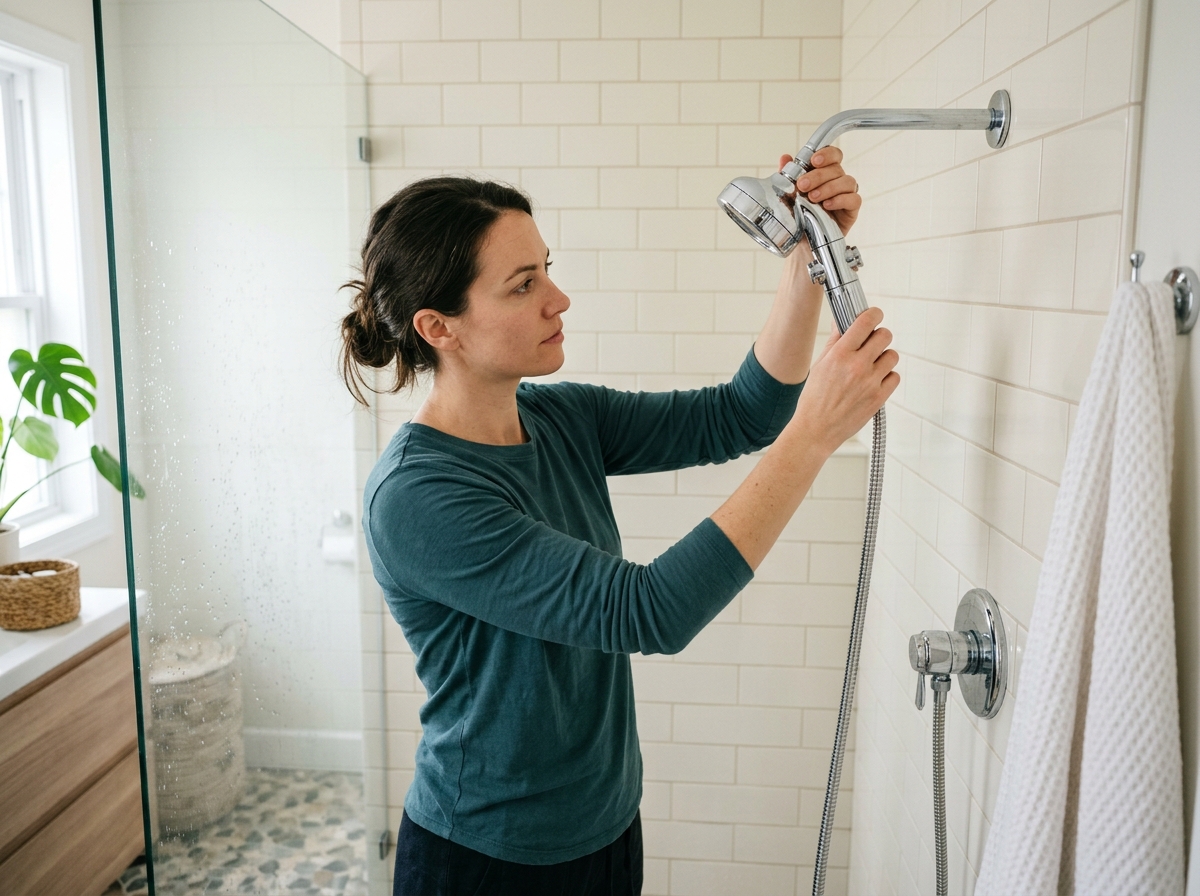
This is where point-of-use filtration earns its keep. A filtered showerhead from Helios reduces chlorine and hardness right where water meets your hair, with no plumber and no whole-home softener required. It installs in minutes by swapping onto your existing shower arm, making it a realistic option for renters or anyone who doesn't want construction work for a rental bathroom.
It won't soften every tap in the house — that's a bigger job handled by a dedicated whole-home softening system, which is a different category of product entirely — but it directly addresses the water hitting your scalp during the one routine that matters most for hair health.
Don't forget the sink
Pre-shampoo rinses, detangling, and final rinse-outs often happen at the bathroom sink too. A Helios under-sink filter covers that water source the same way, so hardness and chlorine exposure don't sneak in through a second tap while you've only solved half the problem.
Step 4: Install a point-of-use filter the easy way
You don't need a toolbox or a weekend blocked off for this. Point-of-use filtration sits right where water meets skin and hair — the shower or the sink — and setup is genuinely simple for most homes.
Showerhead swap vs. under-sink setup
Both routes skip the plumber entirely. The right one depends on whether you want to treat your shower, your sink, or both. Neither requires cutting into a wall or rerouting pipes — that's the whole point of point-of-use filtration.
| Factor | Filtered showerhead | Under-sink filter |
|---|---|---|
| Install time | Under 15 minutes | 20–30 minutes |
| Install steps | Unscrew old head, attach new one, hand-tighten with included washer | Connects inline to the cold water line beneath the sink |
| Tools needed | Usually none, maybe a wrench for stuck fittings | Basic hand tools, sometimes a wrench for existing connectors |
| Where it treats water | Shower only | Cold tap at that sink only |
| Cartridge type | Vitamin-infused, built into the housing | Vitamin-infused, built into the housing |
Notice there's no separate cartridge to shop for. The vitamin-infused filter is part of the unit you install, not an add-on you buy later. A replacement filter subscription just keeps fresh ones coming so you're never swapping in a spent cartridge.
Not sure filtration is worth the effort? A home water hardness test from a separate provider will give you lab-confirmed numbers before you commit. If your readings come back high, that's your answer. If not, you've saved yourself the install.
Step 5: Build a weekly routine around your new shampoo
Buying the right bottle is only half the job. What you do with it, day to day, decides whether your hair actually recovers. A good weekly routine gives your scalp a rhythm instead of random guesswork.
Sample weekly wash schedule
Think of this as a starting template, not a rulebook. Adjust based on how your scalp and ends actually feel after a week or two.
- Wash two to three times a week, not daily — dry hair needs time for natural oils to travel down the shaft, and over-washing strips them before they get the chance.
- Use your sulfate free shampoo as the default for most washes, since it cleans without stripping the lipids your hair is already short on.
- Bring in a clarifying wash every one to two weeks if you're using gel, mousse, dry shampoo, or heavy leave-ins — buildup will dull even the gentlest formula otherwise.
- Follow every wash with a lightweight conditioner, applied mainly to mid-lengths and ends, since roots rarely need the extra weight and can look flat if you overdo it there.
- Rinse with lukewarm water, not hot, so the cuticle lies flat instead of staying raised and rough.
- Filter that rinse water if your home has hardness issues, since mineral deposits can undo a gentle shampoo's work by coating strands right after you've cleaned them.
That last point matters more than people expect. You can buy the best shampoo on the shelf, but if hard water keeps leaving residue behind, you're fighting yourself. A Helios filtered showerhead handles that part of the equation without touching your actual haircare routine.
Step 6: Maintain results and know when to adjust
Finding a formula that works isn't the finish line. Hair care isn't a "set it and forget it" deal. Hard water and product buildup creep back in slowly, so you need a routine check rather than a one-time fix.
Simple maintenance checklist
Run through these few checks on a regular basis so good results don't quietly slide backward:
- Replace the shampoo if hair starts feeling waxy, heavy, or coated again within just a few days of washing, since that's a sign buildup is winning.
- Swap filter cartridges on the schedule the manufacturer recommends, usually every two to six months depending on usage and household size.
- Consider a replacement filter subscription if you're using a Helios showerhead or under-sink filter — it automates cartridge delivery so you can swap it in yourself without performance quietly dropping off between changes.
- Track changes over 4 to 6 weeks, not days; hair needs several wash cycles before you can honestly judge whether a formula is working.
- Keep a quick mental note (or phone photo) of texture and shine weekly, so gradual change doesn't sneak past you unnoticed.
- Loop in a dermatologist if dryness comes paired with persistent scalp irritation, flaking, or redness, rather than cycling through shampoo after shampoo hoping one fixes it.
That last point matters more than people think. Product swaps won't solve a medical scalp condition, and chasing one for months wastes time and money. Filtered water and the right shampoo support healthy hair, but they're a complement to professional care, not a replacement for it.
Putting it all together: a lasting fix for dry, hard-water-stressed hair
Next steps if dryness persists
Here's the short version. A sulfate free shampoo fixes what touches your scalp — the surfactants, the oils, the pH. Filtration fixes what the shampoo mixes with before it ever hits your head. Skip one and the other works twice as hard for half the result. That's the whole logic of this guide, really.
Many estheticians now recommend exactly this pairing: a gentle, sulfate free cleanser alongside point-of-use filtration at the shower. It's not a trend — it's a practical fix for people who've tried every product swap with little change. If hard water minerals are still coating your strands and skin after a product switch, the water itself is the next thing to address, not another bottle.
For full bathroom coverage, a Helios showerhead and under-sink filter bundle covers both where you shower and where you wash your face or hands, without needing a plumber for either install. Give it four to six weeks. Softer, shinier hair tends to build gradually, not overnight — small changes stack up. If a scalp condition like eczema or persistent dandruff doesn't improve, that's a conversation for a dermatologist, not a filter cartridge. Filtered water supports the routine; it doesn't replace medical care.
Before deciding anything, it's worth getting clear on what you're actually trying to fix — whether it's the water touching your skin and hair each day, or a bigger household issue like hardness across every tap and appliance, which calls for a different kind of system entirely. A simple test or a conversation with a professional can help confirm what's really going on before you spend money chasing the wrong fix. From there, the question becomes how much effort and plumbing you're willing to take on versus a simpler, point-of-use change you can install yourself.
Share:
RO Under Sink Water Filters Explained: What Skin-Focused Buyers Need to Know
Medicated Dandruff Shampoo: A Complete Guide for Stubborn Flaking