
Flaky scalp, persistent itch, that stubborn ring of irritation that won't quit — you've probably already reached for an antifungal shampoo hoping it would fix things for good. Sometimes it helps. Then the itch creeps back. Hard water and chlorine can keep irritating your scalp between washes, undoing progress before it starts. This roundup covers seven antifungal shampoos worth trying in 2026, plus what to change about your water so they actually get a fair shot.
How to know if you need an antifungal shampoo
Common symptoms by condition
Not all flaking is the same. Telling one cause from another matters before you buy a bottle. Fungal-related scalp issues usually show up as greasy, yellowish scales rather than dry white flakes, along with a persistent itch that doesn't quit after washing. Redness around the hairline or behind the ears is another tell. If your scalp feels tight, inflamed, or oddly warm to the touch, that's worth noting too.
Plain dandruff tends to be dry, flaky, and mild — annoying, but not usually red or sore. Seborrheic dermatitis is dandruff's angrier cousin: thicker scales, more redness, sometimes spreading to eyebrows or the sides of the nose. Folliculitis looks different again — small red bumps or pustules around hair follicles, often itchy or tender, caused by inflamed or infected follicles rather than surface flaking. Pityriasis versicolor is technically a yeast overgrowth too, but it shows up as patchy discoloration on the skin, more often on the trunk than the scalp.
Severity is a useful guide. Mild, occasional flaking with no redness? Start with an over-the-counter option. Spreading redness, pain, pus, or symptoms that don't improve after a few weeks of consistent OTC use are signs to see a doctor. Same goes for anything affecting a child's scalp or skin — get it looked at rather than guessing.
When flaking isn't actually fungal
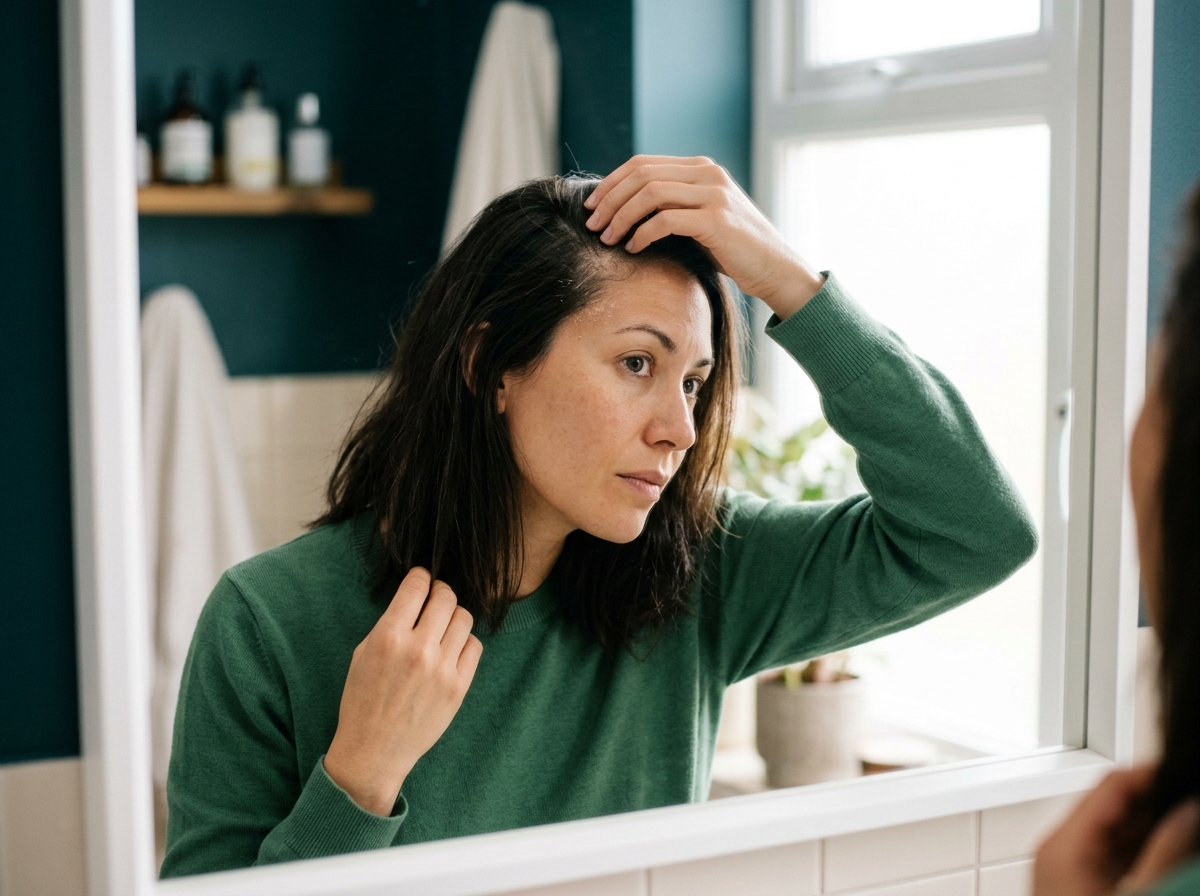
Here's the twist: plenty of flaking has nothing to do with fungus at all. Hard water leaves mineral deposits on the scalp that dry it out and make it flake, mimicking dandruff almost exactly. It can also strip natural oils, leaving skin irritated and primed for more buildup with every shower. If you've tried antifungal shampoo with no real change, mineral buildup might be the actual culprit — a detail explored well in a piece on can hard water cause dandruff.
This is a genuinely common mix-up, and it trips people up for months. You treat a fungal problem that was never fungal. Meanwhile the flaking keeps coming back because the water itself is the aggravator. Some people test their tap water first through a local lab or hardness kit, then decide what to change at the shower.
If your flaking coincides with a move to a new house, a hotel stay, or a change in water supply, suspect hardness before fungus. Curly and color-treated hair owners often notice dullness alongside the flaking — another mineral-buildup clue. When in doubt, rule out water quality before assuming it's a stubborn fungal case.
7 top antifungal shampoo options compared
Before you grab whatever's cheapest on the shelf, it helps to know what you're actually paying for. These formulas don't all fight the same problem. The price gaps are bigger than most people expect.
Active ingredient at a glance
Nizoral's 1% ketoconazole formula (sold in Fresh Scent, Peppermint, and a 2-in-1 conditioning version) is the drugstore benchmark for fungal-driven flaking, since ketoconazole targets the malassezia yeast directly rather than just stripping oil. Vichy Dercos leans on a milder antifungal complex plus soothing agents, aimed at sensitive scalps that react badly to harsher options. Neutrogena T/Sal skips antifungals entirely and uses salicylic acid to dissolve scale and buildup, which helps psoriasis-type flaking more than yeast overgrowth. Selsun Blue Medicated relies on selenium sulfide, an older but effective option that slows skin cell turnover and cuts down the yeast's food supply. PHARMBANNER and RHRI make budget medicated shampoos often marketed for folliculitis and psoriasis, usually blending coal tar, zinc, or low-dose salicylic acid at prices well under name brands.
| Product | Active ingredient | Scent/format | Size | Price tier |
|---|---|---|---|---|
| Nizoral 1% Ketoconazole | Ketoconazole | Fresh, Peppermint, 2-in-1 | 7–14 oz | Mid |
| Vichy Dercos Anti-Dandruff | Antifungal complex | Light fragrance | 6.7 oz | Premium |
| Neutrogena T/Sal | Salicylic acid | Medicated scent | 4.5–8.5 oz | Budget |
| Selsun Blue Medicated | Selenium sulfide | Original, mint options | 7–11 oz | Budget |
| PHARMBANNER / RHRI | Coal tar, zinc, salicylic acid blends | Basic, unscented | Varies | Budget |
The real split is ketoconazole versus salicylic acid versus selenium sulfide. Ketoconazole kills the fungus outright, salicylic acid just clears the flakes it leaves behind, and selenium sulfide sits somewhere in between. None of them work as well in hard water, though — mineral buildup coats the scalp and blocks active ingredients from doing their job, which is a separate issue worth understanding before you blame the shampoo. If flaking has you frustrated with residue on top of everything else, learning about the best clarifying shampoo options can round out a scalp routine alongside whatever medicated formula you land on.
How often to use antifungal shampoo
There's no single correct schedule here. It depends on what you're treating and whether you're in active flare-up mode or just holding steady. Get the timing wrong and you either irritate your skin with overuse or waste money undertreating it.
Flare-up schedule vs. maintenance schedule
Active infections need daily or near-daily contact for a set stretch, then a step-down to weekly or biweekly use once symptoms clear. Skipping the step-down entirely is common — and it's why so many flare-ups come right back within a month. Consistency during the active phase matters more than the total number of washes.
| Condition | Flare-up frequency | Maintenance frequency | Contact time before rinsing |
|---|---|---|---|
| Athlete's foot / jock itch / sweat rash | Daily as a body wash for 7–14 days | 2–3x weekly on sweat-prone areas | 1–2 minutes |
| Seborrheic dermatitis | 2–3x weekly for 2–4 weeks | Once weekly or every other week | 5 minutes |
| Standard dandruff | 2x weekly for 2 weeks | Once weekly | 3–5 minutes |
| Pityriasis versicolor | Daily for 5–7 days | Monthly, especially in warm/humid months | 5–10 minutes |
Notice the pattern: nothing here is a rinse-and-run job. Antifungal shampoos need contact time to actually kill fungus, not just detergent to strip it off. For seborrheic dermatitis on the face, some people also ask how facial cleansing habits interact with scalp routines, and understanding how often you should wash your face helps avoid stripping skin barrier while you're also treating the scalp. Once symptoms settle, resist the urge to quit cold. Maintenance frequency is what keeps a flare-up from becoming a monthly ritual.
Using ketoconazole shampoo safely with other treatments
Before you start
Ketoconazole shampoo is generally low-risk, but it's still a medicated product. If you're pregnant, breastfeeding, or managing liver issues, mention that before you buy. Ketoconazole: an antifungal medicine used to treat skin conditions works by stopping fungal growth on the scalp, and a provider can confirm it's a fit for your situation. Don't assume every version is interchangeable, either — strength and formulation vary by brand.
Combining treatments is where things get tricky. Layering multiple active ingredients on the same patch of skin can backfire.
- Tell your provider about any other dandruff or scalp treatments you're using, including salicylic acid or coal tar shampoos, since combining actives can dry out or irritate the scalp further.
- Flag any prescription steroid creams or foams applied to the scalp, as stacking a steroid with an antifungal can mask symptoms without solving the underlying cause.
- Mention any oral antifungal medications you're taking, since duplicating that mechanism can raise the odds of side effects.
- Bring up other topical prescriptions for eczema or psoriasis, because timing them apart (rather than back to back) often reduces irritation.
- If you missed a scheduled wash, just resume on your normal schedule — don't double up the next session to make up for it.
Side effects and what to do
Most people tolerate ketoconazole shampoo just fine. Still, know what to watch for. Mild stinging, redness, or dryness right after washing is common and usually fades. Unusual hair discoloration, especially on light or chemically treated hair, is worth noting too — it's uncommon but reported. If you notice swelling, hives, or trouble breathing, that's an allergic reaction, and it needs immediate attention, not a wait-and-see approach.
Storage matters more than people think. Keep the bottle at room temperature, away from direct sun, and out of reach of kids. A bathroom shelf near a hot shower isn't ideal — heat and humidity can shorten shelf life. Check the expiration date before each use, since a degraded product may simply stop working as well.
Why hard water can undo an antifungal shampoo's progress
Where filtered water fits alongside medicated shampoo
Here's the frustrating part. You're using your antifungal shampoo exactly as directed, yet the flaking won't quit. Often the culprit isn't the shampoo at all — it's what's rinsing over your scalp every single day. Mineral deposits from hard water and residual chlorine both dry out scalp skin and strip the thin layer of natural oil that's supposed to protect it. That leaves skin more reactive, more itchy, and more prone to visible flaking, even while a treatment shampoo is doing its job underneath.
There's also a case of mistaken identity worth knowing about. Hard water leaves behind mineral film on hair and scalp that looks a lot like dandruff — dry, white-ish, clingy flakes — but it's actually just buildup. Confusing the two means people sometimes double down on medicated shampoo for a problem it can't fully solve, since it's not fungal at all, just residue. If you've read up on Ketoconazole Shampoo (Nizoral): How to Use, you already know it's built to target fungus, not mineral scale.
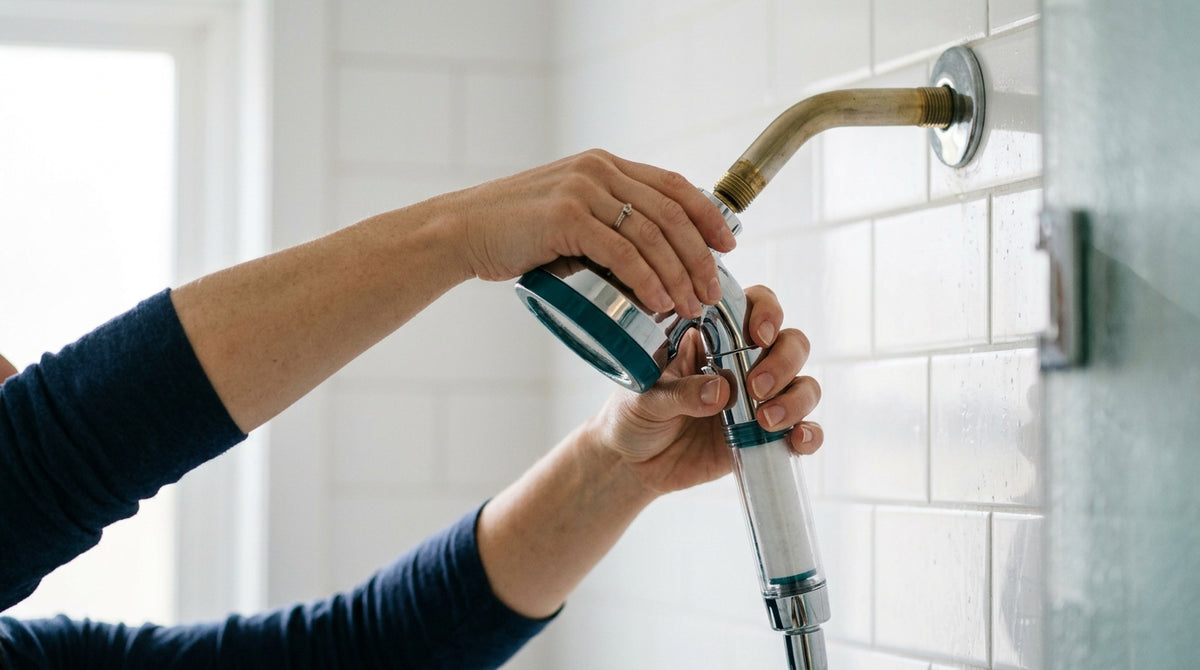
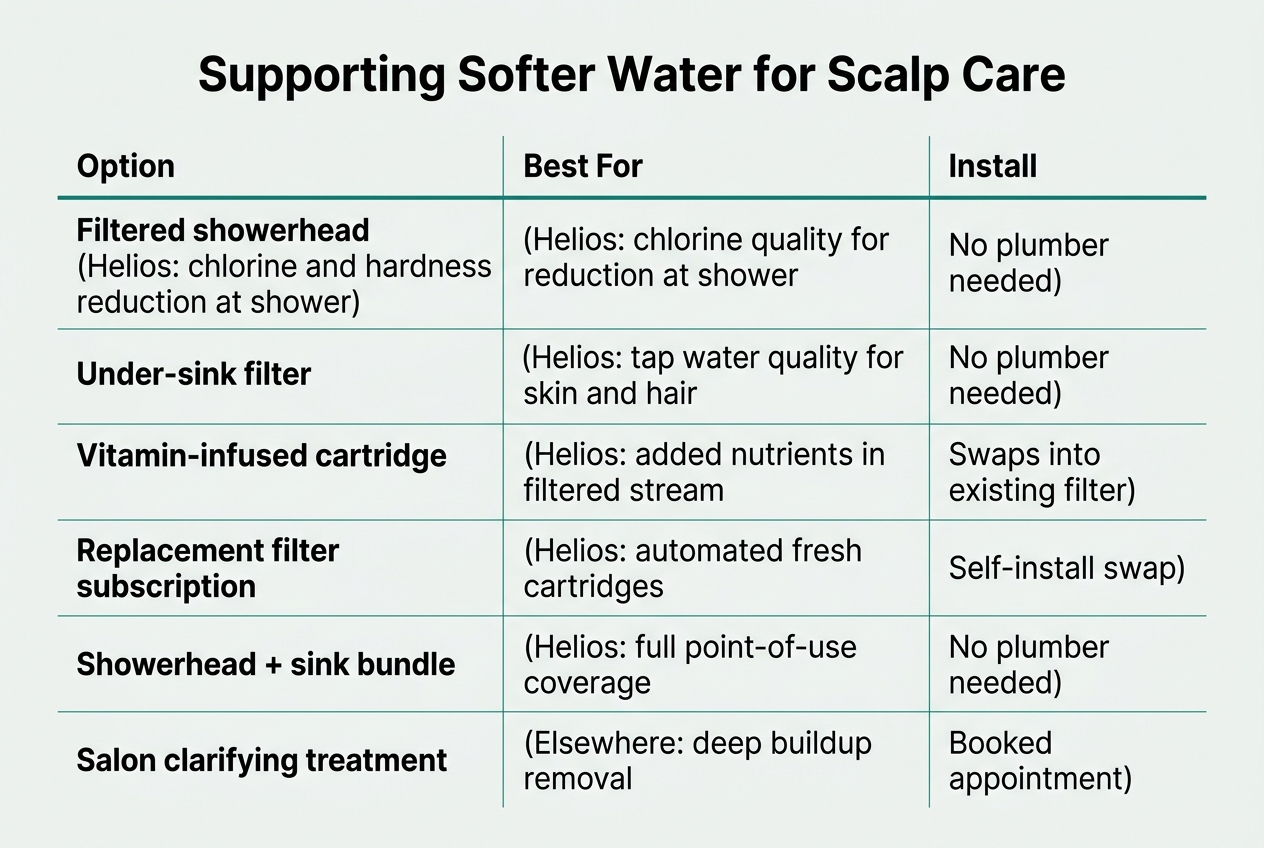
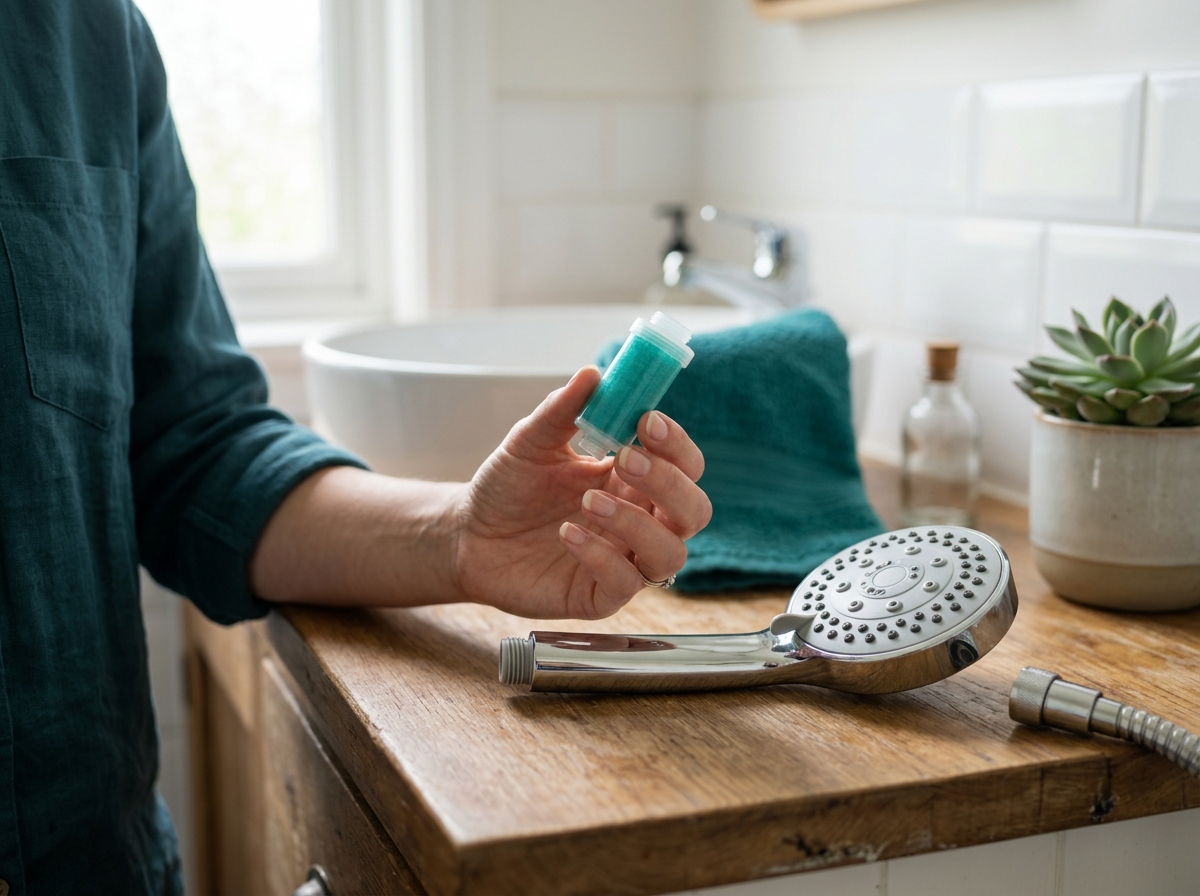
This is where point-of-use filtration earns its place, without overstepping into medical territory. A filtered showerhead or under-sink filter changes the water hitting your skin and hair; it doesn't change or replace the shampoo. Testing your water for hardness first — through a local lab or a home kit — can confirm what you're dealing with, and then Helios's filtered showerhead or under-sink filter addresses what the test turns up. Swapping in a filtered showerhead is a no-plumber job, which matters if you rent and can't install a whole-home softener or call in a filtration plumber. Think of it as a supportive input change — better water in, alongside whatever treatment your dermatologist or esthetician already recommended.
Steps for getting the most out of antifungal shampoo at home
Application routine
Technique matters more than people think. You can buy the best bottle on the shelf and still get mediocre results if you rush the process. The active ingredient, whether that's ketoconazole, selenium sulfide, or zinc pyrithione, needs real contact time with your scalp to actually work. Understanding how ketoconazole shampoo works on the skin helps explain why a thirty-second rinse rarely does much.
- Wet hair fully and thoroughly before applying anything — a half-wet scalp dilutes the product unevenly and leaves dry patches untreated.
- Massage the shampoo directly into your scalp with your fingertips, not just through the lengths of your hair, since the fungus lives on skin, not strands.
- Leave it on for the contact time listed on the label, usually 3 to 5 minutes, and resist the urge to rinse early just because you're done washing.
- Rinse thoroughly with warm water and skip the temptation to follow up with your regular shampoo right away, which can strip the treatment before it's finished working.
- Alternate with your regular shampoo on the schedule the product recommends, since most antifungal formulas aren't meant for daily use long-term.
Skip a step here and there and you'll wonder why nothing's changing after two weeks. That's usually the reason.
Tracking flare patterns
Dandruff and scalp fungus rarely show up at random. Heat, stress, humidity, diet, and even switching hair products can all trigger a flare. Keeping a simple log — a notes app entry or a line in a calendar — helps you spot what's actually driving your symptoms instead of guessing. Jot down the date, how bad the flakes or itch were, and anything unusual that week: a new gym session, a hotel shower, a stretch of hot weather. After a month or two, patterns tend to jump out. Some people notice flare-ups line up with travel, since water quality shifts from place to place. A short log also gives you something concrete to bring to an esthetician or dermatologist if things aren't improving, rather than a vague "it's been bad lately."
Related scalp and skin conditions worth knowing about
Overlapping conditions to rule out
Your scalp isn't the only place fungus likes to set up shop. Athlete's foot, jock itch, and sweat rash are all caused by the same family of yeast and dermatophytes that trigger dandruff, which is why they respond to the same active ingredients — ketoconazole, clotrimazole, terbinafine. If you're prone to one, don't be surprised if another shows up. A gym bag, a damp sock, or a sweaty waistband can all be the source.
Then there's the mix-up between psoriasis and seborrheic dermatitis. Both cause flaking, redness, and itching along the hairline and scalp, and honestly, they can look nearly identical to the untrained eye. Psoriasis tends to bring thicker, silvery scale and can show up on elbows and knees too. Seborrheic dermatitis stays greasier and more confined to oily zones — scalp, eyebrows, sides of the nose. Guessing wrong means treating the wrong thing for weeks.
Eczema is a different animal entirely — it's not fungal, it's a barrier and immune issue, so antifungal shampoo won't touch it. Flare-ups often get worse with hard water, harsh soaps, or hot showers that strip natural oils further. A dermatologist is still the right call for diagnosing and treating eczema itself. Filtered water can be a supportive step alongside that care, easing some of the daily irritation from hard water and chlorine, but it's not a treatment and won't replace medical advice. Think of it as one small piece of a bigger routine.
For ongoing scalp health, it's worth leaning on real resources rather than guesswork. The National Eczema Association, the American Academy of Dermatology's public site, and the National Psoriasis Foundation all publish solid, plain-language guidance. Many local businesses — dermatology clinics, estheticians, even some pharmacists — can also point you toward proper diagnosis before you buy another bottle off the shelf.
Before deciding how to handle hard water at home, it's worth being honest about what you're actually trying to fix—whole-house treatment, appliance protection, and skin or hair comfort are different problems with different solutions, and no single product covers all three. If your concern is really about how water feels on your skin and hair day to day, a point-of-use filter on the shower or sink is a reasonable, low-commitment place to start, while bigger structural issues like softening every tap in the house still call for a proper installed system. Ask what you're solving for, then match the fix to that specific goal rather than assuming one purchase does it all.
Share:
Best Clarifying Shampoos for Curly Hair Battling Hard Water Buildup
RO Under Sink Water Filters Explained: What Skin-Focused Buyers Need to Know